Perspectives

Five Developments Shaping DSOs

09/08/2026
|
7 min. to read

Payer-backed diagnostics, coordinated specialty care and major executive transitions point toward a more connected and disciplined DSO operating model.

The most consequential developments in the DSO market this week were not traditional acquisitions. Instead, leading organizations invested in connecting parts of dentistry that have historically operated separately: oral health and insurance benefits, general dentistry and specialty care, diagnostic AI and reimbursement, and clinical leadership and corporate growth.

Taken together, these moves reflect a broader shift. Enterprise value is increasingly being created by what happens after a patient enters the system: whether the organization can identify disease earlier, coordinate the next stage of care, convert referrals into completed treatment and align leadership around measurable growth.

Here are five developments DSO executives should be watching:

1. PDS Health and United Concordia Test a New Path for Oral-Systemic Care

United Concordia Dental and PDS Health have launched an 18-month salivary-screening pilot across nearly 125 PDS Health practices in Southern California.

Approximately 1,500 to 2,000 eligible United Concordia members who have—or are at risk for—periodontal disease will be offered chairside screenings measuring active matrix metalloproteinase-8, or aMMP-8. This biomarker is associated with active collagen breakdown and periodontal tissue destruction.

United Concordia will fund the screenings at no cost to participating members. Follow-up testing will help clinicians evaluate changes in disease activity during periodontal treatment.

The pilot will examine whether providing patients with measurable information about their periodontal health improves treatment adherence and at-home care. The resulting data may also help United Concordia evaluate whether saliva screening should be covered as part of future dental benefit designs.

Why it matters

The most important element of this pilot is not the diagnostic technology alone. It is the involvement of a national dental payer.

Oral-systemic health initiatives frequently struggle to move beyond education and isolated clinical programs because reimbursement has not evolved alongside the science. This pilot connects a DSO, payer, biomarker and defined patient population within a measurable program.

If the data demonstrate improved adherence, clinical outcomes or reduced downstream costs, the program could offer a model for introducing additional diagnostic and preventive services into dental benefits.

Read the United Concordia announcement


2. Heartland Targets the Specialty-Referral Gap

Heartland Dental has introduced Conuity Care Coordination, a platform and suite of services designed to connect general dentists, specialty providers and patients throughout the specialty-care journey.

The system supports the process from the initial referral and scheduling through treatment and follow-up. It gives care teams greater visibility into patient progress and is intended to reduce the number of patients who disappear between a general-dentistry diagnosis and specialty treatment.

Heartland reports that only 15% to 30% of patients advised to seek follow-up specialty dental care complete the recommendation. That figure and the platform’s anticipated benefits are company-reported.

Why it matters

Lost specialty referrals represent more than missed production. Delayed treatment can result in more complicated, invasive and expensive care for patients.

For multi-specialty DSOs, the ability to keep patients connected across providers also has substantial enterprise value. A group may possess the necessary specialists, clinical capacity and patient demand but still fail to realize the benefit if its referral process depends on disconnected communications and manual follow-up.

The real measure of Conuity will be whether it improves completed-referral rates, time to treatment and patient outcomes. If it does, care coordination could become an important competitive advantage for large multi-specialty organizations.

Read the Heartland Dental announcement


3. Pearl Extends Diagnostic AI Into 3D Imaging

Pearl has commercially launched Second Opinion 3D in the United States and Canada, bringing its FDA-cleared CBCT imaging artificial intelligence to general dentists.

The platform analyzes three-dimensional dental images and incorporates two workflow capabilities designed for general practices: access to specialist radiology-report requests and conversion of CBCT findings into documentation that can support insurance claims.

The release represents a notable expansion of dental AI beyond the two-dimensional radiographs on which many of the industry’s early diagnostic platforms were built.

Why it matters

CBCT adoption gives general dentists access to increasingly sophisticated diagnostic information, but interpreting three-dimensional images requires additional expertise and time.

Advertisement

AI may help clinicians identify findings more consistently and determine when specialist involvement is appropriate. Connecting findings to radiology review and claim documentation could also make the technology more practical within everyday workflows.

DSOs should nevertheless assess more than detection performance. Important measures include clinical consistency, specialist-referral conversion, documentation quality, claim acceptance, clinician adoption and safeguards against unnecessary treatment.

The next phase of diagnostic AI will be judged by whether it improves decisions—not simply whether it identifies more findings.

Read the Pearl announcement


4. 42 North Dental Aligns Leadership Around Its Next Growth Phase

42 North Dental announced a significant leadership transition effective September 1.

David Fusco, previously the organization’s president, has succeeded Geoff Ligibel as CEO. Ligibel stepped down after 12 years leading the organization but will remain a shareholder and support the transition.

Dr. Michael Scialabba has become president while continuing as chief clinical officer. His expanded responsibilities include corporate growth and development, acquisitions integration and procurement.

Brinda Subbiah has become chief operations and financial officer, adding operations to her existing oversight of finance, revenue cycle management, payer strategy, technology and AI. Nicholas Shusas has also been promoted to chief human resources officer.

Why it matters

The changes follow 42 North’s recently announced return to the acquisition market after refinancing its balance sheet and spending several years strengthening existing operations.

The structure closely connects clinical leadership with corporate development and integration. It also places operations, finance, revenue cycle management, payer strategy, technology and AI under one executive.

That alignment suggests 42 North intends to evaluate growth as an integrated operating challenge—not simply an acquisition target. It also reflects a broader DSO leadership trend: traditional functional boundaries are being redrawn as organizations demand tighter coordination between clinical performance, integration, technology, talent and financial results.

Read the 42 North Dental announcement


5. Rodeo Dental Moves From Founder-Led Management to Its Next Leadership Model

Rodeo Dental & Orthodontics has appointed Lorri Detrick as CEO and Andrew Napolitano as CFO. Co-founder and former CEO Dr. Saam Zarrabi will transition to executive chairman.

Detrick brings more than 20 years of healthcare leadership experience and more than a decade in dentistry. She most recently served as president and COO of Riccobene Associates Family Dentistry, where she helped lead a growing multi-location organization.

Napolitano previously served as CFO of Exer Urgent Care, a multi-location healthcare organization. His experience includes financial strategy, capital planning and building infrastructure to support expansion.

Why it matters

Founder succession can be one of the most difficult transitions in a growing DSO.

The organization must add professional management and financial discipline without losing the mission, relationships and culture established by its founders. Rodeo’s structure keeps Dr. Zarrabi involved in long-term strategy and organizational culture while transferring daily executive leadership to experienced healthcare operators.

Detrick’s appointment is also noteworthy in an industry where women increasingly lead major operating functions but remain comparatively underrepresented in the CEO position.

Read the Rodeo Dental announcement


The Larger Signal

Each development addresses a different part of the dental market, but the strategic pattern is consistent.

DSOs are becoming more deliberate about connecting diagnosis, benefits, referrals, technology, leadership and financial performance. The competitive advantage will not come from adding another disconnected tool or service. It will come from building an operating model in which information moves across the organization and results in action.

The questions for DSO leadership teams are becoming clearer:

  • How are clinical findings converted into appropriate completed care?
  • Is data influencing patient behavior and benefit design?
  • How is technology reducing fragmentation?
  • Will leadership drive integration as effectively as expansion?
  • How will founders transition without weakening the culture?

The next generation of DSO growth will depend less on how many capabilities an organization owns and more on how effectively those capabilities work together.

The LEAD Intelligence Brief analyzes consequential developments affecting dental service organizations, industry partners and executive leaders. Company-reported figures and anticipated results are identified as such. Analysis represents the editorial perspective of The LEAD.

Gain ACCESS TO
INSPIRING
stories
Subscribe
Perspectives

Afflicting the Comfortable

07/15/2026
|
10 min. to read
By Dr. Aman Kaur | Founder & CEO, Women in DSO®

Five years after challenging dentistry’s assumptions about leadership, Dr. Aman Kaur examines what still needs rewiring.


I have spent most of my career inside systems. Not admiring them. Not fighting them. Watching them.

I’ve watched how decisions get made and who is in the room when they happen. I’ve watched which talent gets developed and which gets quietly overlooked. I watch patterns repeat themselves, year after year, until finally someone gets tired enough of the repetition to name it out loud and do something about it.

One thing became impossible for me to ignore: Dentistry has an untapped talent problem. The industry is built on a workforce it has not fully developed into leadership, and that gap is costing everyone, regardless of where you sit in the org chart. Women in DSO® began there. Not as an idea searching for validation, but as a practical response to a real and measurable business problem.

Clarity Before Comfort

People often describe me as bold.

I feel that what they are actually responding to is the clarity I try to bring to what we are experiencing.

I have never been interested in collecting options for the sake of comfort. Options delay decisions and they soften accountability. They create the illusion of movement without asking anyone to commit to anything. Once I see what needs to happen, I move. That instinct is what guided me into dentistry, into DSOs, into operational leadership roles where systems matter more than sentiment. It is also what led me, eventually, to build something the industry had been quietly waiting for without quite knowing how to ask for it.

Dentistry makes sense to me because it is tangible, impactful, and operational. It rewards precision, discipline, and follow-through. The same is true of real leadership at any level. Clarity is not aggression. It is respect for time, for effort, and for outcomes.

The Talent Gap No One Was Naming

Inside DSOs, the operational picture becomes visible quickly.

The people holding organizations together day to day—coordinating care, managing practices, stabilizing teams and patient experiences—are largely women. That is not a political observation. It is a workforce reality. But when you look at where decision-making authority actually sits, at the senior leadership and board level, the composition shifts dramatically.

That gap matters for one reason above all others: organizations that fail to develop and promote from within their own talent base pay for it. In turnover, missed growth and in leadership pipelines that are narrower than they need to be. The best leaders I have worked with, men and women, already understand this. They are not threatened by the question. They are asking it themselves.

The issue has never been the ambition or capability of the women being overlooked. It is that access to the right networks, the right rooms, and the right conversations has not been distributed as broadly as it should be. That is a fixable problem. I created Women in DSO® to fix this.

When Observation Turns into Action

By 2021, continuing to talk about the problem felt indulgent. We had been talking long enough.

The conversations that would eventually become Women in DSO® had been happening quietly for years, between colleagues, friends, and people comparing notes in conference hallways and realizing just how consistent the pattern was across very different organizations and markets.

The question was never whether the need existed. The question was whether the industry would actually respond once that need had a name and a structure behind it.

The first Empower and Grow conference answered that.

Six hundred and fifty people showed up during a pandemic, for a first-time event and with a name that stated its purpose clearly and without apology.

The industry was not waiting to be convinced. It was waiting for somewhere to direct the energy it already had.

Five years on, what started as a response to a gap has become a structural force inside our industry. That has not happened by accident. It happened because the underlying need was real, the timing was right, and enough people—men and women alike—were willing to show up for it.

The Kind of Resistance That Is Hard to See

Our early momentum experienced some headwinds. It was not overt opposition. Rarely is.

It looked more like support without structural follow-through. Inclusion in conversation without inclusion in decision-making. Genuine enthusiasm for the mission, paired with very little change to who actually gets developed, sponsored, and promoted.

I am not interested in assigning blame for that. This is usually not intentional. It is the product of systems that were built a certain way and have not yet been updated. Good people operate inside imperfect systems all the time. The question is whether they are willing to update the system once they can see it clearly.

Women in DSO® has never confused talking about progress with making it. The work is operational. It is about building the infrastructure that allows talent to move through organizations the way it should, based on capability and contribution rather than proximity to the right network.

Industries that fail to develop their full workforce pay for that failure in efficiency, in growth, and in the gradual erosion of organizations that could have been so much more than they ended up being. That is not a gender argument. It is a business one.

Advertisement
Quote
“Some of the most committed champions of this work are men who saw the talent gap early and understood exactly what it was costing their organizations.”

Five Years—And We Are Just Getting Started

I want to be clear about what Women in DSO® is actually trying to build, because it gets mischaracterized too often.

This is not about elevating women at the expense of anyone else. The goal is a stronger industry built by developing the full depth of available talent, not a carefully managed portion of it. The research on this is consistent across sectors: Organizations with broader leadership representation make better decisions, build more resilient processes, and grow more sustainably over time.

Some of the most committed champions of this work are men who saw the talent gap early and understood exactly what it was costing their organizations. They did not need to be persuaded. They needed a partner. That is a big part of what Women in DSO® provides.

The practical message to the women we work with is straightforward: Upskill with intention and learn the full business, not just your corner of it. Build visible, measurable, repeatable value for your organization. When those three things are in place, the conversation about advancement changes entirely. You stop asking to be seen. The case makes itself.

The Industry Cannot Outrun the Data

The workforce numbers are not subtle, and they are not new.

The majority of dental practice team members are women. The majority of DSO employees are women. Roughly half of all dental patients are women. Today, most dental school graduates are women. The profession’s incoming talent pipeline is majority female, and that generation is arriving with clear expectations: real pathways to leadership, genuine investment in their development, and an industry that takes their potential seriously.

Organizations that are already building for that reality will be well-positioned. Those that are not will face a compounding retention and leadership pipeline problem that only gets more expensive to solve over time.

Women in DSO® is here to help the industry get ahead of that curve rather than scramble to catch up to it.

Quote
“This is not a movement asking for permission. It is an industry learning how to use its full intelligence.”

Building for the Middle Market

One of the most important decisions we made heading into year five was to be honest about where our reach needed to grow.

Women in DSO® has built significant presence and programming for large DSOs and enterprise-level operators. But the middle market, the regional groups, the emerging multisite practices, and the organizations sitting between independent practice and large-scale DSOs represent both the largest share of the industry and the place where leadership development investment is most uneven. These are the organizations that will define what dentistry looks like over the next decade. And they are the organizations that most need access to the kind of mentorship, education, and peer community that Women in DSO® provides.

To accelerate that work, we welcomed three new board members whose collective reach, expertise, and genuine commitment to this mission are exactly what this next chapter requires.

Guillaume Daniellot, CEO of Straumann Group, brings a global perspective on how the dental industry grows and where it is heading. Straumann is one of the most respected names in dentistry worldwide, and Daniellot’s decision to join this board is a clear signal that the conversation about leadership development and talent investment is not a niche concern—it is a core industry priority.

Nicola Deall, Chief People Officer at Dentalcorp Canada, brings something equally valuable: deep operational expertise in what it actually takes to build people-first cultures inside complex, multisite dental organizations. Her work at Dentalcorp sits at the intersection of talent strategy and organizational performance, and that is precisely the lens Women in DSO® needs as we expand our programming for mid-market operators.

Lorri Detrick, President and Chief Operations Officer at Riccobene Associates Family Dentistry, rounds out the board with hands-on leadership experience inside one of the most respected regional dental groups in the country. Detrick knows what middle market growth looks like from the inside, and she knows what it costs when the right people are not being developed and retained.

Together, these leaders represent something important: This is not a women’s organization asking the industry for support. It is an industry organization, led with a specific and strategic focus, that the industry’s most serious operators have chosen to invest in because they understand the return.

Forward Is Not Optional

“You can’t trip over what’s behind you.”

That is not a motivational line—it is a practical one. It has been the operating principle underneath everything we have built over the past five years.

There was never a real question of whether this work would continue. The only question was how far it could scale. Five years in, we have built mentorship programs, educational platforms, a conference the industry now genuinely anticipates, and a community of leaders across every level and every role in dentistry who have already demonstrated that this model works. What we are building now is not a movement starting from scratch. It is a formal structure for energy that was always present, always powerful, and has finally found a home.

Every year, people tell me that Women in DSO® changed where their career went. What that says to me is straightforward: The industry was ready long before it was willing to admit it.

Building stronger leadership pipelines is not disruption. It is recognition of what the data has been saying for a long time. When more perspectives are shaping decisions, standards do not soften. They sharpen. Systems improve. Outcomes stabilize. The whole industry performs better.

This is not a movement asking for permission.

It is an industry learning how to use its full intelligence.

Dr. Aman Kaur is the Founder and CEO of Women in DSO®, a nonprofit organization dedicated to advancing women in leadership across DSOs. A seasoned DSO executive, she has served as CEO, COO, and dental director for multiple dental groups since 2010 and currently consults with leading dental groups and PE firms across the industry. Women in DSO® is proud to be celebrating its fifth anniversary in 2026.

Gain ACCESS TO
INSPIRING
stories
Subscribe
Perspectives

The Long Recovery: A 2026 Mid-Year Update

07/15/2026
|
4 min. to read

BY BRIAN COLAO
Director, DSO Industry Group at Dykema

Six months into 2026, the DSO industry isn’t stalled. It’s restructuring for what comes next.

In my 2025 year-end article, I described 2025 as the year of the “muted recovery” in that economic conditions clearly improved from 2024 but did not improve nearly as much as the industry had hoped.

Advertisement

This led to the next logical question which is “what can we expect from 2026?” At the time of this publication, 2026 is a little more than half over and so far it seems like a second year of “muted recovery.”

In most weeks I probably have around 30 conversations with DSOs, DSO sponsors and lenders, DSO technology companies, and other members of the DSO community concerning the general state of the industry. By far the question I seem to get the most is the current state of the DSO M&A markets, so I will start there with a few thoughts, then discuss the status of implementation of new technology solutions, and finish with my thoughts for the rest of 2026.


I. Update on DSO M&A Markets

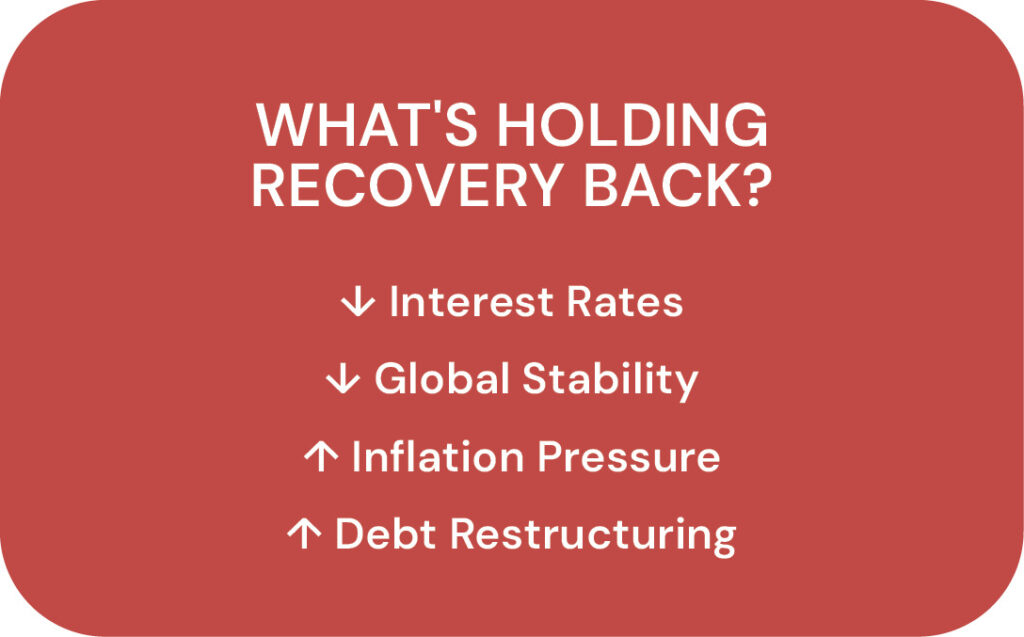
  1. The recovery of the DSO M&A markets is mostly predicated upon a) lower interest rates; b) adjusted valuation expectations from the sellers; c) the reduction of global unrest and uncertainty; and d) the ability of DSOs to build premier organizations with high growth potential that sponsors will want to invest in.
  2. Through the first half of 2026, interest rates have not decreased in any meaningful way and are unlikely to do so until the current Middle East crisis has subsided and oil prices stabilize.
  3. Global unrest and uncertainty has increased with the continuation of the conflict in Ukraine and the addition of brand-new conflicts in the Middle East.
  4. Inflation continues to be a material concern due to a significant spike in oil prices.
  5. Many DSOs are still in the process of restructuring their debt, lowering their overhead, and implementing new technology solutions, and these efforts are expected to continue throughout 2026 and 2027.
  6. As a result of the above issues, there has not been a significant recovery in the DSO M&A markets; although, there is a steady amount of modest activity occurring.

II. Update on Technology Adaptation

  1. One of the keys to mitigating the challenging economic conditions such as labor shortages, high costs of labor, and lowering overhead is the adaptation of new technology solutions.
  2. While there are many innovative solutions in the market, the DSO industry has faced a number of challenges to the implementation of new technology such as a) lack of education; b) lack of integration with PMS systems; c) lack of a solid implementation plan across the DSO’s platform; and d) too many solutions in the market to choose from.
  3. Education and PMS system integration have significantly improved from 2024 and 2025, but many DSOs still struggle to develop implementation plans and in choosing the best options with the highest ROI.
  4. Nevertheless, technology is steadily being implemented throughout DSOs, with one recent DSO poll identifying diagnostic AI and RCM solutions as the most common solutions in use.
Quote
“The question for many organizations is no longer whether capital returns, but whether they will be positioned to capitalize on it when it does.”

III. Thoughts for Second Half of 2026

  1. I am optimistic but not certain that we will see a significant uptick in DSO M&A activity by the fourth quarter provided that the new Fed chairman is able to lower the interest rates.
  2. I expect the slow and steady implementation of technology solutions to continue for the rest of this year, and I expect to see a significant and measurable ROI for many technologies by the end of the year, which should include significant reductions in overhead and material increases in EBITDA for many DSOs.
  3. DSOs that can differentiate themselves in terms of culture, integration of specialty, and and value added through the implementation of technology will significantly increase their enterprise value over organizations that fail to do so.
  4. The DSO industry is filled with significant opportunities for those that take the time to learn and understand the business or dentistry and are thoughtful and disciplined in their approach to M&A and the implementation of technology.

Gain ACCESS TO
INSPIRING
stories
Subscribe
Perspectives

Navigating AI in Dentistry

02/27/2026
|
7 min. to read

A Practical Guide to Thriving in an Era of Intelligent Risk

By Jena Taft
Senior Counsel, Dykema DSO Industry Group

The conversation around technology and artificial intelligence in healthcare has shifted dramatically. What was once a futuristic concept is now an everyday reality in dental practices across the country. As AI tools become increasingly integrated into clinical workflows, from diagnostic imaging to patient communications, dental support organizations and independent practices alike face a critical question: how do we harness the benefits of AI while navigating a developing regulatory landscape?

The answer is not simple, but it is necessary. As someone who has worked extensively with dental groups and healthcare providers, I can tell you that AI regulation is not coming in the distant future it is unfolding now, and providers need to prepare accordingly.

A Current Regulatory Landscape

There is currently no blanket federal law governing AI use in healthcare, and there may not be any time soon. Instead, we are seeing a patchwork of state regulations emerge, each with its own requirements and enforcement mechanisms. This creates complexity, particularly for multi-state operators, but it also reflects the reality that AI regulation is being shaped in real time as the technology evolves.

The current administration has signaled a preference for deregulation and staying competitive in what many call the “AI race.” This aligns with traditional conservative approaches to regulation, favoring innovation over restrictive oversight. However, states are moving forward with their own frameworks. Several states, including California, Colorado, Texas, Pennsylvania, and Florida have all enacted AI-related legislation, with varying degrees of specificity for healthcare applications.

What is particularly interesting about this state-level activity is that it includes traditionally business-friendly states like Texas and Florida. When conservative states begin regulating AI in healthcare, it signals that this is not a partisan issue but a matter of patient safety and professional accountability. The tension between federal deregulation efforts and state-level protections will be something to watch closely over the coming months.

Meanwhile, federal agencies like the Department of Health and Human Services (HHS), the Office for Civil Rights (OCR), and the Food and Drug Administration (FDA) continue to shape standards and oversight mechanisms. These are the same agencies that have regulated healthcare for decades, and they are not stepping aside. Instead, they are developing frameworks and guidelines to help providers understand their obligations when using AI-powered tools.

The Promise and Pitfalls of AI in Dental Practice

The benefits of AI in dentistry are real and compelling. AI excels at automation, saving time on administrative tasks like chart notes, scheduling, and billing. It supports clinical decision-making by providing earlier and more accurate detection of conditions that might otherwise go unnoticed. Enhanced patient management systems powered by AI can improve outcomes and streamline operations.

However, these advantages come with significant risks that cannot be ignored. False negatives and false positives remain a concern, though the technology is improving rapidly. In fact, AI is becoming better at self-correction than we are at correcting it. We are already seeing AI tools designed to monitor and fix other AI systems, creating layers of technological oversight that were unimaginable just a few years ago.

Core Concepts for AI Compliance

State regulations share several common themes that dental practices should embrace as best practices, regardless of where they operate. These principles represent the foundation of responsible AI use in healthcare.

Transparency. States like Texas now require conspicuous disclosure to patients when AI is used in their care. This cannot be buried in fine print or treated as a passive consent buried in onboarding paperwork. Patients must understand, in clear language, how AI is being used in their treatment. If you cannot explain your AI tools to patients, that is a sign you do not understand them well enough yourself.

Provider in the Loop. I prefer the term “provider in the loop” to the generic “human in the loop” because it emphasizes the professional responsibility to patients. A dentist cannot delegate clinical decision-making to an algorithm, no matter how sophisticated. The practitioner bears ultimate liability for patient care, which means every AI recommendation must be reviewed, understood, and consciously adopted or rejected by a licensed professional.

Advertisement

Bias Prevention. This is a relatively new concern in healthcare regulation, distinct from traditional anti-discrimination protections. AI systems can inadvertently perpetuate or amplify biases present in their training data, leading to disparate outcomes for different patient populations. Practices must be proactive in evaluating whether their AI tools perform equitably across diverse patient demographics.

Audits and Monitoring. This is not entirely new territory. Dental practices should already be conducting chart audits and monitoring compliance with existing regulations. AI simply adds another layer to these processes. If your compliance program is not robust at baseline, integrating AI responsibly will be challenging.

Managing Vendor Relationships and Contracts

One of the most important protections practices can implement is controlling how AI vendors use their data. Many vendors use AI models that train themselves on real-world data from its exposed to. While this will help improve the technology over time, it creates significant privacy and liability risks for the practice.

Vendor contracts should be revised to explicitly prohibit the use of patient information or practice data to train AI models unless you have obtained proper consent and understand exactly how the data will be used. If your contracts are silent on this issue, vendors may assume they have permission. This is not acceptable. You are the custodian of patient information, and you cannot delegate that responsibility to a technology company without clear contractual protections.

Building an Effective Compliance Program

Not every practice has capacity or capital for a full-time compliance or AI-specific compliance officer, but every practice can designate someone to monitor AI-related developments and ensure policies are followed. This person does not need to be a technology expert, but they should understand your AI tools well enough to spot potential issues and know when to escalate concerns.

Written policies and procedures are essential, but they must be living documents. The regulatory environment is changing too rapidly for casual reviews every few years. Depending on your utilization, Practices should consider monthly or quarterly check-ins on AI operations and corresponding regulations to ensure they remain current. Start with a baseline policy that addresses the core principles and update as needed for new developments.

A collaborative culture where employees feel empowered to flag potential problems without fear is critical. This is a basic element of any compliance program, but it is particularly important with AI because novelty means issues may emerge unexpectedly.

From Surviving to Thriving

We are entering a defining period for AI in dentistry – one that will reward well-prepared and adaptable practices with more opportunities. With the pace of AI developments, DSOs and practices can feel like they are just surviving and not thriving – but as tools improve, adoption will accelerate and regulatory expectations will become more defined.

With thoughtful planning, robust compliance programs, and a commitment to patient protection, practices can position themselves to thrive in this new era. Recognize that AI is not going to replace dentists, but dentists who learn to use AI effectively will have significant advantages over those who do not.

This is an inflection point for those willing to engage seriously with both the technology and the regulations that govern it. Build your compliance foundation now, stay informed about regulatory developments, and do not hesitate to seek expert guidance when you need it. The practices that invest in understanding and managing AI responsibly today will be the ones that thrive tomorrow.

___

Jena Taft is Senior Counsel at Dykema, where she focuses on healthcare law and business transactions for dental service organizations and healthcare providers. She can be reached at jtaft@dykema.com.

Gain ACCESS TO
INSPIRING
stories
Subscribe
Perspectives

Dentists’ Participation in Medicaid Remains Stagnant

02/27/2026
|
5 min. to read

By Rachel W. Morrissey, Deesha Bhaumik, and Dr. Marko Vujicic

Access to dental care through Medicaid has long been a critical lifeline for millions of American adults and children, yet the future of the program is uncertain. The COVID-19 pandemic disrupted both provider participation and patient utilization, creating ripple effects that are still being felt today. As states expand benefits and policymakers debate reforms, recognizing who is delivering dental care, and who is receiving it, is critical to understanding the complete picture of oral health in the United States.

In this article we consider both sides of the story, looking at utilization by the patients who rely on these benefits as well as the providers who treat them. We explore how utilization patterns differ between children and adults, which groups have recovered since the pandemic, and trends in provider characteristics and practice types.

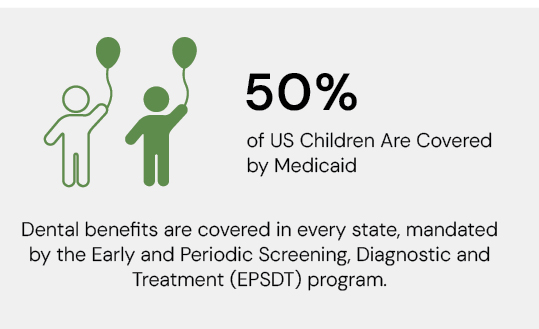
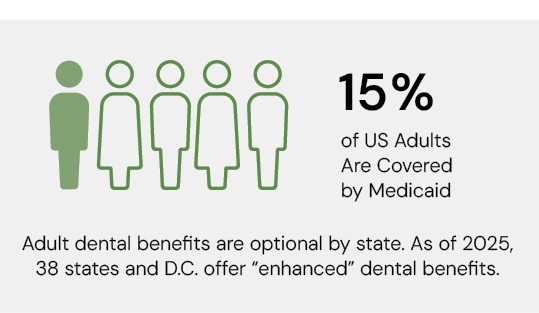
Let’s begin with a brief overview of dental benefits within Medicaid programs. Around 50% of children and 15% of adults in the US are covered by Medicaid or the Children’s Health Insurance Program (CHIP). In the US, dental services are covered for child Medicaid and CHIP beneficiaries in every state, mandated by the Early and Periodic Screening, Diagnostic, and Treatment program. For adults, dental benefits under Medicaid are optional, and each state can decide if and how they want to expand coverage for dental services. As of 2025, 38 states and the District of Columbia offer enhanced benefits (i.e., those that cover a substantial amount of diagnostic, preventive, and restorative services) for adult Medicaid beneficiaries.

Although child beneficiaries have dental coverage under Medicaid and CHIP in every state, a considerably low number have visited a dentist in the past 12 months. Dental care utilization varies widely by state, ranging from 30% to 62%, and in 27 states only 50% of Medicaid and CHIP beneficiaries utilized dental care in the past year. This is 20 percentage points lower than the dental care utilization for privately insured children, and this gap has persisted for the last decade. Utilization among both groups dropped sharply during the pandemic, and neither appear to have fully recovered.

For adults, utilization rates for Medicaid beneficiaries remains flat and is considerably lower than for privately insured individuals. As of 2022 (the most recent year for which adult utilization data is available) the national adult Medicaid beneficiary utilization rate was 18%, and no state had a rate above 33%. States with enhanced benefits saw higher utilization among adult Medicaid beneficiaries than states with limited or emergency-only benefits. By comparison, utilization among privately insured adults is nearly 40 percentage points higher; while it dropped sharply during the pandemic, it has since recovered and even surpassed pre-pandemic levels.

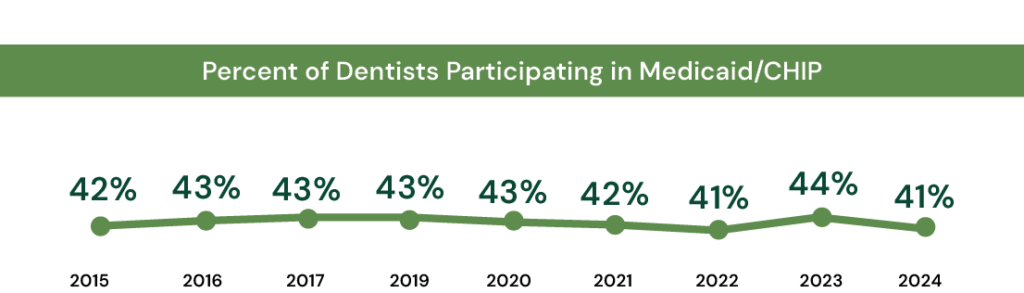
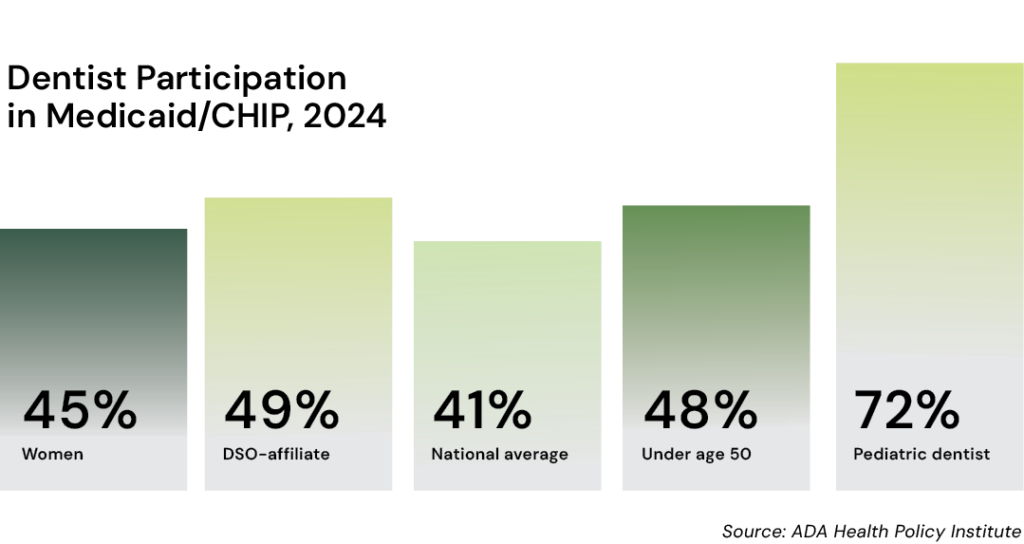
Turning to the provider side, dentist participation in Medicaid or CHIP has remained stagnant over the last decade, although many states have expanded benefits since 2015. As of 2024, 41% of US dentists participate in Medicaid or CHIP, meaning they are enrolled as a Medicaid or CHIP provider through InsureKidsNow.gov or work at a federally qualified health center. There is a wide variation in participation across states, ranging from 22% to 76%.

Advertisement

Who are the practitioners more likely to treat Medicaid and CHIP beneficiaries? Our analysis revealed certain patterns. First, women dentists are more likely to participate in Medicaid than men (45% vs 39%). Like Medicaid participation overall, participation rates by gender have remained stable for men and women dentists since 2015.

Practice type is also a factor. Participation is higher among dentists in DSOs than it is for dentists not in a DSO-affiliated practice (49% vs 39%). However, while rates have been steady for dentists overall, participation among DSO-affiliated dentists is dropping. Ten years ago, roughly two-thirds of DSO-affiliated dentists participated in Medicaid or CHIP. As of 2024, this figure has dropped to just under half—a considerable decline but still higher than participation rates overall. This drop may be partly explained by the expansion and composition of the DSO market over time.

Black dentists and those younger than 50 have higher participation rates than other groups. Dentists up to 10 years out of dental school also have higher participation rates, although the rate has declined since 2015. Compared to other specialties, pediatric dentists have the highest participation rate by far, at 72% in 2024. This figure has been stable since 2015.

It will be interesting to observe the pattern of Medicaid participation in the coming years as demographic and practice trends shift the dental workforce. As mentioned in our earlier article, dentistry is in the middle of a generational transition, and the workforce is increasingly young, racially diverse, female, and DSO-affiliated.

One factor to consider with respect to dentist participation is the Medicaid reimbursement for fee-for-service (FFS) as a percent of average dentist charges. In the majority of states, Medicaid FFS reimbursement rates are less than half of what dentists typically charge for both children and adult dental services. Although there have been recent Medicaid  reimbursement rate increases, they have generally not been large enough to close the existing gap between dentist charges and private insurance reimbursement. This results in a tough landscape to attract more dentists to participate in Medicaid.

As Medicaid continues to evolve, dental benefits will remain a critical component of health policy discussions. With continued collaboration and thoughtful policy decisions, there is real potential to ensure that every child and adult has access to the dental care they need for overall health.

Gain ACCESS TO
INSPIRING
stories
Subscribe
Perspectives

Durable Cash Flow: The KPI I Follow First

11/02/2026
|
4 min. to read

By Dr. Greg White

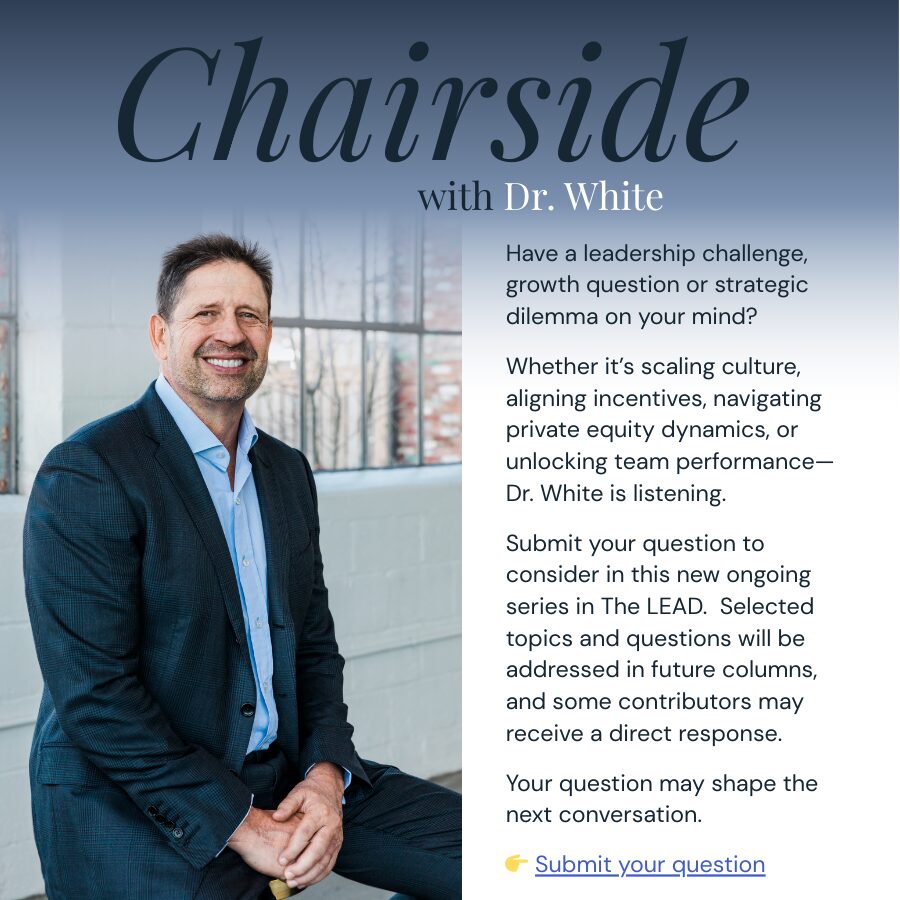
Through Chairside with Dr. White, I recently received a question that gets to the heart of how DSO leaders measure the health of their organizations:

The top KPI for any DSO president to focus on?

For me, the answer is durable cash flow and whether it’s improving year over year.

We track plenty of important metrics in dentistry: production, collections, profitability, provider productivity and overhead, among others. Each tells us something, but durable cash flow gives me the clearest picture of an organization’s long-term financial health.

I define durable cash flow as the recurring cash remaining after operating expenses, taxes, debt obligations and the reinvestments necessary to sustain our practices, including equipment replacement and working capital needs, before owner distributions.

The key word is durable. I’m not interested in cash flow that looks good because we’ve delayed necessary investments or benefited from a one-time gain. I want to know whether the business consistently generates enough cash to meet its obligations, reinvest in its future, and create value for its owners.

EBITDA matters, particularly in valuation discussions, but it doesn’t account for debt service, capital expenditures or working capital requirements. An organization can report improving EBITDA while becoming financially weaker.


Getting Bigger Doesn’t Necessarily Mean Getting Stronger.

At PepperPointe, we’re not building a business to sell. We’re focused on protecting doctor ownership and creating lasting value for the doctors and practices we support. That perspective shapes how we evaluate growth, investment, and financial performance.

When cash flow isn’t improving, I want to understand what’s happening at the practice level. Are we seeing fewer patients? Are doctors working fewer clinical days? Is production per day declining? Are we maximizing schedules, managing expenses, and investing in the right resources to improve productivity and patient care?

Sometimes the opportunity is revenue growth. Sometimes it’s expense management, staffing, or collections. Other times, improving long-term cash flow requires making an investment today that won’t generate a return until later.

The objective isn’t simply to spend less. It’s to make better decisions that strengthen the business over time.

Advertisement

We also can’t overlook the role of our doctors. Dentistry depends heavily on their leadership, clinical judgment, and daily efforts. When doctors have a meaningful connection between practice performance and their financial outcomes, they’re better positioned to participate in building long-term value. That’s why aligned incentives and operational efficiency must go hand in hand.

Focus on What You Can Control.

We can’t control interest rates, the economy, valuation multiples, or every challenge facing dentistry. But we can control how we respond.

We can strengthen existing practices, improve productivity, manage expenses, increase collections, and make smarter investments. More importantly, we can identify what’s driving performance and take action before small problems become bigger ones.

This discipline matters regardless of ownership structure. Private equity-backed organizations may face investment and exit timelines that influence decision-making, while doctor-owned organizations may take a longer view of reinvestment and returns. Either way, the fundamentals remain the same: a healthy business must generate sufficient cash to sustain operations, meet obligations, and invest in its future.

Three Questions Every Dental Leader Should Ask.

Whether you’re leading a DSO, group practice or individual office, I’d encourage you to consider three questions:

  1. 1. Is our cash flow improving because the underlying business is getting stronger?
  2. 2. Are we making investments that will strengthen the business over time?
  3. 3. Are our doctors and teams aligned around the success of the practice?

For me, durable cash flow is more than a financial KPI. It connects the decisions we’re making today to the financial strength of our organizations tomorrow.

Growth matters. Profitability matters. But neither means much if the business can’t consistently generate the cash necessary to sustain itself.

Our responsibility as leaders isn’t simply to build bigger organizations. It’s to build stronger ones that create lasting value.


Ask Dr. White

Have a question about leadership, practice growth, partnership or navigating the evolving dental industry?

Submit your question for a future edition of Chairside with Dr. White, where Dr. Greg White shares his perspective on the questions facing dental leaders today.   Submit your question here

Dr. Greg White

Dr. Greg White serves as the president and CEO of PepperPointe Partnerships, and is one of the founding partners of White, Greer and Maggard Orthodontics (WGM). WGM formed in 1991, and is currently part of one of the largest, privately-owned pediatric and orthodontic group practices in the country. Prior to leading PepperPointe’s significant growth, he actively practiced orthodontics for more than 25 years.

Gain ACCESS TO
INSPIRING
stories
Subscribe
Perspectives

We Don’t Just Optimize. We Originate.

02/27/2026
|
10 min. to read

The Next Advantage Isn’t Margin—It’s Innovation

By Dr. Greg White

As leaders, we wake up every day trying to move things forward—teams, communities, organizations, and sometimes entire cultures. High ambition creates a wild ride. And if you’ve been anywhere near dentistry over the past five years, you know the ride hasn’t exactly been gentle.

I’ve always loved a line from one of my favorite storytellers, Jimmy Buffett. He wrote about a friend who “went to Paris looking for answers to questions that troubled him so.” Jimmy asked him, “Did you find the answers?” And the friend replied, “There are no answers, but the search generated a lot of interesting stories.”

That’s leadership. That’s business. That’s dentistry right now. We may not have found all the answers we expected to find in the last half-decade, but if you’ve been in the arena, you’ve generated plenty of interesting stories.

The Market Matured—and It Changed the Rules

For a long stretch, the DSO industry was dominated by efficiency: cost control, scale, systems, margin management, and standardization. The “machine” got built, and a lot of organizations built it well. But the market matured.

Efficiency used to be differentiation. Now it’s table stakes. It’s no longer the trophy; it’s the admission ticket. It’s the ante to stay in the game.

And when the chairs are arranged and the music starts up, the organizations that win won’t be the ones who can only cut costs. They’ll be the ones who can build value.

Because profitability in the next era will be fueled by innovation and engagement, not just margin management.

Some Entered the Theater Looking for the Exit

Here’s a picture that keeps coming back to me: No one enters a movie theater looking for the exit. You don’t walk in, sit down, and think, “How fast can I get out of here?” Your mind is focused on the story unfolding.

Yet many in our industry-built cultures centered on the end scene, not the experience of the film. They optimized everything around the exit (around the equity event) and around the final score. Monday-morning quarterbacking is always easier than game day, but in retrospect, we can make a case that this was predictable.

Quote
“If you enter the theater looking for the exit, why would you care about the quality of the film?”

Post-pandemic fear accelerated consolidation, and valuations climbed. Pipelines became a flex. Differentiation among DSOs was used to attract affiliate doctors. Healthy pipelines attracted investors. The deals were made, and the clock began ticking.

For affiliate doctors: retirement timelines.

For investors: return timelines.

For leadership teams: performance timelines.

And most in our industry—whether we admit it or not—became aligned around one finish line: the next equity event.

Then the predictable part arrived. Inflation emerged as a result of federal cash infusion in the US economy. Interest rates increased. Global unrest continued. Regulation tightened. And suddenly, the market that had been sprinting hit the kind of fatigue that makes even optimistic leaders start looking for the water table.

And for many groups, there was no contingency plan because the strategy was the exit. Arbitrage was the plan—the only plan.

Which brings us back to that movie theater. If you enter the theater looking for the exit, why would you care about the quality of the film? Culture suffers. Innovation dies. Engagement evaporates. And when the leaders are disengaged, the team can smell it. They can smell the BS.

The Human Capital Blind Spot

Here’s what I believe we overlooked, but that the right leaders are uniquely positioned to correct:
We optimized processes more than potential.

We treated talent like labor—not like leverage.

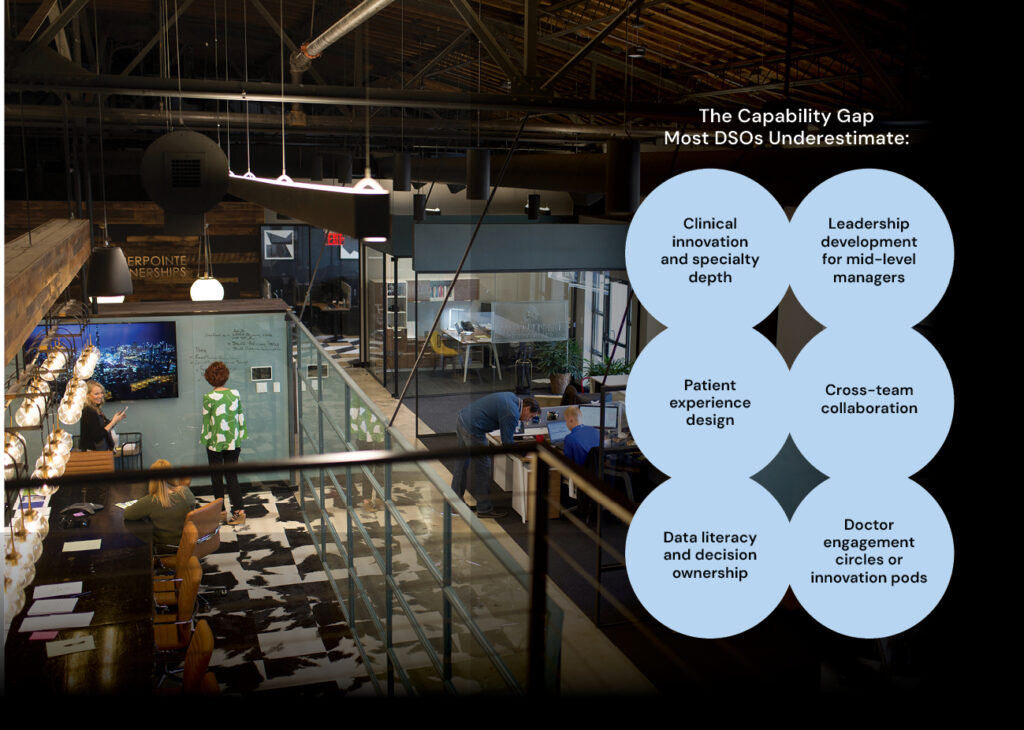
Leaders know people matter, but many DSOs don’t have systems that turn human potential into enterprise value. For the past two years especially, many poured energy into creating efficient systems, and by and large, failed to unlock the human capability sitting inside those systems.

And the truth is, the skill sets required now have changed.

This next era is going to reward organizations that invest in people who can think strategically, solve problems, innovate, and lead through ambiguity.

The next strategic advantage isn’t another layer of reporting or another dashboard. It’s unlocking the full potential of your people.

Profit Follows Engagement (and Disengagement Is Expensive)

Engagement is the number-one predictor of profitability. And yet, if we’re honest, most teams in the dental industry have lived through an extended stretch of uncertainty, burnout, and emotional whiplash. Disengagement shows up quietly at first: slower adoption, less ownership, more turnover, more drama, more excuses, less creativity.

And disengagement is expensive: financially, operationally, culturally.

Private equity–backed DSOs often unintentionally train doctors and leadership teams to think in “exit math.” When every early conversation starts with “Here’s how you’ll get paid at the next event,” it’s hard to build a culture that wakes up fired up about Monday.

So what if the mindset shifted from “One day we’ll cash out,” to “What value are we building now?”

Who we partner with matters. And the stage for a great partnership is set by expectations.

When affiliate conversations begin with exit math, there’s little motivation to engage in the behavior change required to build a winning culture. Achieving a desired final score without a game plan is as effective as a budget without a business plan.

Advertisement

Rethink Incentives: Align to Daily Value Creation

Dentists don’t wake up excited to contribute to EBITDA. They wake up excited about impact, pride, autonomy, excellence, patient outcomes, team culture, and, if you selected well, contribution. We have to be cautious of dentists whose primary goal is to exit the chair. Someone has to do the work. The doctors you want get excited to contribute to the mission. So, make it worth their time.

The current state in many DSOs is that providers and teams are aligned to liquidity, not daily value creation.

The future state has to look different:

  • Align compensation with innovation, inspiration, and culture.
  • Align recognition and decision-making to performance in the present, not just the promise of a payout.
  • Avoid tying everything to financial metrics alone, because when you do, you’ll create a tyranny of the urgent at the expense of what’s truly important—and morale will suffer.

Great organizations cling to purpose—not people. We should focus on the humble, hungry, and emotionally smart. Thinkers. Builders. And prune away the disengaged and arrogant. Because in a tighter market, we’re competing for a limited number of chairs.

This Is Where Leaders Step Up

This is the time for leaders to step up.

If we stop anchoring everything to the exit, what innovation might our doctors and teams feel permission to pursue today?

Differentiation is now measured in terms of leadership and innovation. This is critical at both the office level and the enterprise level.

Many founding doctors built something of great value with their teams. The practice isn’t just a P&L. The doctor and the team are the practice, built on decades of trust and relationships. And, that value only transfers well through a carefully planned transition. It takes clarity, cooperation, planning, and time.

The Capability Areas DSOs Can’t Ignore Anymore

Capability, motivation, and innovation will take us further. And all of it requires discipline—the same discipline that built great practices in the first place. Because without discipline, we become prisoners of our bad habits and we get the results we deserve. Bad habits, at first, are like chains—too light to be felt. But in time they become too heavy to be broken.

The Capability Ladder: How to Unlock What You Already Have

If we’re playing to win, let’s access the team we have.

First: Know your people.
Map strengths, interests, and hidden expertise. You’ll be shocked what you discover when you stop treating job titles like identity.

Second: Activate teams.
Give them ownership over solutions and ideation. People engage with what they feel part of.

Third: Build shared language.
Common language around goals, service, growth, and behavior.

Simple shared frameworks can create alignment faster—lean into what you think will resonate most with your team.

Fourth: Invest in skill growth.
Don’t invest just in CE, but invest in leadership, innovation, and strategic thinking, such as AI-driven leadership training, EI workshops, and staff development days. Make it a deliberate practice around how to think—not just what to do.

Not all people seek to be inspired, but some do. And all people are attracted to optimism and energy when it’s authentic and has substance behind it.

Which brings us to the true job description of leadership.

Innovation Isn’t a Department—It’s a Culture

Your team doesn’t want to sit in the audience. They want a role in the story. So, leaders must create environments where ideas are not just welcomed but expected.

Innovation is not a department. It’s a culture powered by clarity, permission, and collaboration.

And the advantage will favor those who create that culture.

If you want to boil human innovation down to three levers, here they are:

  • Provide clarity: paint the picture. Make the plan understandable.
  • Give agency: permission to act, permission to try, permission to fail and learn.
  • Offer recognition: celebrate visibly and often. Praise in public. Correct in private.

Be open, honest, and transparent with your key team members. Train them and let them go. Let them fail, learn, and succeed. People who are going nowhere can take on no fellow travelers. If you don’t paint a clear picture of where you’re leading, you’ll look behind you and see no one.

And be clear in communication. Most relationships are lost in the gap between what is said but not meant— and what is meant but not said.

Quote
“Engagement is the number-one predictor of profitability.”

A Mantra for the Next Era

We’re moving into an era where we must wage war on complexity. Simplify systems. Streamline operations. Hire talent. Lease expertise when needed. Invest in people who can build, not just maintain.

And most of all, stop building cultures centered only on the end scene.

Because the story matters. The experience matters. The way value is built day after day matters.

So here’s a mantra I believe the winners will live by: We don’t just optimize. We originate.

Innovation must lead. We need to create the environment where the thought can live, grow, and turn into action. That requires top talent, disciplined leadership, and a culture of engagement.

The music is starting up again. The chairs are limited.

Let’s make sure we’re not just trying to sit down.

Let’s make sure we’re building something worth standing for.

Dr. Greg White

Dr. Greg White serves as the president and CEO of PepperPointe Partnerships, and is one of the founding partners of White, Greer and Maggard Orthodontics (WGM). WGM formed in 1991, and is currently part of one of the largest, privately-owned pediatric and orthodontic group practices in the country. Prior to leading PepperPointe’s significant growth, he actively practiced orthodontics for more than 25 years.

Gain ACCESS TO
INSPIRING
stories
Subscribe
Perspectives

Thoughts for the DSO Industry in 2026 and Beyond

02/27/2026
|
5 min. to read

BY BRIAN COLAO
Director, DSO Industry Group at Dykema

Five Years of Unprecedented Challenges

The last five years have brought unprecedented challenges to the DSO industry including the great lockdown, the great reopening, the great recovery, the great resignation of dental professionals, record levels of inflation and interest rates, and a great uncertainty which continued throughout 2025 and the first part of 2026 as a result of trade wars and continued global unrest. Over the last five years, the dental industry has existed in an unnatural state with almost all expenses including labor, supplies and equipment, and the cost of money going up, while reimbursement rates remained flat or only slightly increased. This has significantly shrunk profit margins, and from 2022 to 2025, caused a number of DSOs to completely restructure their operations to reduce expenses and increase same-store growth by attempting to implement a variety of technology solutions while eliminating or significantly decreasing M&A and de novo activity.

Unfortunately, many innovative samestore growth strategies were hindered by fear and uncertainty, lack of education regarding how to properly use the technology, lack of integration with existing practice management systems (PMSs), lack of a strong plan of implementation, difficulty sorting through the surplus of options, and lack of support from affiliated dentists and staff. Going into 2026, many organizations find themselves in an environment with very little to no M&A and an unclear path to the creation of significant same-store growth through the implementation of innovative technology solutions. But as detailed below, there is reason for optimism as many of these challenges are slowly being solved, and the obstacles blocking the path forward are beginning to slowly clear. These are my thoughts for 2026 and beyond.

Current State of M&A Markets

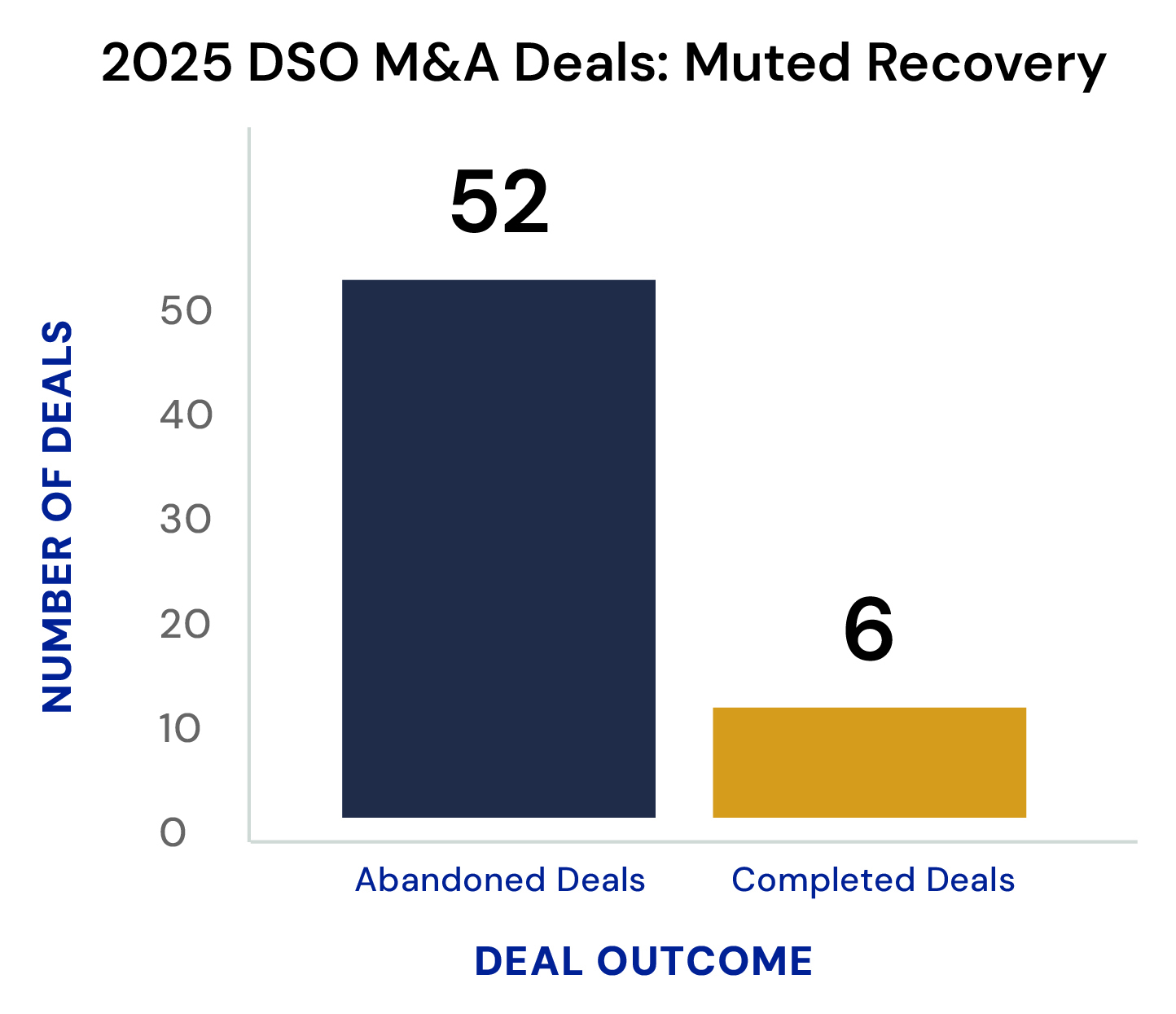
From June 2022 until the end of 2025, there has been a great M&A drought. Nearly 75 DSO sale processes have been abandoned with only around eight transactions occurring at fairly modest multiples. But going into 2026, interest rates are steadily being lowered. The new federal chairman that will be taking office in 2026 is widely believed to be an aggressive advocate of lowering interest rates. There is a huge amount of money on the sidelines, and almost every organization in the current DSO marketplace is overdue for a recapitalization event, all of which provides the necessary momentum for a gradual market recovery. During the first quarter of 2026, it appears likely that several significant DSO transactions will occur. Other large DSOs are taking steps to position themselves to go public in the future. With respect to smaller transactions: 1) Sellers are beginning to adjust their expectations to more realistic valuations that reflect the 2026 market conditions; 2) Buyers are utilizing more creative acquisition structures that derisk the transactions including earnouts, holdbacks, post-closing purchase price true-ups, and joint ventures. As a result, we are beginning to see a significant uptick in small- to mid-size acquisitions that will likely accelerate even further by the second, third, and fourth quarters of 2026. Therefore, I am cautiously optimistic that the DSO M&A markets will experience a material rebound in 2026, but the volumes will still be much lower than the market highs of 2021. The scope of the rebound will of course depend on how low the interest rates ultimately go, the degree to which sellers adjust their expectations on valuations, and whether or not some of the more global issues such as trade wars and military conflicts subside.

Advertisement

Current State of Innovation and Technology

Most DSOs are well on their way to working through their plans of restructuring and cost and overhead reductions and are now very well poised to implement new innovative technology solutions to improve same-store growth, which means doing more with existing patients, acquiring new patients, and lowering overhead. Over the last two to three years, the DSO industry has learned a lot of valuable lessons from the trial-and-error process with new technology including:

  • There must be standardization of systems across an organization. Attempting to operate with multiple PMSs or multiple technology solutions that serve the same function undermines the efficiency, profitability, and success of the DSO organization.
  • There must be proper education throughout the organization as to how to properly use the technology; otherwise, it likely won’t be used or will be incorrectly used.
  • The technology must integrate with the DSO’s PMS or else it likely won’t be used.
  • There must be a highly organized implementation plan or else the technology will not be consistently adopted.
  • There must be strong collaboration between the technology partner (vendor), DSO leadership, affiliated practice dentists, and affiliated practice staff or else the technology will not reach its maximum value.
  • Not every solution will work for every organization, and time and research must be spent analyzing which solutions will have the greatest ROI for a particular DSO.
  • There is a surplus of solutions in the market, and time and research must be spent determining which solutions are truly a value add and which solutions are “shiny objects” that ultimately do not impact the bottom line in a material way.

My predictions for 2026 are that many organizations will crack the elusive code on properly implementing new technology through education, integration, and collaboration between technology partners, DSO leadership, dentists, and staff. I also predict that we will see a gradual reduction in the number of technology solutions in the market as the weaker, less valueadded solutions are forced to exit the marketplace, and the stronger solutions rightly gain market share.

Final Thoughts

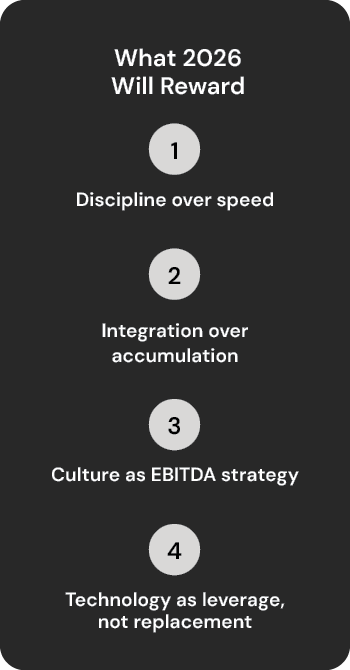
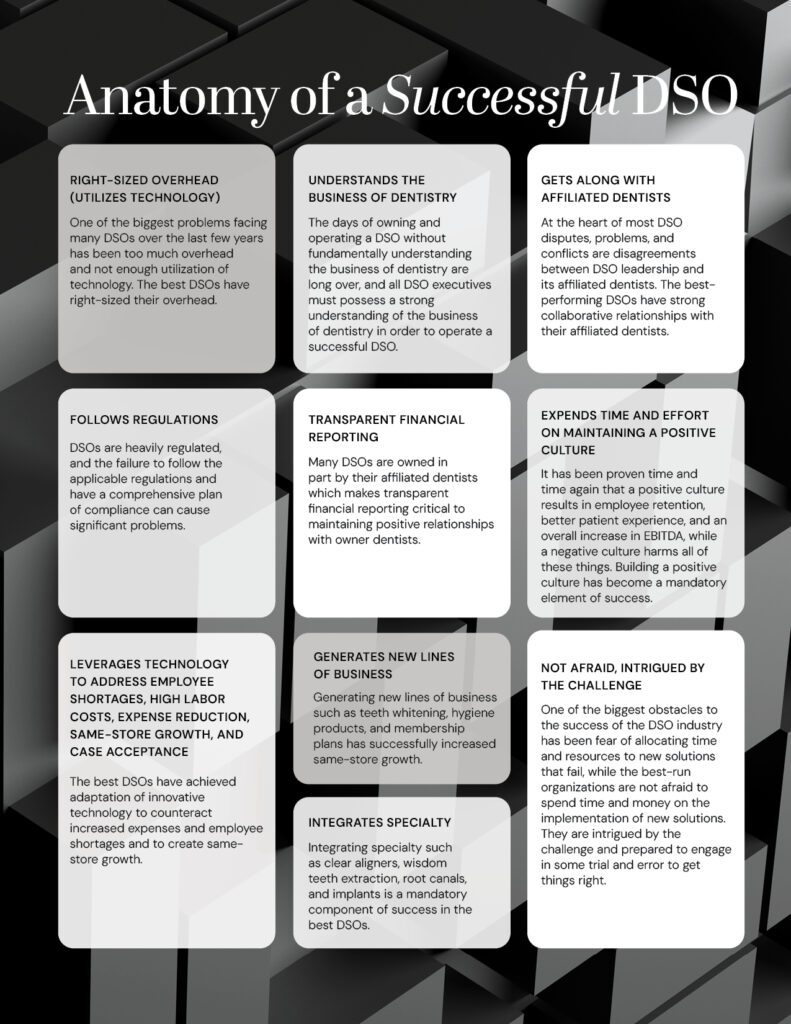
I have been asked many times (after 31 years in the DSO industry) to give my thoughts as to the characteristics of a successful DSO and set forth below are my thoughts for success in 2026. A successful 2026 DSO will do the following:

Gain ACCESS TO
INSPIRING
stories
Subscribe
Perspectives

The Muted Recovery

10/22/2025
|
7 min. to read

What 2025 Taught DSOs—and the Road to Renewal

By Brian A. Colao
Director, DSO Industry Group at Dykema

The year 2025 will be remembered throughout the DSO industry as The Year of the Muted Recovery. Entering the year, hope was high that the M&A drought and challenging conditions that began in mid-2022 and caused over 50 significant DSO sales processes to be abandoned would finally subside. A succession of interest rate cuts in late 2024, the inauguration of a new presidential administration promising pro-business reforms, and signals of economic stabilization and the promise of an end to a number of global military conflicts gave rise to expectations that the DSO M&A markets would make a robust rebound.

In my previous year-end article, I identified the critical conditions necessary for a true market revival: sustained interest rate reductions, moderation of inflation, resolution of global unrest, and a regulatory environment that fostered business growth. I also projected that DSOs would increasingly focus on technology adoption for same-store growth to drive EBITDA, compensating for muted acquisition activity.

The Reality: A Muted M&A Market

Unfortunately, virtually none of the foundational pillars for recovery materialized. In 2025, interest rates remained stubbornly high; inflation— though improved—never fell below the key 2% threshold; economically crippling tariffs were introduced against most of the developed world and, as of the time of this writing, much uncertainty remains as litigation over the validity of tariffs appears headed to the US Supreme Court for a decision sometime in 2026. Additionally, the military conflicts in Ukraine and the Middle East have not concluded and continue to exert downward pressure on global markets.

The administration, despite its business-friendly posture, has targeted healthcare fraud aggressively, fueling a notable spike in federal enforcement actions and producing further headwinds for DSO deal-making, which is the subject of a separate article contained herein by my partner, Leigha Simonton, former US Attorney for the Northern District of Texas. As a result, M&A volume remained extremely limited, valuations were pressured, and many groups opted to focus inward, delaying growth decisions and focusing on operational efficiency.

Signs of Hope for 2026: The Year of Renewed Opportunity

Despite these frustrations, several positive signals have emerged, setting the stage for potential improvement in 2026—The Year of Renewed Opportunity:

Advertisement
  • The Federal Reserve at its Sept. 16 meeting, finally, in a highly anticipated move, reduced interest rates by a quarter point. As of the time of this article, there is optimism that there will be additional rate cuts in 2025 and into 2026 because it will take several more rate cuts to create truly favorable economic conditions for the M&A markets.
  • Preliminary peace talks in Ukraine and calls for resolution in the Middle East offer guarded optimism regarding global stability.
  • Legal challenges to tariffs may result in their invalidation, potentially easing supply costs and reducing inflation.
  • Sellers are increasingly adopting pragmatic valuation standards, acknowledging the need to turn investments amid evolving market conditions.
  • There have been at least two significant transactions that have closed and several potential transactions that, as of the time of this article, are under Letter of Intent (LOI) and there is cautious optimism that several closings will be announced before year-end, which represents at least a muted recovery with the chance for a fullblown recovery in 2026.

Given these developments, I anticipate an uptick in M&A activity beginning in the second half of 2026, with the potential for momentum to accelerate should economic circumstances and policy frameworks finally align.

A New Era of Healthcare Enforcement

By Leigha Simonton, Former High-Level DOJ Official and Leader of Government Investigation and Defense Practice for Dykema’s DSO Industry Group

This year has ushered in a markedly elevated threat landscape for health care businesses. The US Department of Justice (DOJ) has prioritized healthcare fraud enforcement at an unprecedented level, shifting its approach from isolated financial disputes to aggressive criminal prosecution in cases that, in prior years, might have remained civil contract matters.

This effort accelerated following the DOJ’s May announcement identifying healthcare fraud as a top priority. New initiatives include financial incentives for whistleblowers to report offenses spanning federal benefit programs, private insurer schemes, and a broader array of conduct now categorized as “fraud,” including actions impacting patients, investors, or other nongovernmental entities. The DOJ reinforced its commitment with new dedicated teams, collaborative working groups with HHS, and the launch of the Health Care Fraud Data Fusion Center—a sophisticated operation leveraging advanced analytics and AI to identify emerging fraud schemes.

“The risks of proceeding without expert guidance have never been greater.”

June 2025 saw the largest healthcare fraud takedown in American history, with criminal charges brought against 324 defendants—including nearly 100 licensed medical professionals—for allegedly orchestrating $14.6 billion in fraudulent activity. Notably, this crackdown involved coordination with 12 State Attorneys General’s Offices and extended beyond federal payer fraud to include wire and mail fraud charges associated with private payers, demonstrating a wide net of enforcement.

Given this aggressive climate, industry participants must maintain rigorous compliance and seek experienced counsel with deep knowledge of the DSO industry, government agency processes, and the structuring of advertising, marketing, business development, patient incentive, and compliance programs—and certainly at the earliest indication of possible scrutiny or an internal concern. The government’s sophisticated investigative approach means that even seemingly minor abnormalities can escalate quickly, and the risks of proceeding without expert guidance have never been greater.

Technology: The Imperative of Innovation

Just as predicted, technology adoption for same-store growth has become essential. DSOs nationwide have piloted—and increasingly implemented—innovations in diagnostic AI, cloud-based practice management, automated RCM tools, patient finance solutions, and specialty integration platforms. While adoption has advanced more slowly than hoped—primarily due to challenges in education, training, integration, and implementation—it is steady and inexorable.

Rising costs for labor, supplies, and equipment, combined with stagnant reimbursement rates, have made technology the only viable solution for sustaining margins and driving growth.

A Bright Spot: The 2025 Dykema Definitive Conference for DSOs
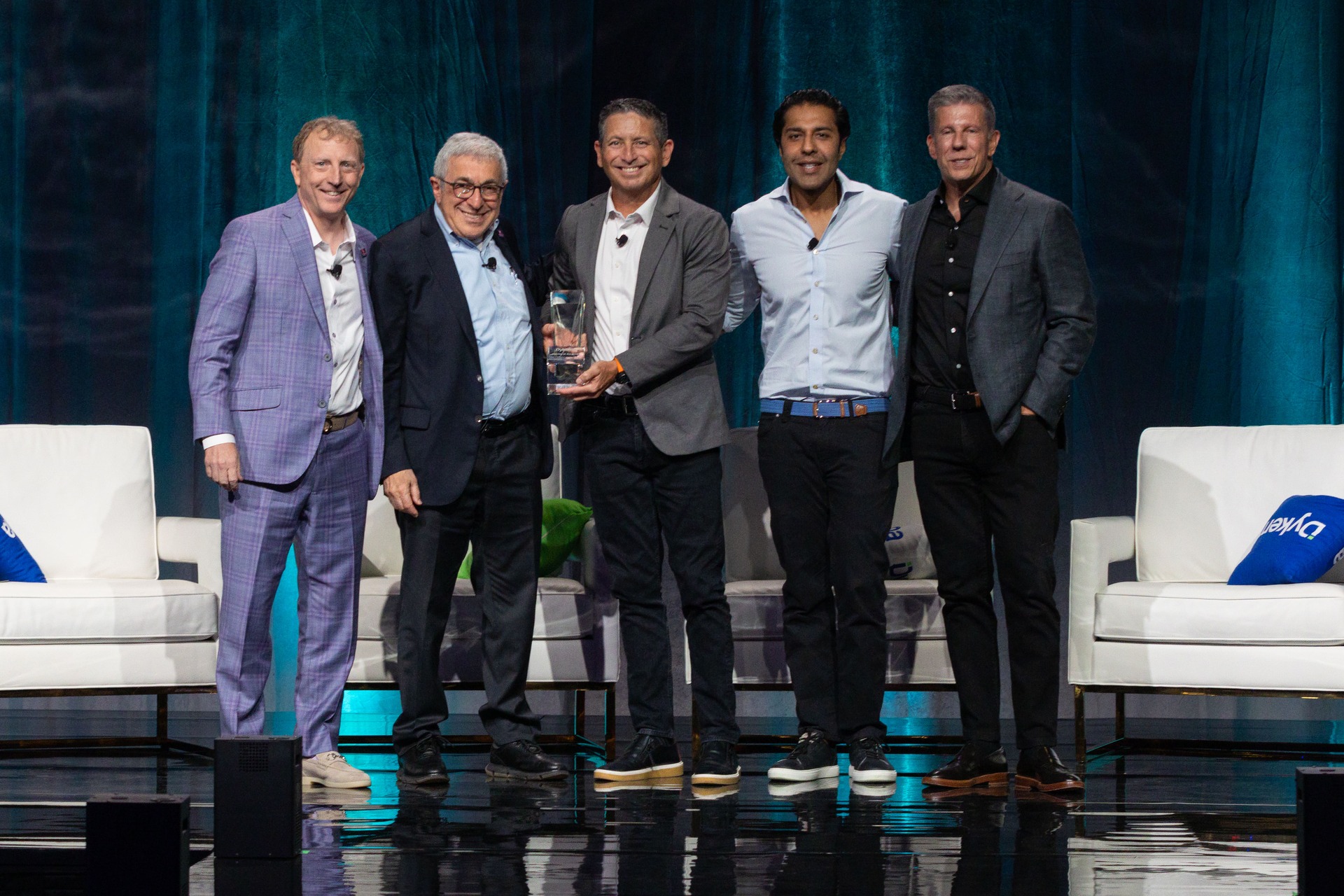
Amid an otherwise stagnant year, the Dykema Definitive Conference for DSOs emerged as the industry’s true highlight and north star. With attendance surpassing 2,500 and experiences selling out within just hours, the event reaffirmed the strength and future promise of the DSO community. Breakouts and workshops quickly reached standing-room only, underscoring the appetite for practical insights and forward looking strategies. The conference also shined a spotlight on industry leadership: Bob Fontana (The Aspen Group) and Stan Bergman (Henry Schein) received the Lifetime Achievement Award, while respected voices like Dr. Sulman Ahmed (DECA Dental) and Steve Bilt (Smile Brands) reinforced their commitment to advancing the profession.

Just as significant, vendors and sponsors showcased innovations that will help power a new era of growth—advancements that align directly with the industry’s need to innovate, refine operations, and prepare for the rebound ahead. The conference made clear that while recovery may take longer than hoped, the foundation of innovation, leadership, and community is firmly in place to carry the industry forward.

Strategic Outlook: Thriving in Uncertainty

As The Year of the Muted Recovery draws to a close, DSOs must remain strategic and resilient. The best-run organizations will not simply survive the volatility; they will use this period to innovate, refine internal operations, and position themselves to lead as the market rebounds.

My prediction: 2026 will begin with the same cautious progress but, as the year unfolds, will reward those organizations who are prepared—operationally flexible and technologically advanced—when true recovery gains traction. With strategic adaptation and forwardthinking investment, DSOs will be well-positioned to lead dentistry’s next era of growth.


Gain ACCESS TO
INSPIRING
stories
Subscribe
Perspectives

Waterlines as a Leadership KPI

10/22/2025
|
8 min. to read

Many dental offices manage waterlines blindfolded: dump in treatment products, test sporadically, and hope for compliance. But waterline safety isn’t just a clinical detail—it’s a litmus test for leadership. Reliable waterline testing reveals more than bacteria counts; it exposes the strength of a practice’s discipline, accountability, and patient-first values. In an era where a single outbreak can shatter brand equity, erode investor confidence, and damage leadership credibility, treating waterline testing as a core key performance indicator (KPI) separates the organizations that scramble from those that lead.

Some argue the cost of compliance outweighs the risk of penalties. But that perspective collapses when you factor in the true cost of reputational damage and litigation. In 2016, one pediatric dental group learned this the hard way after an outbreak linked to contaminated waterlines resulted in 71 confirmed infections, 49 probable cases, and more than 200 lawsuits— an incident estimated to cost tens of millions.

But it doesn’t have to be this way.

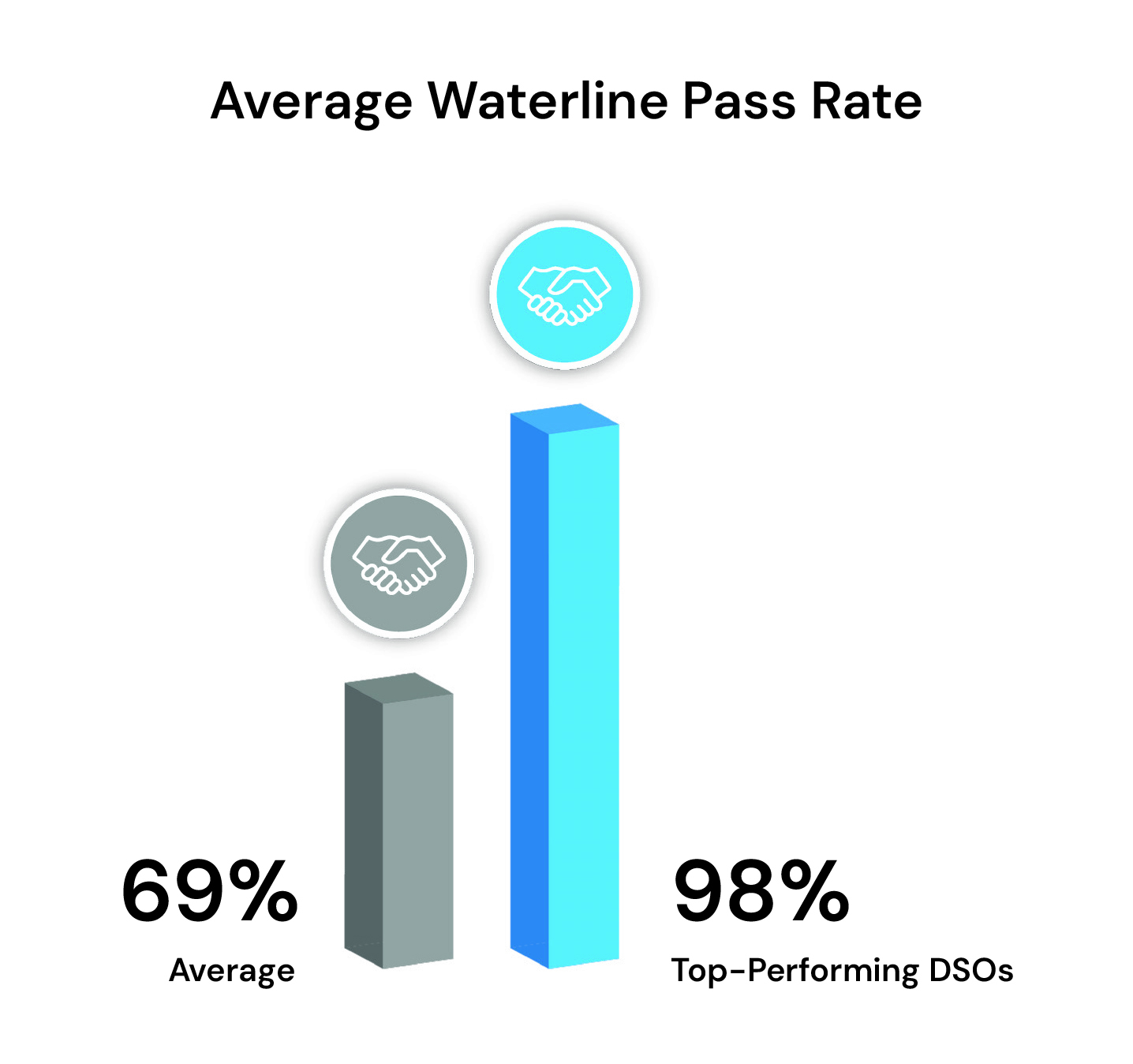
There are large DSOs hitting waterline compliance rates well above 95%. That’s not luck. It’s the result of empirically driven, well-built water management protocols that allow waterline testing to shift from a reactive headache to a strategic KPI. High pass rates aren’t just about ticking regulatory boxes; they offer a window into the health of the entire operation.

When DSOs start proactively treating waterline testing as a KPI, they unlock powerful insights into their training effectiveness, operational discipline, and compliance culture at a team and organizational level.

Treatment Isn’t Enough— Test or Risk It

While roughly 75% of offices actively treat their waterlines, fewer than 25% test them. That’s a dangerous disconnect. Regulations require meeting a 500 CFU/mL bacterial threshold. Treatment alone isn’t a guarantee; without testing, there’s no way to confirm the treatment worked. 

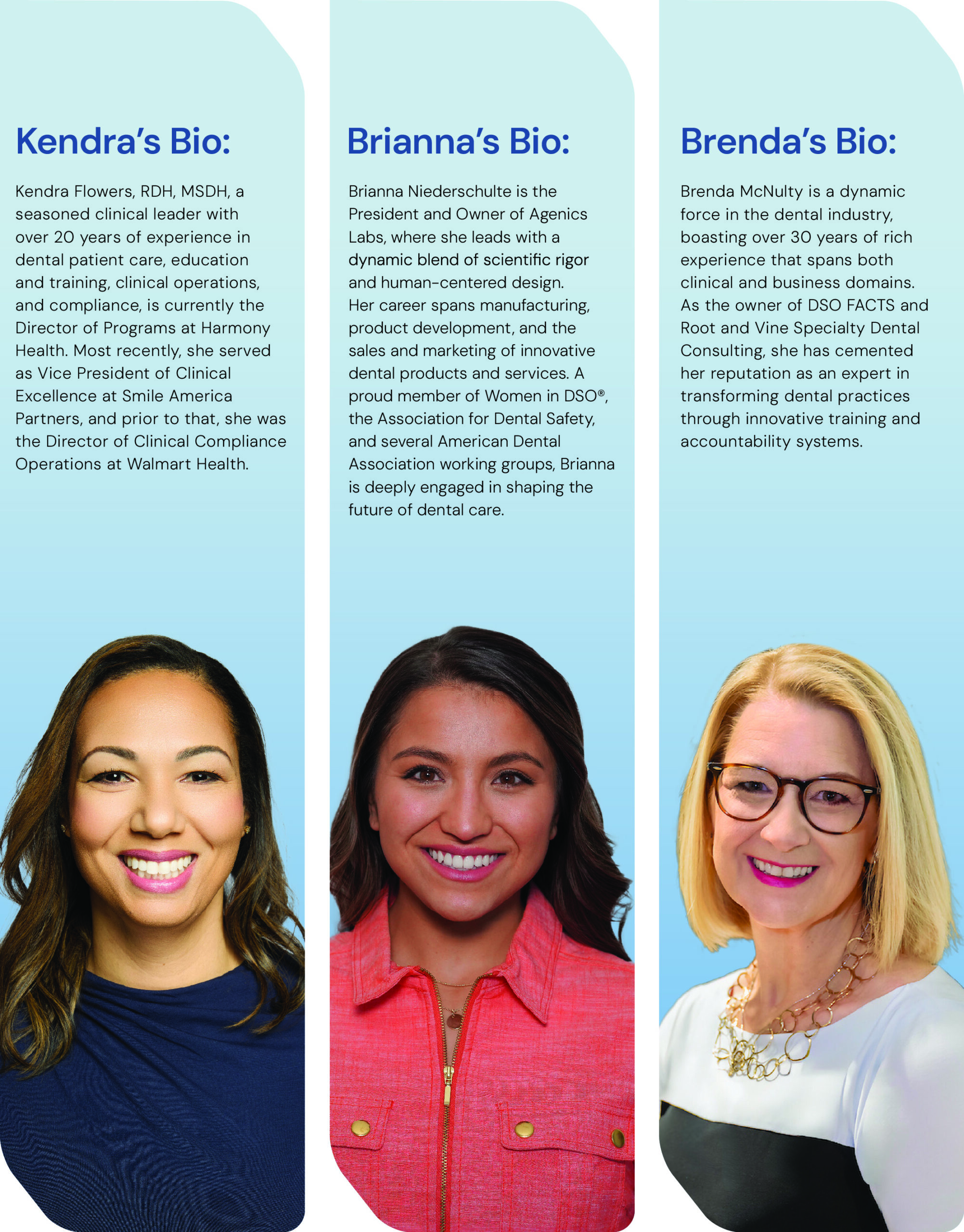
“Laws and regulations are created because the mass population is not following best practices and guidelines. Those who understand testing is doing the right thing for the patients are the early adopters, starting processes long before they are forced,” Kendra Flowers, a clinical operations/ compliance leader, says.

Quote
“Waterline safety isn’t a checkbox —
it’s a competitive advantage.”

Many waterline test failures come down to simple, preventable oversight, like forgetting to add a treatment tablet or neglecting in-line filters on ultrasonic scalers. These small gaps often fly under the radar until a failed test forces attention.

Water quality KPIs should be treated like spore testing: nonnegotiable and high stakes. “Unsafe water has deadly consequences,” Flowers says.

The key? Integrate waterline data into dashboards, reviews, and incentive programs. What gets measured—and rewarded—gets done.

Training That Shows Up in Every Test Result

Waterline test results don’t just measure bacteria—they measure training. When pass rates are consistently high across locations, it’s a strong signal that teams are intentionally following protocols.

According to Flowers, high failure rates are common during the initial implementation of a dental waterline protocol. The failure rates reflect the lack of standardized processes, such as:

  • Heavily occluded lines requiring replacement
  • Elevated bacterial levels from municipal sources
  • Staff unfamiliar with proper procedures


Over time, as the protocol becomes embedded in daily operations, staff gain greater awareness, adopt best practices to prevent failures, and consistently follow maintenance routines.

“Protocol makes or breaks waterline safety. We’ve tested hundreds of thousands of samples, and the truth is simple. Every product can work, and every product can fail if protocols slip. With the right training and site-specific procedures, the majority of failures never have to happen,” says Brianna Niederschulte, President of Agenics Labs.

In short, high scores are proof that the training stuck. Use top-performing offices as a blueprint and treat low pass rates as flashing signs for retraining or standard operating procedure (SOP) overhauls.

Onboarding Passes the Ultimate Test

Waterline test results also serve as a real-time gauge of new hire readiness. When DSOs walk every new hire through SOPs in detail from day one, they sharpen accountability and drive better results. If waterline scores dip after onboarding, it’s time to tighten the process—and make sure new hires aren’t just trained but battle-ready. 

To assist in new hire readiness and better results, Agenics Labs provides customized onboarding and training for DSOs, including developing and maintaining SOPs.

“Not only does this allow us to provide DSOs with solutions we know will work, but it also means we can work right alongside their practices, helping staff adhere to the group’s established procedures,” says Niederschulte. 

Celebrate Your Champions

When offices proactively test and maintain waterlines without reminders, it reveals a culture of discipline and pride in clinical excellence.

“I like to identify champions in all areas of focus or initiatives I oversee,” Flowers explains. “Showcasing the team’s best practices, whether through a company newsletter, peer training for new offices, or coaching support for underperforming teams, not only drives broader adoption of effective strategies but also fosters the development of future leaders within the organization.”

Average DSOs comply because they have to, while great DSOs embed infection control into their operations because giving their patients the greatest care possible is their standard. Recognize and reward the teams that use best practices. Then, use their success to inspire others and embed a culture where accountability isn’t just expected. It’s celebrated.

Advertisement

A Hidden Indicator of Employee Burnout

If well-trained teams are still failing waterline tests, it’s often a red flag for deeper operational issues like understaffing, burnout, or lack of support. This reflects breakdowns in communication, resources, or trust between staff and leadership. 

“Most issues turn out to be workflow inefficiencies requiring coaching or protocol tweaks. But when real resource gaps arise, it’s critical to escalate and engage leadership to find solutions,” Flowers emphasizes.

Use low pass rates as a trigger to reassess staffing, redistribute duties, and provide targeted support before small cracks become big problems.

Compliance as a Strategy, Not a Scramble

By adopting the most rigorous, yet reasonable, waterline testing protocols across all states, organizations can create a consistent standard of care and sustainable compliance culture. 

“This approach not only mitigates risk but also positions the organization ahead of regulatory changes, ensuring readiness and reinforcing our commitment to patient safety and compliance,” Flowers says. 

But protocols alone don’t cut it.

“For any system to succeed, it must be fully integrated into daily workflows, routinely measured, and supported by clear accountability,” Flowers adds.

That’s where deeper, more informative testing can make the difference. Equipping teams with the knowledge to understand what their results mean allows them to take ownership of the process.

“Our mail-in tests include additional water quality metrics that not only help us understand why a sample may have failed but also empower dental team members to identify their own protocol gaps. We are the only lab in the industry to include these extended metrics in every mail-in test, demonstrating our commitment to being comprehensive—one of our core values,” Niederschulte says.

Without this level of integration and insight, compliance becomes a scramble, not a strategy. The best DSOs embed waterline management into the daily routine, track it relentlessly, and use detailed data to prevent failures before they happen. 

Quote
“Embedding waterline results into dashboards, onboarding, and incentives creates a system-wide feedback loop that builds trust with patients, investors, and regulators.”

Benchmarking That Drives Results

Waterline compliance data isn’t just numbers. It’s a spotlight on which offices are excelling and which need help. By centralizing test results, DSOs can benchmark performance (and check compliance culture) across locations, identify top performers, and replicate their success.

“In addition to our online reporting hub, we curate customized reporting for DSOs, allowing them to view their test data in a variety of ways that can be leveraged for insights into their different locations and collective performance as an organization,” Niederschulte says.

The best teams pass on the first try, no hand-holding required. Their secret? Simple, consistent habits like daily maintenance logs, visual checklists, and operatory signage.

When shared through coaching, newsletters, or onboarding, these practices fuel a culture of compliance and improvement. This isn’t just about tracking—it’s about setting the pace.

Lead the Charge or Get Left Behind

When waterline safety becomes a core KPI, DSOs don’t just check boxes. They drive real, measurable excellence.

“Two factors consistently drive reliable waterline outcomes: first, standardized protocols tailored to the organization and second, ensuring teams understand the why behind waterline management through meaningful education. When both are in place, we routinely see offices jump from the industry average of around 70% pass rates to exceeding 95%,” Niederschulte explains.

Waterline safety isn’t a checkbox—it’s a competitive advantage. For DSOs, every test is more than a compliance measure; it’s proof of operational discipline, staff readiness, and patient-centric leadership.

The groups that test, not just treat, demonstrate to patients, regulators, and investors that they put safety and accountability first. Those are the DSOs that will earn trust, scale with confidence, and lead the industry forward. The challenge is simple: Use waterline testing as your gauge. It won’t just tell you if your water is safe—it will tell you if your organization is built to win.

Sources:

Ross, Erin. “Infection Outbreak Shines Light on Water Risks at Dentists Offices.” NPR, Average Top-Performing DSOs September 30, 2016.


Gain ACCESS TO
INSPIRING
stories
Subscribe
Filter
Categories
Paspaudę „Įsigyti mokymus“ mygtuką būsite nukreipti į platformą, kurioje galėsite įsigyti šiuos mokymus.