By Dr. Aman Kaur | Founder & CEO, Women in DSO®
Five years after challenging dentistry’s assumptions about leadership, Dr. Aman Kaur examines what still needs rewiring.
I have spent most of my career inside systems. Not admiring them. Not fighting them. Watching them.
I’ve watched how decisions get made and who is in the room when they happen. I’ve watched which talent gets developed and which gets quietly overlooked. I watch patterns repeat themselves, year after year, until finally someone gets tired enough of the repetition to name it out loud and do something about it.
One thing became impossible for me to ignore: Dentistry has an untapped talent problem. The industry is built on a workforce it has not fully developed into leadership, and that gap is costing everyone, regardless of where you sit in the org chart. Women in DSO® began there. Not as an idea searching for validation, but as a practical response to a real and measurable business problem.
Clarity Before Comfort
People often describe me as bold.
I feel that what they are actually responding to is the clarity I try to bring to what we are experiencing.
I have never been interested in collecting options for the sake of comfort. Options delay decisions and they soften accountability. They create the illusion of movement without asking anyone to commit to anything. Once I see what needs to happen, I move. That instinct is what guided me into dentistry, into DSOs, into operational leadership roles where systems matter more than sentiment. It is also what led me, eventually, to build something the industry had been quietly waiting for without quite knowing how to ask for it.
Dentistry makes sense to me because it is tangible, impactful, and operational. It rewards precision, discipline, and follow-through. The same is true of real leadership at any level. Clarity is not aggression. It is respect for time, for effort, and for outcomes.
The Talent Gap No One Was Naming
Inside DSOs, the operational picture becomes visible quickly.
The people holding organizations together day to day—coordinating care, managing practices, stabilizing teams and patient experiences—are largely women. That is not a political observation. It is a workforce reality. But when you look at where decision-making authority actually sits, at the senior leadership and board level, the composition shifts dramatically.
That gap matters for one reason above all others: organizations that fail to develop and promote from within their own talent base pay for it. In turnover, missed growth and in leadership pipelines that are narrower than they need to be. The best leaders I have worked with, men and women, already understand this. They are not threatened by the question. They are asking it themselves.
The issue has never been the ambition or capability of the women being overlooked. It is that access to the right networks, the right rooms, and the right conversations has not been distributed as broadly as it should be. That is a fixable problem. I created Women in DSO® to fix this.
When Observation Turns into Action
By 2021, continuing to talk about the problem felt indulgent. We had been talking long enough.
The conversations that would eventually become Women in DSO® had been happening quietly for years, between colleagues, friends, and people comparing notes in conference hallways and realizing just how consistent the pattern was across very different organizations and markets.
The question was never whether the need existed. The question was whether the industry would actually respond once that need had a name and a structure behind it.
The first Empower and Grow conference answered that.
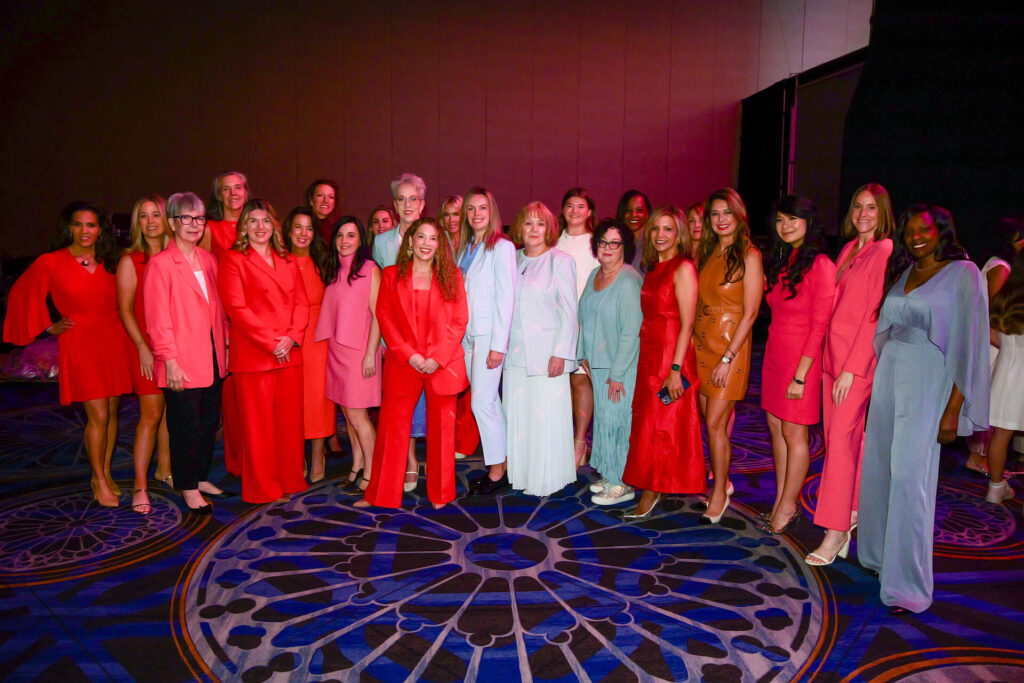
Six hundred and fifty people showed up during a pandemic, for a first-time event and with a name that stated its purpose clearly and without apology.
The industry was not waiting to be convinced. It was waiting for somewhere to direct the energy it already had.
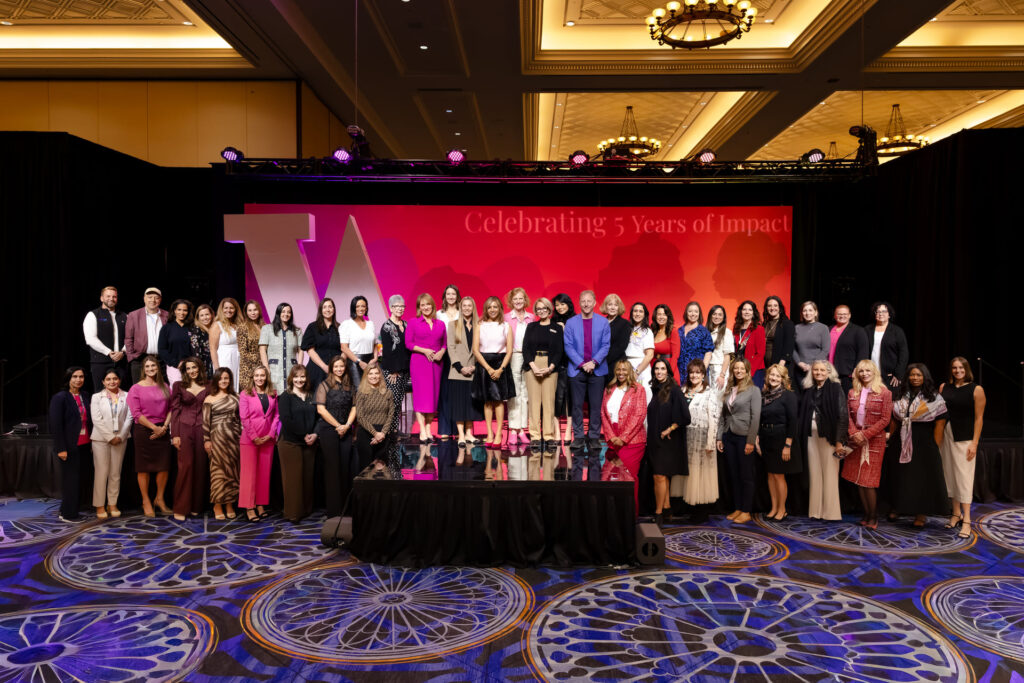
Five years on, what started as a response to a gap has become a structural force inside our industry. That has not happened by accident. It happened because the underlying need was real, the timing was right, and enough people—men and women alike—were willing to show up for it.
The Kind of Resistance That Is Hard to See
Our early momentum experienced some headwinds. It was not overt opposition. Rarely is.
It looked more like support without structural follow-through. Inclusion in conversation without inclusion in decision-making. Genuine enthusiasm for the mission, paired with very little change to who actually gets developed, sponsored, and promoted.
I am not interested in assigning blame for that. This is usually not intentional. It is the product of systems that were built a certain way and have not yet been updated. Good people operate inside imperfect systems all the time. The question is whether they are willing to update the system once they can see it clearly.
Women in DSO® has never confused talking about progress with making it. The work is operational. It is about building the infrastructure that allows talent to move through organizations the way it should, based on capability and contribution rather than proximity to the right network.

Industries that fail to develop their full workforce pay for that failure in efficiency, in growth, and in the gradual erosion of organizations that could have been so much more than they ended up being. That is not a gender argument. It is a business one.


Five Years—And We Are Just Getting Started
I want to be clear about what Women in DSO® is actually trying to build, because it gets mischaracterized too often.
This is not about elevating women at the expense of anyone else. The goal is a stronger industry built by developing the full depth of available talent, not a carefully managed portion of it. The research on this is consistent across sectors: Organizations with broader leadership representation make better decisions, build more resilient processes, and grow more sustainably over time.
Some of the most committed champions of this work are men who saw the talent gap early and understood exactly what it was costing their organizations. They did not need to be persuaded. They needed a partner. That is a big part of what Women in DSO® provides.
The practical message to the women we work with is straightforward: Upskill with intention and learn the full business, not just your corner of it. Build visible, measurable, repeatable value for your organization. When those three things are in place, the conversation about advancement changes entirely. You stop asking to be seen. The case makes itself.
The Industry Cannot Outrun the Data
The workforce numbers are not subtle, and they are not new.
The majority of dental practice team members are women. The majority of DSO employees are women. Roughly half of all dental patients are women. Today, most dental school graduates are women. The profession’s incoming talent pipeline is majority female, and that generation is arriving with clear expectations: real pathways to leadership, genuine investment in their development, and an industry that takes their potential seriously.
Organizations that are already building for that reality will be well-positioned. Those that are not will face a compounding retention and leadership pipeline problem that only gets more expensive to solve over time.
Women in DSO® is here to help the industry get ahead of that curve rather than scramble to catch up to it.
Building for the Middle Market
One of the most important decisions we made heading into year five was to be honest about where our reach needed to grow.
Women in DSO® has built significant presence and programming for large DSOs and enterprise-level operators. But the middle market, the regional groups, the emerging multisite practices, and the organizations sitting between independent practice and large-scale DSOs represent both the largest share of the industry and the place where leadership development investment is most uneven. These are the organizations that will define what dentistry looks like over the next decade. And they are the organizations that most need access to the kind of mentorship, education, and peer community that Women in DSO® provides.
To accelerate that work, we welcomed three new board members whose collective reach, expertise, and genuine commitment to this mission are exactly what this next chapter requires.
Guillaume Daniellot, CEO of Straumann Group, brings a global perspective on how the dental industry grows and where it is heading. Straumann is one of the most respected names in dentistry worldwide, and Daniellot’s decision to join this board is a clear signal that the conversation about leadership development and talent investment is not a niche concern—it is a core industry priority.
Nicola Deall, Chief People Officer at Dentalcorp Canada, brings something equally valuable: deep operational expertise in what it actually takes to build people-first cultures inside complex, multisite dental organizations. Her work at Dentalcorp sits at the intersection of talent strategy and organizational performance, and that is precisely the lens Women in DSO® needs as we expand our programming for mid-market operators.
Lorri Detrick, President and Chief Operations Officer at Riccobene Associates Family Dentistry, rounds out the board with hands-on leadership experience inside one of the most respected regional dental groups in the country. Detrick knows what middle market growth looks like from the inside, and she knows what it costs when the right people are not being developed and retained.
Together, these leaders represent something important: This is not a women’s organization asking the industry for support. It is an industry organization, led with a specific and strategic focus, that the industry’s most serious operators have chosen to invest in because they understand the return.
Forward Is Not Optional
“You can’t trip over what’s behind you.”
That is not a motivational line—it is a practical one. It has been the operating principle underneath everything we have built over the past five years.
There was never a real question of whether this work would continue. The only question was how far it could scale. Five years in, we have built mentorship programs, educational platforms, a conference the industry now genuinely anticipates, and a community of leaders across every level and every role in dentistry who have already demonstrated that this model works. What we are building now is not a movement starting from scratch. It is a formal structure for energy that was always present, always powerful, and has finally found a home.
Every year, people tell me that Women in DSO® changed where their career went. What that says to me is straightforward: The industry was ready long before it was willing to admit it.
Building stronger leadership pipelines is not disruption. It is recognition of what the data has been saying for a long time. When more perspectives are shaping decisions, standards do not soften. They sharpen. Systems improve. Outcomes stabilize. The whole industry performs better.
This is not a movement asking for permission.
It is an industry learning how to use its full intelligence.
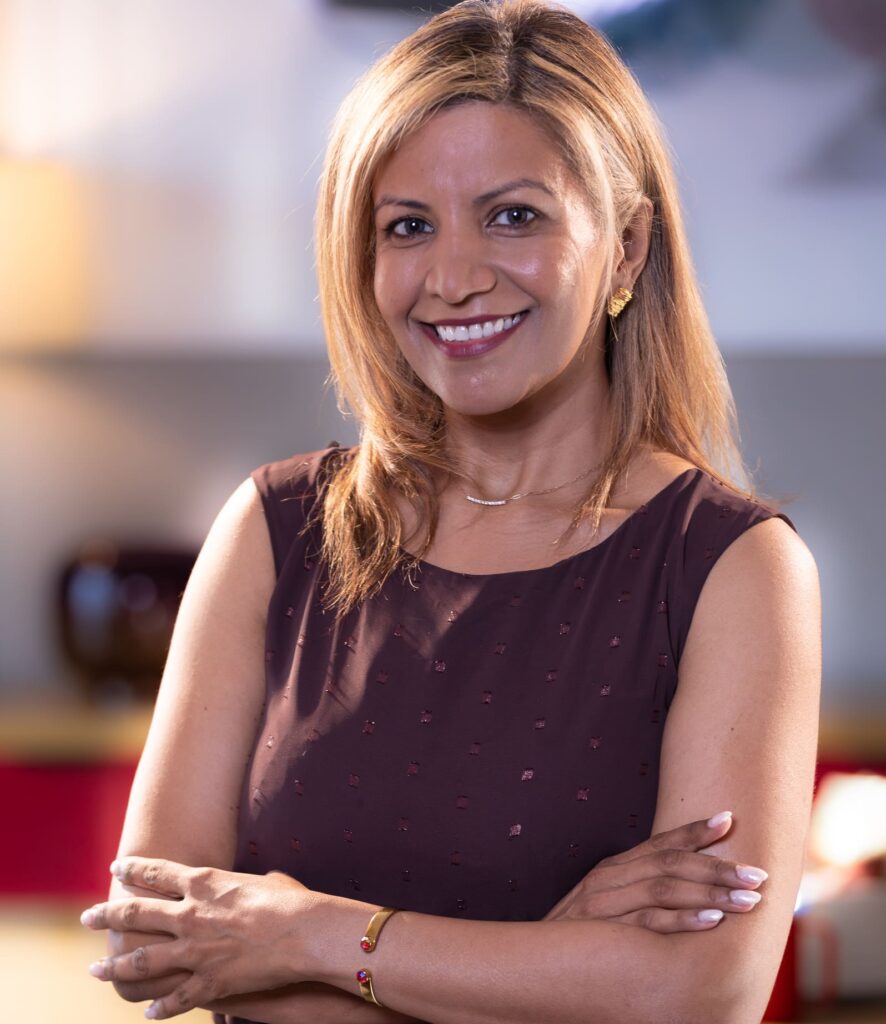
Dr. Aman Kaur is the Founder and CEO of Women in DSO®, a nonprofit organization dedicated to advancing women in leadership across DSOs. A seasoned DSO executive, she has served as CEO, COO, and dental director for multiple dental groups since 2010 and currently consults with leading dental groups and PE firms across the industry. Women in DSO® is proud to be celebrating its fifth anniversary in 2026.