Leadership

Clean Water, Clear Purpose

02/27/2026
|
11 min. to read

Integrity isn’t an innovation. It’s a series of conscious choices that defines Agenics and the future of safe dentistry.

Every patient that leans back in a dental chair trusts that the water is clean and safe. Usually, it is. When it’s not, the complications can be life changing.

In 2016, for example, more than 70 patients of an Orange County, California, children’s dental practice experienced infections that were later traced back to unclean water at the practice. As a result, some children lost parts of their jaws, adult teeth, and even some hearing.

Dental water infections are far more common than they should be. That they happen at all speaks not to our ability to keep water clean but instead to a lack of organizational rigor and the prioritization of profits over people.

Having learned at the feet of a clean water pioneer and evangelist for a people-first business approach, I know that every instance of dental water infection can be traced to misplaced priorities, lax protocols, and flawed understanding. Thankfully, the technology available now gives dentists the tools to virtually eliminate dental water infections.

Quote
“Clean water isn’t just about safety—it’s a reflection of values.”

A Legacy Rooted in Service

While most people in the developed world don’t think twice about water quality unless they’re unfortunate enough to get sick, I can scarcely remember a time when it wasn’t part of my life.

My father, Brad Downs, was a chemical engineer who, in the 1990s, signed on to an Army Corps of Engineers project in Colorado, where our family would soon live. The ambitious project goal was to purify 3 million gallons of contaminated groundwater from the Rocky Flats nuclear site north of Denver. Of all the bids submitted, only Dad’s proposed purifying the water instead of hauling it to a nuclear waste site. That water was eventually purified so well it was safely returned to local rivers and streams.

The success of the Army Corps project convinced my father he could adapt the technology and scale it down to meet the needs of missionaries in Papua New Guinea who were regularly getting sick from biocontaminated water.

Buoyed by his faith, experience, and enthusiasm, he set off with a backpack full of equipment for the South Pacific island nation. Before long, he fashioned both a purification system and a solar-powered microbiological test lab to confirm water safety.

Clean water isn’t just about safety—it’s a reflection of values.

Portable Water Treatment System

Treated Sample

Ukarumpa River Untreated


Discovering a New Mission

Dad returned home still buzzing from his recent successes and looking for a new way to make a difference. He found it in early 2000 when ABC News’ 20/20 ran a story called “Dentistry’s Dirty Little Secret,” which highlighted a dental practice biocontamination water problem that was surprisingly common.

Only months later, dental water purity expert Dr. Shannon Mills published an article in the Journal of the American Dental Association (JADA) entitled, “The Dental Unit Waterline Controversy: Defusing the Myths, Defining the Solutions.” Dr. Mills described the ideal water treatment agent in terms of efficacy, safety, and cost, and concluded that no such agent had been discovered.

For my parents, the JADA article presented a worthy challenge and a purpose they could not ignore.

I still remember sitting with my father in the crawl space of our home as he worked to develop the ideal water treatment solution Dr. Mills had outlined. Recognizing the need to pair technology with user-friendly design, my mother, Theresa, did all she could to understand the needs of dental practitioners. She even trained as a dental assistant and worked in a clinic to see how treatment products could fit seamlessly into existing workflows.

At a young age, I could not then accurately describe the feeling that permeated our home, but now I know that it was purpose. Always present and attentive to their children, my parents were also driven to make a societal contribution and improve the world they lived in; they were moved by higher principles and values.

Quote
“The goal should be zero dental water infections.” 

Driven by Science and Service

After months of research and experimentation, my father identified silver as the ideal water treatment agent and created a novel process to produce it in a usable form factor. Not long after, my parents’ company Sterisil was born and throughout the first decade of this millennium, they developed a leading line of patented dental waterline treatment technologies.

Sterisil still creates the only products recognized by the Environmental Protection Agency (EPA) that treat and maintain water purity at a level of 10 colony-forming units (CFUs) per milliliter of water, which is 50 times cleaner than the 500 CFU/mL standard established for drinking water by the Centers for Disease Control (CDC) and embraced by the ADA.

In 2011, my parents started Agenics Labs as an independent dental waterline testing company. I worked various jobs in the family business growing up but formally started my dental career alongside my parents after obtaining a bachelor’s of science in engineering. My husband-to-be Greg Niederschulte and I joined the company together and spent the next several years learning all there is to know about dental water purity. In 2022, Sterisil was sold to private equity without Agenics, and my parents entered semiretirement to run their new foundation, Our King’s Way.

In 2023, Greg and I acquired Agenics and are now putting all our efforts into maintaining the legacy my parents created.

Profit as an Outcome, Not a Goal

Thinking back to those 73 kids in Orange County, as troubling as the infections were, there is another aspect of that case that I think might be more disturbing.

After the outbreak led local public health authorities to the dental practices, a more thorough investigation discovered that the practice had performed more than 1,000 pulpotomies (root canals on children) between January and September of 2016.

Subsequent lawsuits filed on behalf of the children’s families alleged “predatory dentistry” and “production quotas” that ultimately sacrificed the children’s health on the altar of greater profits.

Were all those 1,000 plus pulpotomies necessary? It’s difficult to say definitively, but clearly the families of those impacted didn’t think so. I’ve imagined the trauma of a root canal performed on a toddler, and it makes this entire episode that much more troubling and shines a bright light on the priority of water quality.

Did the practice owners rely on municipal water quality and think testing was unnecessary? Perhaps, and they wouldn’t be alone. Many practices adhere to the “good enough” principle when it comes to water quality and nothing bad ever happens, until something does.

The Orange County outbreak also illustrates for me exactly what my parents were guarding against when they explained—with emphasis and passion—the unassailable hierarchy of business priorities: people, product, and then profit. The first two are the constant focus, and the third is the reward.

If dental practices cut corners, even with the best of intentions, at the expense of patient safety, they’re potentially putting both patients and practice at risk.

Good Intentions Aren’t Enough

Even if most or all dental water infections are the product of error, not avarice, that probably doesn’t matter to the infected patient. The goal should be zero dental water infections.

Our philosophy is that the best intentions are close to worthless without proper training, rigidly adhered-to protocols, and robust technology.

Consider Atul Gawande’s The Checklist Manifesto for a relevant comparison. Gawande’s book illustrates how even the most dedicated, well-trained, and compassionate surgeons and surgical teams make mistakes without robust protocols in the form of simple posted checklists that include no-brainers like “wash hands.”

Perhaps it would be different if states conducted periodic water-quality tests that practices had to prepare for. Currently, however, only Georgia and Washington state mandate regular testing.

And those infections do keep happening. According to the CDC in 2022, multiple outbreaks of nontuberculous mycobacteria infections have occurred in children who received treatment at practices with water contaminated with high levels of bacteria.

“Dental providers should be familiar with these recommendations on how to properly maintain and monitor their dental equipment to ensure that dental treatment water is safe for patient care,” the CDC says.

Quote
“People, product, and then profit. The first two are the focus. The third is the reward.”  

Protecting Your Patients and Your Practice

The cost of defending a negligence lawsuit and paying damages would be too high for most practices to survive.

But before an infection scenario ever gets to this extreme, most providers are simply concerned with properly and professionally caring for patients, which is a priority we share.

Agenics is dedicated to ensuring that patients don’t suffer devastating infections from routine procedures. While only Washington and Georgia have mandated water testing with a specified frequency, 43 states have codified the CDC guidelines for water quality into law, and all states recognize maintaining and monitoring dental water as the standard of care.

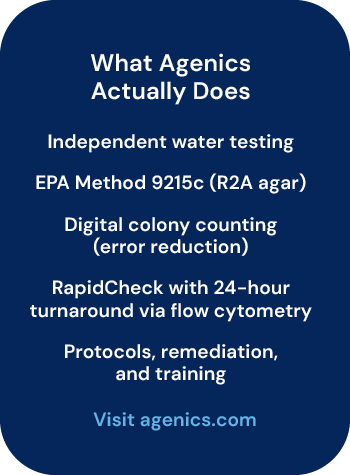
Agenics’ services begin with water testing but extend through comprehensive support, including protocol development, failure remediation, and extensive training. Bacteria testing is most commonly performed via the gold standard EPA Method 9215c using Reasoner’s 2A (R2A) agar—a venerable approach particularly effective at growing the bacteria common in dental waterlines. We’ve branded this our StandardCheck service, and it is a reliable baseline for whether a practice meets the basic EPA standard for drinking water.

When evaluating water samples with StandardCheck, Agenics uses a digital reader, which rapidly counts the number of bacterial colonies on a given sample. By removing the potential for human error, Agenics establishes confidence in both the reports we provide and the solutions we recommend.

Continuing the legacy of innovation, Agenics also offers RapidCheck: the most advanced bacteria detection method available. Agenics developed this specialized process in-house using thousands of real-world dental samples to create the most extensive and reliable test results available. With results in just 24 hours thanks to flow cytometry, this test meets the intense demands of high-throughput practices.

If a test reveals a bacteria level above the EPA minimum, Agenics looks deeper into potential sources, which may not be obvious. Water sources may be an issue, as might a dental chair’s frequency of use. (If narrow waterlines are not flushed and treated frequently, biofilm forms and quickly multiplies.) The water quality reports we provide are comprehensive and include data on alkalinity, total dissolved solids, and potential inhibitors of treatment agents.

From a generation of water treatment expertise, we’ve also learned to recognize unique water quality patterns such as the changes from spring to fall in municipal water or the differences in types of bottled water. As the only independent lab in the industry—Agenics does not sell any treatment or shock products—we can honestly review the effectiveness of any given product for a specific dental practice.

These are all things that most dentists don’t have the time or training to understand, but they can have an impact on clinical quality and patient safety. Instead of putting their livelihoods at risk, dentists can make water quality the responsibility of professionals who concentrate on nothing else.

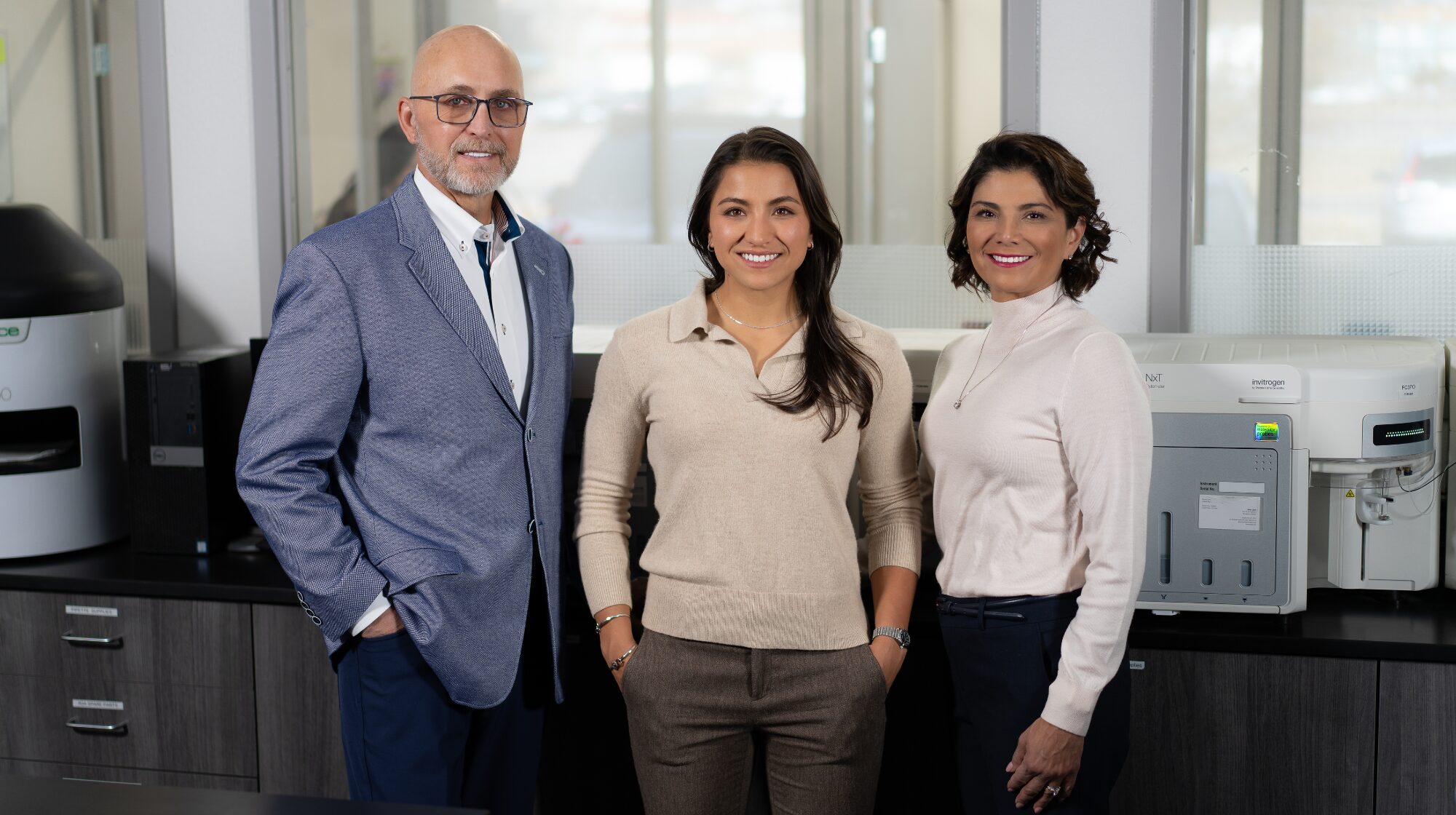
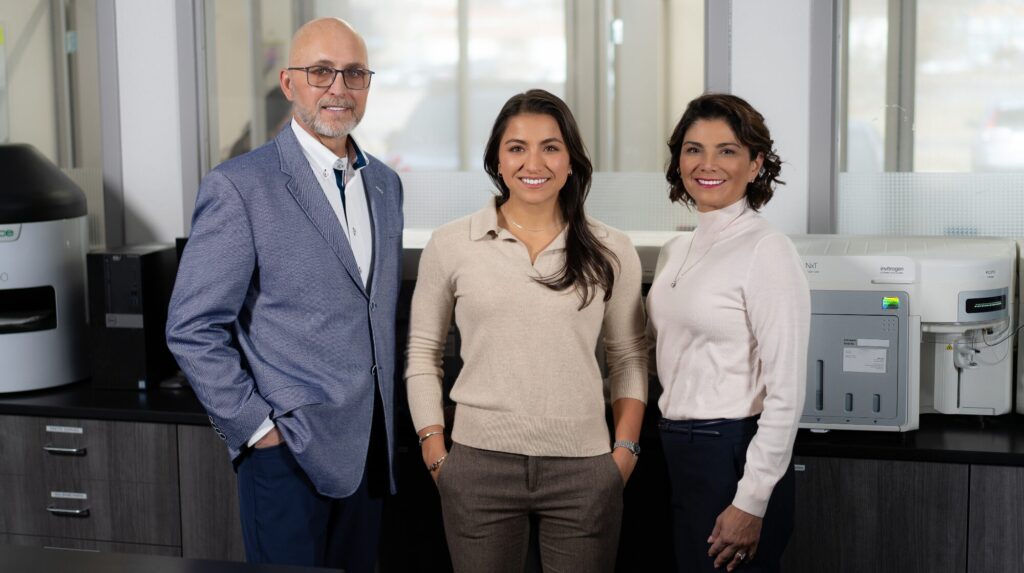
Brad Downs, Brianna (Downs) Niederschulte, and Theresa Downs inside Agenics’ microbiology lab.


Built on Principle, Leading with Purpose

I share my family’s story because it’s a reminder that an inherited legacy must still be protected every day or it will die. My parents built their professional lives on faith, integrity, and a simple truth: When people come first, success naturally follows.

That conviction drives Agenics today as much as it did when my parents were running the company. They taught me that embracing belief and service—purpose and meaning—is a better way to live. My parents never let us forget that seeing money as a primary objective would eventually cheapen our lives.

Growing up, my mother told us her goal was to raise children who cared about other people more than financial or business success. Our goal is for Agenics to succeed because we put first things first and trust the reward to come from consistent, values-driven business principles. Every sample Agenics tests, every partnership we embrace, is an act of legacy stewardship that honors where we came from and defines where we are going. Greg and I could think of no better way to honor my parents than to carry on as they taught us.

Gain ACCESS TO
INSPIRING
stories
Get membership
Leadership

Ushering In Dentistry’s Overdue Future

02/27/2026
|
10 min. to read

DR. RANIA SALEH IS ON A PERSONAL AND PROFESSIONAL MISSION TO UNITE THE CLINICAL AND BUSINESS SIDES OF DENTAL PRACTICES IN ONE SOFTWARE PLATFORM

In the early 2000s, newly minted dentist Dr. Rania Saleh faced a dilemma: she knew how to be a great dentist, but she found herself in an environment where it was almost impossible.

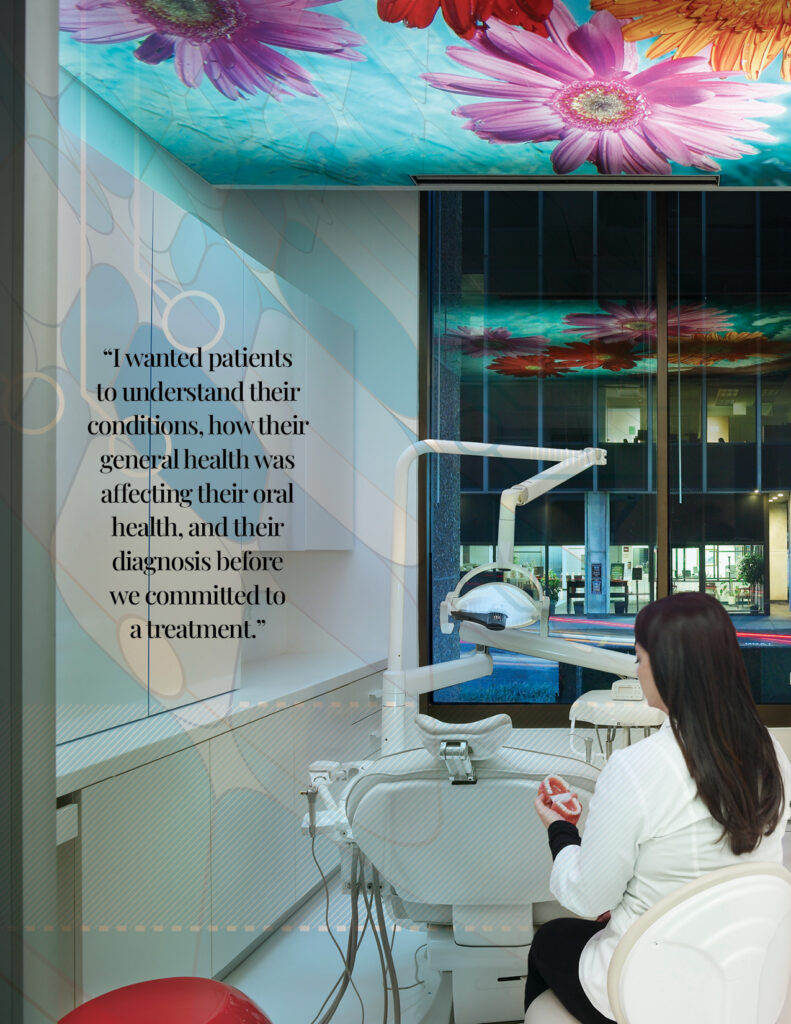
“I was working in an extremely busy practice as an associate, and I couldn’t continue the way that practice demanded, knowing that there was a better way to do it,” she says. “I wanted patients to understand their conditions, how their general health was affecting their oral health, and their diagnosis before we committed to a treatment.”

So, Saleh struck out on her own, ready to do things her way, opening a practice near Washington, DC. But even after opening her own cosmetic dental office and implementing an in-depth, diagnosis-focused approach to examining and treating patients, she found that the available dental software on the market was more hindrance than help, particularly in terms of getting her entire team on the same page when doing examinations.

Saleh knew technology could empower dentists to better serve their patients with enhanced clinical care and education. She also knew she had a Kois Center-inspired examination protocol that worked, and that modernized technology could only make it better.

Guided by an undaunted attitude informed by a childhood shuttled between war-afflicted Lebanon and Canada, a strong belief in her own abilities, and an extensive knowledge of the dental industry, Saleh decided she could create what the industry lacked. In 2016, she founded Oryx Dental and began developing the platform, starting with her clinical approach to patient exams.

The vision behind Oryx is clear and direct: give dentistry the technological support and innovation it has lacked for so long—and watch the industry reach its full potential.

Dental Health Is Healthcare

Saleh developed the detailed examination protocol she would later apply to her practice and to Oryx after she was introduced to the Kois Center and completed the program in Seattle. The Center’s comprehensive, evidence-based methodology upended her view of traditional, procedure-based dentistry. It also posed a fundamental question in terms of treating patients.

“Would dental patients have the patience for an exam that might stretch to hours if they knew it would significantly improve their outcomes?” she recalls asking herself.

Indeed, she discovered, they would.

As Saleh’s private practice in DC rapidly grew and her patients embraced extensive, detailed exams and information, Saleh started getting feedback on her somewhat unusual methods.

“I would get calls from the GI department at Georgetown,” Saleh says. “They’d say, ‘Thank you so much for referring these patients. We were able to discover early cancers. We didn’t know that dentists could find these things.’”

The Kois Center-derived approach was working. As her thriving practice grew to two locations, Saleh hired associates to meet demand. But when she became pregnant with twins and was put on bed rest for five months, her associates were unable to maintain the standard of care and the business suffered.

Saleh found herself at a crossroads. The bed rest finally gave her time to reassess her strategy and revise her exam protocol, which she began teaching in earnest to her associates to try to boost her practice. Still, she couldn’t be in the clinic looking over their shoulders.

At this point, she started discussing with her husband, an engineer for a healthcare IT company, how she could duplicate the exam protocol using software. Clearly, there must be a better way to get consistent results through technology, even if dentistry had yet to discover it.

That’s when the beginnings of Oryx Dental went from concept to reality.

Quote
“Dentistry has been underserved by software for decades.”

Putting Clinical Care at the Core of a Broader Platform

“There was no clinical component at all,” Saleh says of dentistry software back in the day. “You could complete an exam by just writing two lines, or by entering a few data points. Nothing was guiding the dentist to go through a very thorough process.”

Dentists also juggle marketing, billing, and business management alongside clinical work, often falling back on manual, disconnected processes just to get things done. Previously, the software available to help with those tasks was neither integrated nor efficient. In terms of pace and pizzazz, the existing solutions were like a horse-drawn carriage.

“There were a lot of workflow inefficiencies in the software on the market in 2016,” Saleh says. “Software functioned more like different data entry points that you had to put together, and the output was not a treatment plan but just a procedure code and a price.”

Saleh envisioned something precise and responsive—a sports car instead of a carriage. Thinking of systems used more broadly in healthcare, she set out to develop a platform that both drives clinical evaluation workflows and improves the efficiency of those workflows.

Conceptually, the solution also had to be a fully integrated platform that included messaging, scheduling, billing, and other front-desk functions automatically generated by a triggering event like the completion of a patient exam.

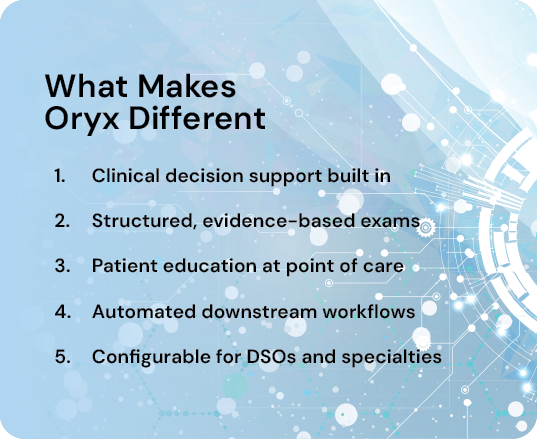
“Oryx is about having an amazing workflow from start to finish, making sure you’re delivering the best clinical care, and, on the business side, taking care of everything you need to,” says Saleh.

It’s been more than a century since horse-drawn carriages were considered advanced technology. Perhaps it’s time to stop thinking that the software equivalent is useful.

Smarter Providers and Patients

“My goal has always been to empower dentists and also to empower patients—and to create an amazing relationship between them,” says Saleh.

As the starting point for her clinical protocol, Saleh relied on the Kois Center’s foundational four-part examination methodology: gum health, condition of teeth, bite and jaw joint, and overall smile.

“You assign a risk in each area, so when you explain the patient’s dental health to them, they understand the risks involved,” Saleh says. “Patients really liked that, even though it was time-consuming.”

Indeed, this clinical approach is what makes Oryx a unique platform that elevates the way dentistry is practiced. Saleh highlights the educational materials the system makes readily available to providers at the point of care, which are updated regularly.

These materials drive the thorough and detailed explanations patients receive during exams, which increase engagement and understanding. That improved understanding, Saleh emphasizes, is the product of a system that looks at the big picture and focuses on the confluence of factors that impact overall health.

“Traditionally, dentistry has been procedure-focused, at least in part because of how insurance is paid.” Saleh explains. “Dentists become conditioned to look for problems rather than looking at the patient’s general health. Oryx enables them to see the full picture.”

7 Minutes to Better Heath

Dental providers need effective software to improve clinical performance and patient satisfaction.

Consider how Oryx uses images to ensure that both the clinician and the patient clearly see what’s happening. Where dentists have typically used a digital SLR to take high-quality images, Oryx supports an iPhone app to take photos that go straight into the chart.

“We saw compliance skyrocket in data collection with the introduction of this app,” Saleh says. “And users are saying the reports generated for patients have more value with the photos.”

Of course, a busy dental practice still doesn’t have hours for each check-up, as Saleh originally envisioned the ideal patient examination. In developing Oryx, and in working with John Kois, Saleh and her team have created a standard, templated exam that incorporates the Kois Center’s evidence-based treatment protocols and employs clinical decision support.

“There’s a very structured exam,” Saleh says. “It takes about seven minutes to do on any patient, and this is the best seven minutes you can spend. When you’re done with the exam, the next steps for diagnosis and treatment are clear.”

That Oryx can support a diagnosis after seven minutes is in part enabled by how the platform can be configured for specific practices and patient bases. For example, Oryx includes pediatric exams, questionnaires, and photos; prompts for questions about fluoride; and unique workflows to accommodate specialty practices.

“What we wanted was to be able to focus on just the clinical stuff that simplifies everybody’s life and makes things easier for patients,” explains Dr. Christopher Baer, a Colorado clinician and Oryx user. “We’ve seen a dramatic improvement in case acceptance because of the way that we can present the information.”

Better Tools, Better Dentistry

As with health care generally, software as a service (SaaS) and AI innovations are key to bringing the dental industry up to date in terms of what is technologically possible.

Because Oryx is implemented using a SaaS approach, the platform can be segmented to meet the needs of multioffice practices or DSOs with multiple locations. The SaaS model also eliminates the need for on-premise data centers and makes future expansion to accommodate growth a simple process that negates local data center demands and requirements.

What will really enable dentistry to evolve from the antiquated technology of just a decade ago to the cutting-edge potential of now is AI and the functions it makes possible, such as ambient listening and image scans.

“It’s going to make clinicians and front-office workflows a lot more efficient,” Saleh says, “but most importantly, it is going to improve the patient experience. Clinicians in our offices who use AI tell us, ‘I can look the patient in the face. We can have a conversation.’ I think dentists and patients will have a much better relationship once all the clutter is gone.”

Oryx objectively represents a leap forward in an industry that has relied on old-fashioned legacy software for decades. Just as hospitals and clinics made the jump to the digital age two decades ago, dentistry is having its own digital moment now.

“Dentistry has been underserved by software for decades,” Saleh says. “Some offices were reluctant to adopt certain tools because the benefit was not clear, but when software is clearly built for specific purposes and provides documented benefits, the decision is much easier to make.”

The Future of Dentistry Is Now

Saleh knew dentists and patients deserved better, and she had the confidence to believe she could deliver. From more consistent protocols to better education to more structured exams, Oryx enables dentists to practice in a way that is a huge leap forward from even a few years ago.

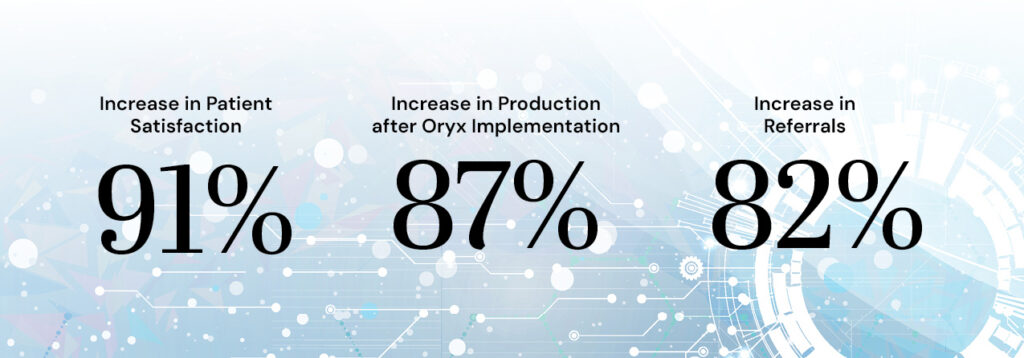
And the practices that have moved to Oryx have quickly noticed the business benefits and improvements to patient treatment.

“We had a DSO that moved to Oryx, and they doubled their production in one year,” Saleh recalls. “Their case acceptance and referral rate more than doubled because they had this consistency. It didn’t matter if it was the lead doctor or the new junior doctor seeing a patient. Everyone was doing the same exam, everyone was doing the same treatment plan.”

The funny thing about the future is how hard it is to know when you’re in it. Appreciating the difference between a horse-drawn carriage and a sports car, however, is very easy. Saleh is confident that dentistry can recognize this significant moment—that now is the time for groundbreaking change— and appreciate the increase in velocity.

Gain ACCESS TO
INSPIRING
stories
Get membership
Leadership

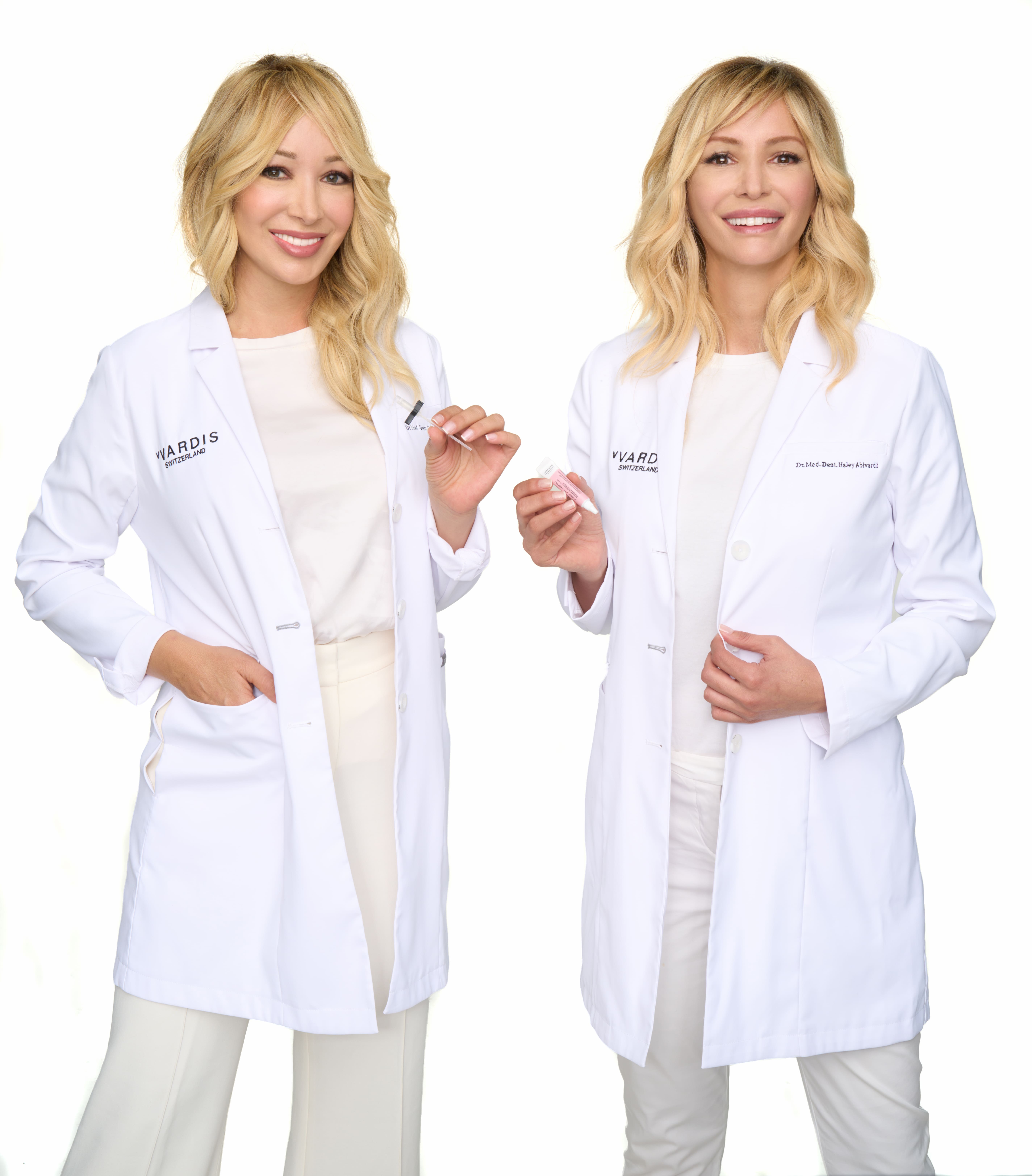
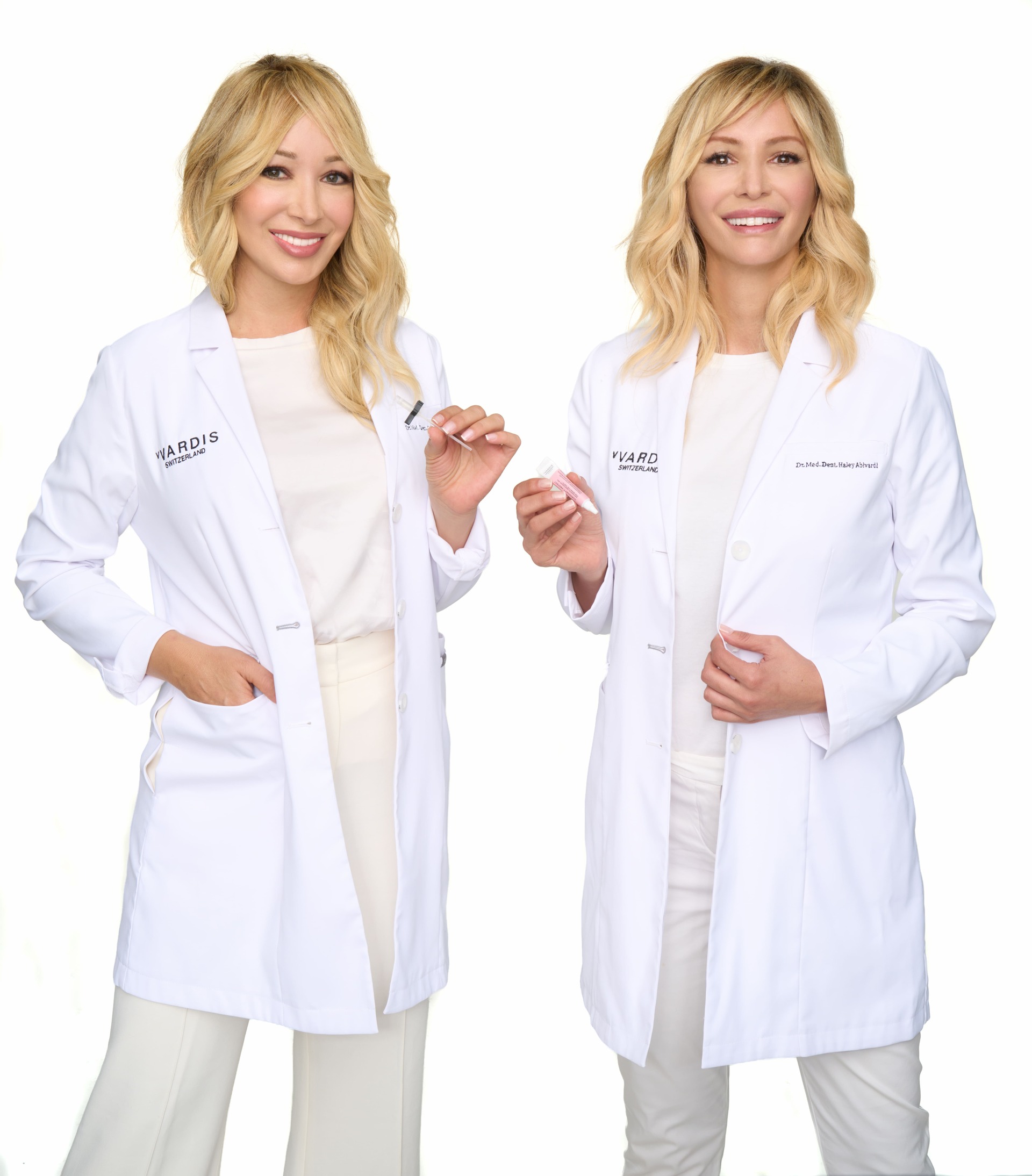
Sisters Defying Dental Norms

10/22/2025
|
9 min. to read

From a pediatric clinic to a global healthcare brand, Haley and Goly Abivardi are rewriting the rules of dentistry with drill-free innovation.


They were never destined for the ordinary.

Swiss dentists and sisters Haley and Goly Abivardi have spent their careers asking why dentistry should look and feel the same as it did a generation ago. The answer? It shouldn’t. From running a pediatric clinic in rural Switzerland to pioneering Europe’s first fear-free DSO, their path has always led toward a bigger idea: that oral health is inseparable from overall health, and that care should be non-invasive, patient-friendly, and accessible.

Today, through their company vVARDIS and its breakthrough treatment CurodontTM, the Abivardis are pushing dentistry into a future of non-invasive care, inspired by nature. Stylish, uncompromising, and deeply human, their story blends science with innovation, patient compassion with commercial success. What they are building isn’t just a company—it’s a movement.

The Abivardis’ story is proof that big visions can upend old systems. Case in point: Their non-invasive early caries treatment was being used by two DSOs serving 250 offices, but 18 months later, it had reached 13% of U.S. dental offices—a rapid leap in influence and impact.

CurodontTM, vVARDIS’ proprietary, biomimetic solution, treats early-stage caries through hydroxyapatite generation, offering the opportunity to preserve the natural tooth structure without the need for drilling, injections, or artificial filling materials.

The Abivardi sisters fuse cutting-edge science with a deeply human mission: to improve oral health for better overall health—and make it available to everyone.

In this Q&A, they open up about their journey, the lessons that shaped them, and why they believe dentistry is on the verge of a revolution.

Origins & Influences

What sparked your journey into dentistry, and how did your early influences shape your vision?

Dr. Haley: Powerful role models deeply influenced our upbringing. Our mother, an entrepreneur, showed us the possibility of balancing a career with being a dedicated mother. What we hold most dear about her is her commitment to making a positive impact on people’s lives and her determination to pursue one’s goals.

Dr. Goly: Absolutely. She instilled in us the belief that the most beautiful achievement is bringing happiness to others. On the other hand, our father, a natural scientist, was a pioneer in sustainability, having written his thesis on the subject 60 years ago. He taught us the invaluable lesson Mother Nature always knows best.

How did your journey in dentistry begin, and what inspired your first steps?

Dr. Haley: After studying medicine and dentistry as DMDs, knowing how important oral health is, we wanted to treat children to make an impact on their overall health.

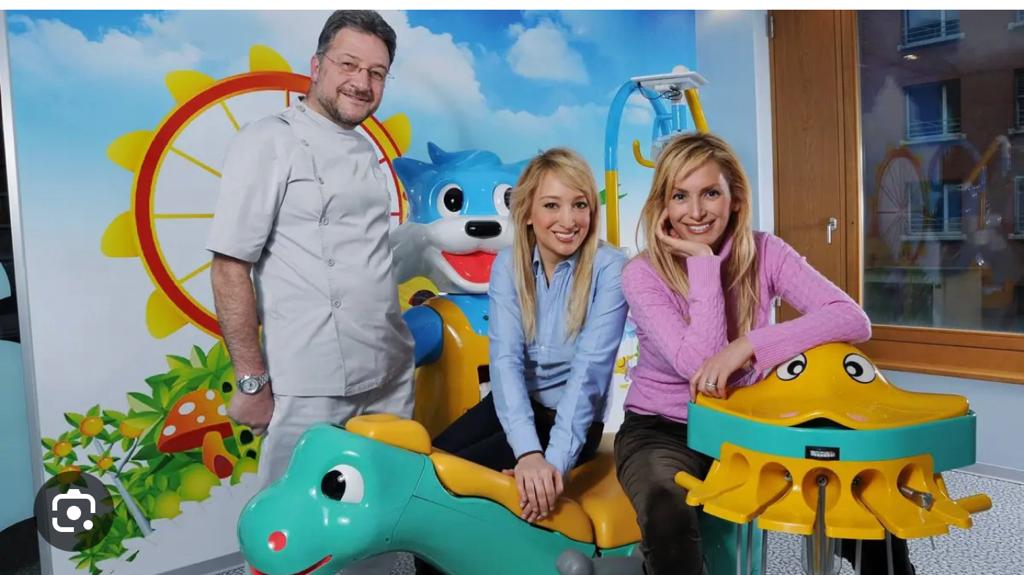
Dr. Goly: Having the same mission, we decided to work together as sisters and to run a public pediatric dental office in the rural areas of Switzerland, linked to elementary schools with the focus on prevention and early intervention. As healthcare professionals and mothers, it was heartbreaking to witness our patients suffering and to observe the impact of poor oral health on their physical and psychological well-being, mainly due to a lack of knowledge, awareness, or often anxiety associated with dental visits.

Most of the patients missed their appointments or came too late. Those early experiences inspired us to seek positive patient experiences and to elevate patient care, specifically to ease the anxiety associated with delaying dental visits. Ultimately, this led us to develop a new concept of a fear-free dental clinic, and that is how we opened our first clinic.

At that time, we were young—driven by vision yet facing the challenge of having no patients in a city with the highest number of dentists in the world, and only modest savings to rely on. Despite initial skepticism, our clinic proved remarkably successful, capturing 14% of the market within three years.

Encouraged by our success, we expanded by opening new clinics in Switzerland and Europe, founding the first Swiss DSO, the first European fear-free DSO, and expanding the brand worldwide.

How did you transform the traditional dental clinic into a fear-free, patient-first experience?

Dr. Goly: We founded our DSO over 20 years ago with an entirely new approach. This innovative concept combined state-of-the-art technologies and techniques with an unprecedented level of comfort and well-being for patients. For the first time, all specialists could be found under one roof with extended opening hours, until 9 p.m., seven days a week, with a walk-in concept.

We created a unique experience, maintaining consistent identity and design across all clinics. We even had our own music and fragrance. Unlike traditional clinics, we reimagined the entire patient experience, putting the emphasis on overall health and wellness and delivering a spa-like atmosphere, as opposed to one of a dental room.

The Breakthrough

Why has Curodont taken off so quickly—and what makes it a win for dentists and patients alike?

Dr. Haley: Because it is a win-win for everyone. For clinicians there is finally a drill-free solution for early-stage carious lesions and you can treat them in as little as three minutes during the same appointment. Patients are motivated to return because the treatment is completely drill-free. When the dentist performs a recall after six months, any new lesions can again be treated without drilling. This not only encourages repeat visits but also helps dentists save valuable chair time for more complex procedures.

When did you realize Curodont could upend traditional dentistry and why was it a game-changer?

Dr. Goly: We founded vVARDIS around four years ago, but the groundwork for our vision started almost two decades back with the pediatric dental clinic. Those experiences deeply influenced us. That is why our vision has consistently revolved around practicing minimally invasive, early intervention care rather than relying on reparative dentistry.

In addition to our clinics, we led our own dental hygienist school, complete with a research center, facilitating various clinical studies. It was during this time, over 10 years ago, that we came across groundbreaking technology offering a non-invasive treatment for early decay, without the need for a needle or a drill.

For decades, we’d been scouting for a solution and finally one day, we found it! The proprietary formulation disperses throughout the depth of the lesion and treats the early-stage caries by restoring the lost or damaged hydroxyapatite crystals with minerals from saliva.

As daughters of a natural scientist, we were fascinated by this innovation. Despite years of trying everything possible to improve our patients’ oral health, we felt that something was still missing.

Tooth decay remains the number one disease in the world. Despite significant improvements in oral health and dietary habits over the past 50+ years, around 95% of the global population is still affected. More common than heart disease, diabetes, or even cancer, tooth decay impacts millions—especially vulnerable populations. Until now, there has been no satisfactory solution for treating the early stages of the disease.

Dr. Haley: We see early-stage lesions in nearly 80% of our patients, but most leave the office untreated, with dentists putting a “watch” on it without having a suitable solution available. However, patients may not return for a follow-up appointment, which exposes them to the risk of cavity progression and potential severe secondary diseases.

Dr. Goly: Motivated by the aspiration to make this groundbreaking innovation accessible to everyone, we decided to sell our dental clinics and reinvest everything into the creation of vVARDIS.

How is vVARDIS pushing the boundaries of dentistry—and inspiring change beyond the dental chair?

Dr. Haley: Now that Curodont is available in over 13% of U.S. dental offices, an increasing number of dental professionals—or “Curodontists”—are embracing our treatment and giving patients access to this revolutionary solution with fast adoption rates. It demonstrates the demand dental professionals have for a solution capable of treating tooth decay at an early stage.

Dr. Goly: We are thrilled to witness a ground-breaking transformation in dentistry similar to the advancements that medicine embraced years ago toward non-invasive, early intervention approaches. In the same way, Curodont is helping to elevate the standard of care for the early treatment of tooth decay.

Quote
CAVITIES ARE THE WORLD’S NUMBER ONE DISEASE—AFFECTING 95% OF PEOPLE.

Sisterhood & Vision

How do sisters turn shared vision into a powerhouse partnership and make it last 25 years?

Dr. Haley: People often ask us why and how it’s been possible. We challenge each other, yes—but our shared mission of improving lives through better oral health keeps us aligned.

Dr. Goly: We have such a strong bond that we’ve cultivated over the years. This deep connection has enabled us to discover the most effective ways to complement each other. 

When did you see that dentistry can transform not just health—but someone’s entire future?

Dr. Haley: Looking back, we see countless experiences that shaped us into who we are today, but the most impactful experience was when we decided to give back to our community and provide free dental treatment to the homeless in our clinics. After restoring their smiles with implants and crowns, many patients regained employment and reestablished connections with their loved ones. This was the exact moment where we saw the impact a healthy smile can have on others.

Dr. Goly: This was a very moving experience and reinforced our belief in the idea that proper dental care can change lives. We learned that if everyone has access to dental care, not only will their mental and physical health benefit, but their overall quality of life will as well.

What advice would you give to anyone chasing a bold vision, even when the path feels impossible?

Dr. Haley: The same advice that we received from our parents that helped us become who we are today: “If you have a vision, go for it. ‘It doesn’t work’ doesn’t exist.”

For Haley and Goly, vVARDIS is more than just a company—it embodies a mission to make non-invasive dentistry and early caries treatment accessible to all, creating a meaningful impact on people’s lives, especially underserved communities.

Quote
IF YOU HAVE A VISION, GO FOR IT. ‘IT DOESN’T WORK’ DOESN’T EXIST.
Gain ACCESS TO
INSPIRING
stories
Get membership
Leadership

Making Care Possible

08/06/2025
|
5 min. to read

Leading with Empathy and Innovation in Dentistry

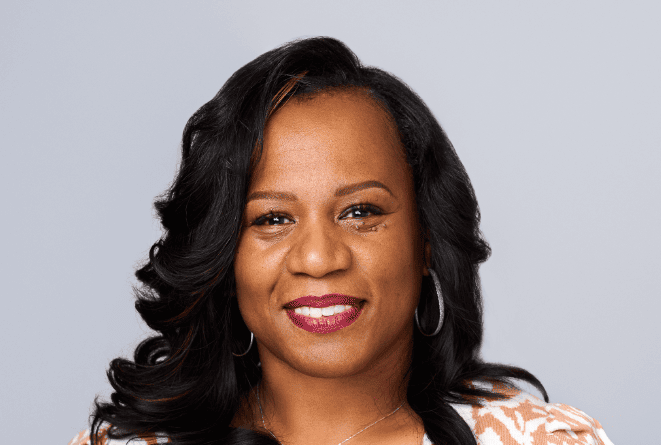
By Sonia Williams
Senior Vice President, General Manager of Dental at Synchrony

When my son needed braces, I did what many parents do: I nodded through the orthodontist’s explanation, asked the right questions, and tried not to flinch at the cost.

I was fortunate—only one of my two sons needed braces, and I had great dental insurance. Still, it was a moment of reflection not just about the cost, but about how many families face that same scenario without access to resources or flexibility.

What happens when a parent doesn’t have flexibility? What does it mean when dental care, something so vital to a child’s confidence and health, is out of reach?

Quote
Care can’t wait, and cost shouldn’t be the reason people walk away from what they need most.

Those questions never left me. Now, as the Senior Vice President and General Manager of the dental business at Synchrony, I lead with that perspective every day.

As one of Synchrony’s top 50 executives, I have the opportunity and responsibility to shape how innovation in dental care reaches millions. It’s a responsibility I don’t take lightly, especially when I know the decisions we make can change what care looks and feels like for patients, providers, and entire practices.

Dental care impacts how children learn, how adults show up at work, and how seniors eat, speak, and stay connected to others. I spend time volunteering with senior citizens, many of whom live on fixed incomes and haven’t seen a dentist in years. I hear their stories. I see how dignity is tied to oral health. Yet too often, cost becomes the barrier no one talks about.

More than 90% of people said they would consider holding off on general dental care because of cost, according to Synchrony’s Dental Lifetime of Care study. Care can’t wait, and cost shouldn’t be the reason people walk away from what they need most.

I carry those stories with me into every strategy meeting, every product launch, every partnership. This work matters to me.

It’s not enough to recognize the challenges. We must build smarter systems around them. That’s why I lead with empathy first: Because innovation should solve real-world problems and meet patients where they are, financially and emotionally.

Innovation That Feels Human
At Synchrony, I lead the dental business with a clear mission: to make care more accessible for patients and reduce barriers for practitioners to provide that care. It’s interesting because my background is not in healthcare but rather in retail strategy, helping brands grow by solving problems that matter to real people. It’s exciting to bring that same focus to dental financing.

This isn’t about selling more services; it’s about saying yes to care when it matters most. Being on the front line of innovation in this space gives me professional and personal fulfillment.

In response to Synchrony’s study which found that 58% of adults believed that oral care was not affordable, I am proud that our team created innovative solutions. Synchrony features a behind-the-scenes integration that enables providers to offer payment solutions directly within the systems they already use. No separate logins. No added friction. Practices can check eligibility, offer financing, and complete transactions quickly so that cost conversations are simplified, not avoided.

It removes barriers to care—and, most importantly—help. And it works. When patients understand what’s possible, they’re more likely to say yes to everything—from braces, to cleanings, to the kind of preventive care that improves lives.

My goal is to help redefine what modern dental care looks like, where financial conversations are seamless, where providers feel supported by smart tools, and where no patient delays care because of cost. By aligning technology with human-centered design, we’re not just improving transactions; we’re reimagining the way care is delivered.

Quote
It’s not enough to recognize the challenges. We must build smarter systems around them.

Designing with Empathy, Delivering with Impact
For dental professionals, especially within growing DSOs, the business of care has become increasingly complex. Teams are stretched thin, administrative burdens are rising, and patient expectations are evolving.

According to the American Dental Association, some dentists’ confidence in economic success has waned in the first quarter of 2025. My goal isn’t just to simplify financing for patients; it’s to empower providers to deliver care more confidently and efficiently while optimizing their financial management.

Synchrony’s CareCredit partners with the industry’s most trusted platforms to ensure providers can simplify the patient experience, from scheduling and reminders to payments. These tools reduce the burden on staff, support clearer communication, and help teams
focus on what matters: care.

By integrating our solutions directly into their workflows, we’re helping practices improve case acceptance, reduce staff stress, and elevate the patient experience. This kind of innovation gives practitioners the freedom to focus on care while giving patients more reasons to say yes to it.

Quote
Dental care is a gateway to overall wellness, and everyone deserves the chance to say yes to it.

Why I Lead
I know how rare it is to bring empathy into innovation, but I believe it’s the only way forward. Technology should feel seamless. Practitioners should be able to focus on delivering the best care. Financing should feel supportive. Every patient should feel seen.

I lead this work not just because I can, but because I must. Because too many families still wonder if they can afford care. Because too many providers feel stuck. And because I understand that tension.

Dental care is a gateway to overall wellness, and everyone—regardless of income, age, or background— deserves the chance to say yes to it. Innovating in this space isn’t just business. It’s personal.

Gain ACCESS TO
INSPIRING
stories
Get membership
Leadership

Lessons in Leadership

10/22/2025
|
1 min. to read

Learn quick insights and success strategies from Women in DSO members shaping the future of dentistry. Gain wisdom, inspiration and practical guidance.

Gain ACCESS TO
INSPIRING
stories
Get membership
Leadership

Lessons in Leadership

03/06/2025
|
1 min. to read

Learn quick insights and success strategies from Women in DSO members shaping the future of dentistry. Gain wisdom, inspiration and practical guidance.

Gain ACCESS TO
INSPIRING
stories
Get membership
Leadership

Lessons in Leadership

02/27/2026
|
1 min. to read

Learn quick insights and success strategies from Women in DSO members shaping the future of dentistry. Gain wisdom, inspiration and practical guidance.

Gain ACCESS TO
INSPIRING
stories
Get membership
Leadership

Lessons in Leadership

08/06/2025
|
1 min. to read

Learn from Women in DSO® members shaping the future of dentistry. Gain wisdom, inspiration, and practical guidance from these quick insights and success strategies.

Gain ACCESS TO
INSPIRING
stories
Get membership
Leadership

Charting a New Path for DSOs

03/06/2025
|
6 min. to read

Across Amy McCarthy’s professional journey, her passion for innovation and entrepreneurial spirit have been driving forces behind her success. They have defined her career and are now shaping the future of Envista. As the newly appointed leader of Envista’s DSO initiative, she is spearheading a transformation designed to elevate how DSOs operate, scale, and deliver exceptional patient care.

Building a Foundation

Amy’s entrepreneurial journey began early. At 17 years old, she founded a mail courier service in Everett, Washington, which served over half of the local medical community. Her innovative service cut delivery times for medical records in half, streamlining workflows for countless healthcare providers.

“I was creating solutions that added value. I didn’t realize it then, but that experience taught me the importance of identifying pain points,” Amy shares. Over the next decade, she grew this business while pursuing a college degree, a career, and later an MBA. This hands-on experience laid the foundation for professional work in the pharmaceutical industry where she quickly made her mark. At 25 years old, Amy became one of the youngest district sales managers in the company’s history.

“I focused on understanding my customers’ goals and needs. By aligning my efforts with their objectives, I was able to build trust and long-lasting relationships. That approach has been a cornerstone of my leadership philosophy,” she explains.

But Amy’s career trajectory shifted when she chose to leave her high-pressure role to focus on raising her two young children.

“On my youngest child’s first birthday, I quit my role as Regional Sales Manager at Sanofi-Aventis Oncology. I was traveling constantly and felt like I wasn’t doing anything well — being a mom or a manager. No matter what adjustments I tried, I couldn’t find balance or happiness. It was one of the hardest decisions I’ve ever made. I loved my career, but I felt a lot of pressure—and pull—to be with my kids. My family always valued stay-at-home parenting, so I decided to give it a try,” Amy recalls.

Yet even during this work hiatus, Amy’s entrepreneurial drive could not be stopped. She soon launched a photography business, a passion project that allowed her to balance motherhood with work through a creative outlet.

“It filled my constant need to learn and improve. I built a custom website, grew a thriving client base, and enjoyed the flexibility. But after a few years, I found myself wanting more,” Amy reflects.

That desire led her to consulting, where she advised small businesses on strategic planning, operations, and marketing. Consulting ultimately connected her to Premier Periodontics, a Seattle-based DSO who brought Amy on to scale operations. Amy was pivotal to the organization’s success.

“I started as Director of Operations and moved into marketing, and eventually I became COO. During my time there, we expanded Premier to eight locations and helped launch Evident Alliance, a 25-location multi-specialty DSO,” Amy explains.

She credits much of her success to the trust her colleagues placed in her.

“They let me make decisions and run with them, which is how I work best. Dr. Will Fernyhough and Dr. Issa Dkeidek remain great friends to this day,” she adds.

Joining Envista

In 2021, Amy joined Envista, drawn by the opportunity to combine her expertise in innovation and healthcare.

“Envista’s portfolio is unmatched. I knew that it would be an opportunity to grow personally and offer endless opportunity to innovate and create value for customers,” Amy says.

Amy shared her vision for the future of Envista’s place with DSOs last spring with CEO Paul Keel. Paul saw the importance, shared Amy’s excitement for the opportunity and added DSO to the strategic planning process. As a result, extensive voice of customer interviews were completed, new resources allocated, and restructuring occurred to suit the needs of these very important customers. All focused on leveraging Envista’s vast customer-centric solutions and portfolio.”

The Secret Sauce

Envista’s success with DSOs boils down to three key elements: solutions, simplicity, and scale.

Envista’s portfolio includes best-in-class solutions, products and technologies across categories: diagnostics/imaging, implants, consumables, and ortho. What sets the company apart, however, is its ability to integrate these offerings into tailored solutions for DSOs.

“We’re not just selling products. We’re partnering with DSOs to help them operationalize and scale their businesses. This means creating training programs, offering fleet management tools, and collaborating on innovations that improve efficiency and patient care,” Amy explains.

Envista offers simplicity for DSO partners. The advantages of working with one manufacturing partner for multiple solutions / across multiple categories is enormous. Having a single point of contact, one contract, a partner who knows your goals and paint points and who is proactively working on your behalf to help you grow, across initiatives, is invaluable. The time savings and peace of mind are invaluable. Envista has the resources, expertise and experience to help our DSO partners and scale.

“Amy has a deep understanding of market dynamics, coupled with an innovative approach to partnership development. Her ability to identify new opportunities, negotiate mutually beneficial agreements, and align partnerships with the company’s broader objectives has directly resulted in significant achievements for Heartland. Her leadership has had a profound impact on DSOs,” adds Dr. Anna Singh, Senior Vice President of Clinical Operations at Heartland Dental.

Quote
I saw a chance to apply everything I’ve learned to an organization with incredible potential. Envista’s portfolio is unmatched, and I knew that by bringing everything together strategically, we could create a new kind of value for our customers.

A Vision for the Future

Amy envisions continued growth and innovation for Envista. A significant focus is on advanced training and education, with customized programs for partners like Heartland Dental and Smile Brands to help providers grow their implant practices.

“Envista has been a great partner to Smile Brands for many years and has evolved with our changing needs, always with long-term success in mind for our providers, their patients, and us as an organization. We look forward to continuing this journey together,” shares Steve Bilt, CEO of Smile Brands.

Fleet management technology is another area of focus. Envista’s suite of tools helps DSOs track and optimize equipment usage, improving efficiency and effectiveness. The DTX Studio Imaging Suite is also revolutionizing workflows by integrating diagnostics, imaging, and treatment planning into a seamless experience.

“It’s changing the way dental offices operate. The best part is, it’s an open platform that works with any existing technology, making DSOs more agile and effective,” Amy says.

For Amy, Envista’s success is about more than business — it’s about solving problems and growing relationships.

“I’m never satisfied with the status quo. There’s always room to grow, innovate, and improve. That’s what keeps me going,” she says.

Under Amy’s leadership, Envista is setting a new standard for partnership in the dental industry — offering DSOs not just the tools
to succeed but a vision for growth, innovation, and meaningful collaboration that drives long- term impact.

Gain ACCESS TO
INSPIRING
stories
Get membership
Leadership

Architects of Growth

08/06/2025
|
23 min. to read

An Interview with Five Prominent CTOs Shaping What’s Next

Growth doesn’t happen by accident—it’s built. From the systems that power smarter operations to the tools that elevate patient and user experience, the CTOs featured in this issue are designing the frameworks that help their companies scale, adapt, and lead.

Whether inside a fast-growing DSO or at the helm of technology serving the industry, each leader brings a distinct perspective on how innovation actually happens—what to invest in, what to ignore, and how to stay focused when the noise gets loud.

Meet five visionary technology leaders who are reshaping what it means to be a CTO in the dental industry. Their responses are equal parts strategic and personal. You’ll find insight into long-term tech bets, practical approaches to productivity, and the mindset required to align complexity with clarity. And yes, even what keeps them up at night.

This is growth by design—and the executives behind it.

Carol Juel
Executive Vice President, Chief Technology and Operating Officer
Synchrony

What’s one technology decision you’ve made in the last year that will shape your company for the next five?
Our goal is to connect patients with financing options at the moments that make the biggest impact for them—and technology is an increasingly vital piece of that equation. We’ve been deeply embedded in the dental space for more than 35 years. During that time, we’ve prioritized partnerships that allow us to reach patients where they are with payment choices that fit their budget and lifestyle.

One way we’ve been doing this through the years is by partnering with independent software vendors (ISVs). Synchrony’s extensive partnerships with many of the leading healthcare ISVs make it possible for practices to seamlessly integrate customized technology into their existing systems. These partnerships ultimately allow us to extend financing offerings that boost treatment acceptance from patients, supporting dental providers by ensuring their patients can continue seeking care.

In your view, what role should the CTO play in shaping the user experience?
Customer experience is at the heart of everything we do. I have a unique role overseeing both our technology and operations organizations, including our contact center teams. Bringing these organizations together has enabled more transparency, closer collaboration, and a sharper focus on CX across channels—ensuring a positive and consistent experience, no matter how patients engage with us.

Of course, this extends to our providers as well. We recognize that handling healthcare payments can be complicated, even on a good day. Streamlining that process starts with making our solutions as seamless and easy to use as possible.

All to say—technology plays an essential role today in shaping the user experience, and it’s only becoming increasingly critical. I think CTOs who embrace this role and develop a real passion for the customer experience will be best positioned to influence and drive growth for their organizations.

What keeps you up at night— cybersecurity, interoperability, or something else entirely?
I truly believe we have the industry’s best talent. Our teams are experts in the sectors we serve and bring incredible passion for driving innovation and results for our partners. Especially within technology, I know there’s always competition to attract and retain high-performing employees. That’s why, as a company, we have prioritized creating an outstanding employee experience and culture for our Synchrony teams.

Our approach centers on employee listening. I travel to each of our team’s Synchrony hubs to hear directly from employees. Then we act on their feedback. This has led to quick tech fixes, process overhauls, new employee benefits, career development programs, and much more. Most importantly, it creates a culture of trust, where great talent can do great work.

What’s one piece of non-tech advice that made you a better technology leader?
The best advice I’ve received is to stay curious. Sometimes it can be hard to set egos aside and admit that you aren’t the expert in every discussion, which is why real curiosity takes courage. It means surrounding yourself with smart people with different life experiences and being unafraid to ask a question that exposes that you don’t have all the answers.

Whether you’re a new leader or a veteran member of the team—ask the questions. It shows you want to learn more and grow with your team. If you’re not having those conversations, you can’t learn, you can’t improve, and your business won’t advance.

What emerging tech trend is overhyped—and which one isn’t getting enough attention?
In many ways, I believe the generative AI discussion is both oversaturated and often misunderstood. Gen AI has incredible potential and will undoubtedly change the ways many of us work but can exist as a tool that supports human-centered work, rather than threatening it.

We view AI as a partner at Synchrony, not a replacement for human expertise. Gen AI can help get certain tasks done more efficiently, but a human must always be in the loop. We’ve introduced a variety of use cases across our business over the past two years, and they have one thing in common—they reduce friction in employees’ day-to-day work. In many cases, gen AI has reduced or removed tedious manual tasks, helping employees to focus on the more fulfilling and engaging parts of their jobs.

I believe this approach has also led to enthusiastic—and responsible—exploration of gen AI-powered tools at Synchrony.

What is a recent book or podcast that you recommend?
A good friend and long-time mentor recommended The Rose Code by Kate Quinn. It’s historical fiction that takes place during World War II, telling the story of three female “code breakers”—people who were charged with decoding and breaking German military codes. The three main characters all come from various walks of life and are brought together by their wit and the intense circumstances of their duties.

We know that so many women were involved in important projects like code breaking throughout history, but often their firsthand accounts are scattered or lost because women’s stories weren’t deemed important enough to tell at the time, let alone recorded or preserved for future generations. Although this book is fiction, it reminded me of the importance of shining a light on women’s stories and valuable contributions.

Dev Ashish
Chief Technology and Center Operations Officer
ClearChoice Management Services

What keeps you up at night—cybersecurity, interoperability, or something else entirely?
What keeps me up at night isn’t just one thing—it’s the pace of change and how we adapt while continuing to enable the business to grow securely and efficiently. Cybersecurity remains a constant concern, especially with healthcare data being a high-value target. But just as critical is interoperability. Even with intentional system design, ensuring seamless integration across clinical, operational, and financial platforms can be complex and resource-intensive.

I also think about how to evolve our technology function from a traditional support role into a true strategic partner by leveraging data, automation, and cutting-edge digital tools to improve patient care, enhance the provider experience, and drive operational efficiency. My goal is always to stay aligned with business objectives, anticipating needs and delivering scalable, sustainable solutions that help the organization thrive.

What’s one recent tech tool you personally can’t live without?
One tech tool I have personally incorporated into personal and professional life is generative AI. I use it regularly to accelerate research, draft communications, refine ideas, explore new ways to solve problems, and even create itineraries for family vacations. It has become a powerful thinking partner, helping me move faster without sacrificing depth.

Beyond personal productivity, we are actively exploring how AI can be responsibly leveraged across the organization. From automating routine documentation to enhancing data analysis and improving patient communication, the opportunities are vast. What excites me most is how AI can reduce the administrative burden for clinicians and enable more focus on patient care. We approach it thoughtfully, with a focus on transparency, safety, and alignment with our clinical and operational goals. AI is a strategic capability that has the potential to reshape how we work and serve patients.

How are you leveraging tech to improve clinician productivity without adding complexity to their workflow?
We focus on supporting clinician productivity by making technology feel almost invisible. Our approach starts with understanding where clinicians actually work—whether that is in the practice management system, the operatory, or on mobile tools. We design around those touchpoints to meet them where they are, rather than forcing them into new systems or steps.

One major area of focus is connecting across platforms to reduce redundant data entry. When systems can talk to each other, clinicians spend less time inputting the same information and more time focused on patient care. We also prioritize automation and real-time data access to support faster, more informed decision-making without adding clicks or complexity. Every solution is evaluated not just for functionality but for how seamlessly it fits into the daily workflow. Our goal is to remove friction, not add it—and that starts by listening closely to our users.

What’s been the biggest challenge in unifying data across multiple practices or platforms—and how are you addressing it?
The biggest challenge in unifying data across multiple practices is inconsistency. That can show up in processes, system usage, data capture, labeling, and interpretation at the local level.

Since we have grown through de novo, we have had the advantage of choosing our platforms from the start. However, even with that consistency, variations in workflows and user behavior can still lead to fragmented or incomplete data. To address this, we have made data governance a top priority. This includes establishing clear data standards, ownership, and validation processes to ensure accuracy and usability across the organization.

We are also investing in centralized integrations and APIs that allow for secure, real-time data flow between systems. More than just a technical task, unifying the data requires ongoing collaboration across marketing, clinical, operational, and technology teams to ensure that data supports both frontline needs and strategic decision-making.

What is a recent book or podcast that you recommend?
Two recent reads that I have enjoyed immensely and am working to incorporate into my leadership approach are Multipliers by Liz Wiseman and To Sell Is Human by Daniel Pink.

Multipliers reframed how I think about leadership. It emphasizes that the most effective leaders are not those with all the answers but those who create space for others to think, contribute, and grow. That insight has shaped how I build teams, run meetings, and approach problem-solving—always looking for ways to amplify the intelligence around me rather than directing from the top down.

Daniel Pink’s To Sell Is Human complements that idea by exploring how influence and persuasion show up in everyday leadership. Whether I am advocating for a technology investment or aligning stakeholders around a shared vision, the ability to move people with clarity and purpose is critical. Together, these books reinforce the human side of leadership—developing talent, building trust, and inspiring action.

Cindy Klein
Chief Administrative Officer
Affordable Dentures & Implants

What’s one technology decision you’ve made in the last year that will shape your company for the next five?
There have been significant advancements in AI for dentistry, and over the next five years, AI will transform the dental office and patient experience. The decision to focus on finding the right AI solution to support our clinical quality and patient experience programs will transform how we view clinical quality from reactive to proactive. AI-powered tools will enable us to personalize care and build better relationships with patients.

Being thoughtful in the approach to AI is critical to building confidence in the tools and creating a roadmap to a long-term solution that clinicians and patients can trust. By understanding the role of AI in enhancing human ability and making sure we use automation for efficiency, we can place focus on making human interactions more caring and empathetic.

In your view, what role should the CTO play in shaping patient experience?
In building a roadmap that elevates the patient experience, technology leaders are critical thought partners. Collaboration creates a shared vision for a comprehensive end-to-end patient journey that can be supported by automation and integration. The technology leader plays a pivotal role in aligning technology throughout the organization and must understand how technology can improve the patient experience and seamlessly integrate with other technologies and workflows.

A technology leader who understands processes and pain points in workflows and experiences will be better equipped to create technology that works for the patient and the practice. When technology is built and supported from an automation standpoint, the human element can be lost; the partnership between operations, clinical, and technology creates an open dialogue to build a patient experience that allows people, all along the journey, to be caring humans augmented by great technology.

What does your ideal “deep work” day look like, and how often does it happen?
My best deep workday includes a thinking walk. Walking allows me to clear my mind and focus. I shut off distractions and let my mind wander and explore ideas or creative solutions that I may not see when I am in hectic workday mode. The rhythm of walking can help calm my busy brain and bring clarity of thought. Stepping away into a new environment helps me see things from a different perspective.

I am at my best and most creative self when I have a thinking walk daily, which only happens when I make it a priority and put it on my schedule. My focus is on taking a walk to think, not counting steps. I count my thinking walks as a vital leadership skill to continuously keep me balanced.

What’s been the biggest challenge in unifying data across multiple practices or platforms—and how are you addressing it?
While we have a data warehouse that helps us bridge the gap between disparate systems, changes made within those systems can be a challenge. Governance and change control are critical to ensure data is mapped and maintained for consistency across systems.

Limiting security access to make system changes helps support the change control process, but system owners need to attend governance and change control meetings, where the impacts of decisions are discussed, understood, and then communicated. Master data management used consistently across systems and departments is a good foundation and an important part of the governance and change control process.

What is a recent book or podcast that you recommend?
Co-Intelligence: Living and Working with AI by Ethan Mollick is a good book for anyone who wants a basic, not-so-technical understanding of AI. The book offers some sensible advice on interacting with AI. The title says this so well: AI isn’t human, but collaboratively working together. AI can make us better humans. It reminds you to be the human in the loop and keep human control over AI applications.

The book stresses the importance of not losing our critical thinking and problem-solving skills but learning to partner with AI to enhance human potential. The most critical human in the AI loop is the person who reviews, judges, and analyzes the data AI provides. We are all curious, excited, and a bit wary of AI, so it was nice to find a book that offers some advice on being more prepared for the massive changes ahead in a rapidly changing field.

What do you prioritize or make time for that replenishes you?
I love the water—just being near water replenishes my joy well. Knowing my paddleboard is in my car, waiting to hit the water after a long day, keeps a smile on my face. I started cold-water swimming and have learned to love that moment when you have to make the decision to just jump in—and once you get past the initial shock, you are refreshed and exhilarated. When facing a difficult decision or task, I think of that moment when I jump in, and I’m reminded to stop overthinking and take the leap.

Jeff Forbes
Chief Technology Officer
Dentalcorp

In your view, what role should the CTO play in shaping patient experience?
There is a reason some organizations choose to have a C-level IT leader, and that choice comes down to an awareness that technology is at the center of how every business is evolving. In terms of patient experience, we’ve seen a huge transformation over the past few years, whether it be the shiny new AI radiography solutions, patient engagement tools like MaxAssist, digital scanning technology, or AI agents answering phone calls.

The role of the CTO is to be a partner to help vet these solutions out, understand who the pretenders are and only implement the real deal, and use the experience technologists have around systems implementations. This ensures we get the change management right for the clinic so that they’re ready to adopt these solutions properly and provide a frictionless experience to the patient.

What keeps you up at night—cybersecurity, interoperability, or something else entirely?
Anybody who has cybersecurity as a mandate will always be kept up by it, no matter how well prepared. While we’ve done a lot of great work to strengthen the resilience of our network and our clinics, risk is always present. Dentistry is a highly attacked industry and we’re seeing further tailoring of attacks towards our dental clinics like phishing emails masked as patient referrals, and therefore preparing our administrative teams on phishing and usage of MFA have been critical. These are fairly new measures in our industry, but they’re foundational and critical to adopt. I encourage anyone outside of our network to also make these important investments in training and cybersecurity as this is an area where we’re better off as an entire industry when everyone is secure to ensure dentistry isn’t perceived as a soft target.

What’s one piece of non-tech advice that made you a better technology leader?
Leading with empathy and being and having a servant-based leadership philosophy. This generally surprises a lot of people, as the stereotype of a tech executive is that we’re very input and output focused and don’t focus on the human side. Given that technology wears multiple hats (not only implementing new technology but supporting current technology), managing risk and security can lead to teams being overwhelmed and burnt out. Unless you’re equipped to support your team as people, you’re not going to be successful in creating an environment where you can balance all these demands and keep your head above water and your teams engaged.

What’s one technology decision you’ve made in the last year that will shape your company for the next five?
The biggest technology decision in the past year was landing on VideaHealth as our partner for AI radiography. Given this technology has been around dentistry for the past few years, the first part of this critical decision is knowing when the right time was to fully commit. We were intentional in having early pilots across all the major vendors and watching the technology closely, and we felt this was the right time. These solutions have evolved to a place where while they’re not accurate enough to replace a clinician’s judgment, they’re additive to the clinical and patient experience where prior iterations were far too “noisy” with false positives to be effective.

The second part of this critical decision was picking the right partner, balancing clinical feedback with the ability to execute a rollout at scale, along with commercial considerations. We also wanted to bet on a partner we felt would be around for the long haul. As we’re now well into our rollout of VideaHealth’s clinical AI solution, I can see how this will shape our patient experience and standard of care for years to come, and our dentists and teams really like the solution.

How are you leveraging tech to improve clinician productivity without adding complexity to their workflow?
It’s more about the workflow and how a clinic adopts technology rather than the technology itself. If we take VideaHealth’s clinical AI solution for radiography as an example, one of our best doctors who uses it freely admits that when he first implemented the technology, it slowed him down.

What changed after a few weeks was he thought about the workflow—as an example, ensuring his staff already has the application open in the operatory when he comes in. He also changed over time viewing the annotated view before the unannotated view so that he still used his own clinical judgment for the final say but understood where the AI was drawing his attention first to evaluate those findings before doing a final check of everything else in the field of view.

Very few technologies will improve clinician or staff productivity on their own. It’s about how these technologies are implemented and adopted that will ultimately lead to the right outcomes.

How do you prioritize tech investments across clinical, operational, and patient-facing initiatives?
I’m very thankful that given the size of Dentalcorp, if it’s the right investment to make, and if it will drive the right outcome, the capital will be there. This is an advantage we have that may not be true of many smaller DSOs or independent operators.

The other side of that coin is when you do want to invest and implement something, you have more than 570+ clinics to roll out, which requires significant planning and effort. We’re very intentional with our prioritization; we don’t chase shiny objects or the latest features. We look at what is foundational (like PMS consolidation, cybersecurity, and data) and how we can execute on those foundational things across a large network to then act as a springboard for flashier investments that we’ll be able to implement more broadly because the foundation is there to integrate with.

These foundational pieces are sometimes multiyear strategies that require very intentional planning and investment but are absolutely necessary for the long-term success and scalability of our network.

What is a recent book or podcast that you recommend?
I am going to shamelessly plug for our very own Dentalcorp podcast DNTL Talk hosted by our Chief Dental Officer Dr. Gary Glassman. We have two episodes on AI in dentistry I highly recommend, and there is a lot of other great content there too.

Navin Narayanan
Chief Technology Officer
DentalXChange

What’s one technology decision you’ve made in the last year that will shape your company for the next five?
Over the last two years we have built and deployed API infrastructure that enables DSOs and Practice Management Software to create intelligent workflows within their applications. This shifts old-school clearinghouse models that were slow and had no real-time feedback within the workflow for the user. We now leverage this stack to provide intelligence for patient eligibility and payment reconciliation in detail that was never available to dental practices.

How do you balance the need to push forward while aligning legacy systems and workflows?
With over 20 years of experience, DentalXChange has cultivated its knowledge of Practice Management Software and transaction data to develop solutions that help bridge gaps in legacy workflows. This knowledge helped us understand the variances that exist within these systems, enabling us to build an API infrastructure that normalizes these variances. We are now actively working with every Practice Management Software in dental to utilize our API stack to upgrade these workflows.

What keeps you up at night— cybersecurity, interoperability, or something else entirely?
While cybersecurity is number one, the next most important problem is automating treatment planning to payer payment life cycle within the dental office. We have created purpose-built solutions, like Eligibility AI, to provide data that helps dental offices get accurate pricing for patients at the time of service, creating a more efficient RCM life cycle from claims to payments. We are now working on a similar solution to reconcile payments from insurance companies through automation. I am always thinking about ways to innovate and modernize these actions into the user workflow within the Practice Management Software so the front office can focus on patient care.

In your view, what role should the CTO play in shaping user experience?
While UX is typically seen as the domain of design and product, the reality is that technology defines the boundaries of what is possible. I see it as my responsibility to ensure our tech strategy enables exceptional user experiences. That means collaborating closely with design and product early in the process, making intentional trade-offs and advocating for things like real-time responsiveness. It’s not about dictating UI decisions, but about creating the conditions where great UX can thrive—through scalable platforms, clean APIs, fast feedback loops, and a culture that values user empathy.

What’s one piece of non-tech advice that made you a better technology leader?
When approaching a solution to a problem, we always go in with the “How can I solve this problem?” mindset. Early in my career, I was quick to jump in with solutions, especially in technical conversations. “Listen to the room with the approach that every person in the room is smarter than you” and “Listen to what’s not being said”. These two pieces of advice have reshaped the way I work and lead my team.

What does your ideal “deep work” day look like and how often does it happen?
An ideal deep workday starts early, before the noise kicks in. I like to start two to three hours before my first meeting for the day for uninterrupted work. That time is for strategic thinking, architecture design, digging deep into a complex problem that needs clarity. Realistically, deep workdays happen once, maybe twice a week—and only if I guard the time fiercely. It’s not about volume, it’s about protecting quality thinking time, because that’s where the best decisions are made.

What’s one recent tech tool you personally can’t live without?
My reMarkable tablet has become nonnegotiable for me. It’s where I think. I use it for deep notes during meetings, sketching out architectural designs, and clearing my head when I need to step back from the screen. What I love most is that it’s distraction-free, with no notifications, no browser tabs, just focused thoughts.

What is a recent book, or podcast that you recommend? And Why?
On the podcast front, I’d suggest Acquired. They do deep dives into iconic companies and technologies that are rich with business insight and strategic thinking.


Gain ACCESS TO
INSPIRING
stories
Get membership
Filter
Categories
Paspaudę „Įsigyti mokymus“ mygtuką būsite nukreipti į platformą, kurioje galėsite įsigyti šiuos mokymus.