Everyone wants to grow, but how do you minimize growing pains?
Advancements in new technologies have created exponential scaling opportunities for DSOs and partner clinics. But these very opportunities introduce complications that require strong leadership to navigate.
We’ve talked to six CEOs acting as visionary leaders balancing innovation and sustainability—and the financial and human needs of the DSO—as their organizations change. From navigating tough decisions to keeping humble in the face of exponential growth, these luminaries highlight the triumphs and tribulations of maintaining and growing a thriving DSO in an always-changing world.

How should DSOs and industry partners collaborate differently to accelerate innovation and access to care globally?
Collaboration between DSOs and industry partners is already strong—particularly with manufacturers, technology providers, and education platforms. DSOs are highly focused on ensuring quality of care and on equipping their clinicians with the best tools, technologies, and training.
A key area of collaboration is clinical education. Industry partners are increasingly investing alongside DSOs to support continuous education for clinicians, helping them strengthen their clinical skills and confidently adopt new, technologically advanced solutions and equipment. Well-designed education programs ensure that innovation translates into better outcomes, not just new technology.
We also see strong collaboration in the digital space. DSOs and industry partners are co-developing more efficient clinical workflows, improving data integration, and exploring how AI can support clinical decision-making in a responsible and clinically relevant way. This deeper collaboration leads to better-trained clinicians, a better patient experience, and higher-quality care, which is our common goal.
When you think about “scaling,” what does it mean beyond expansion—how do you scale people, culture, and purpose?
It starts with anticipation: understanding where dentistry is going, reading clinical and market trends early, and having the courage to invest in the right opportunities before they are obvious to everyone.
Scaling involves investing in the infrastructure, digital capabilities, manufacturing capacity, and operational excellence—but true scaling is, above all, about people. As the organization becomes larger and more complex, everyone must remain connected to why we do what we do: improving patient outcomes, supporting clinicians, and building long-term value for the dental ecosystem. Growth only works when people, culture, and purpose scale together.
What was the hardest leadership decision you’ve made in the past two years—and what did it teach you about yourself?
One of the hardest recent decisions was restructuring our operations when COVID hit. The level of uncertainty was unprecedented, and we had to make decisions quickly to protect the long-term health of the company and ensure continuity for our customers and their patients. This meant stopping or delaying important projects and, most painfully, letting go of valued colleagues across the organization. I learned how critical empathy and transparency truly are.
This experience also taught me to trust my convictions while actively seeking diverse perspectives. It helped me accept vulnerability as a strength, rather than a weakness. Ultimately, it strengthened my resilience and deepened my commitment to leading with integrity, humility, and humanity—values that are just as critical in healthcare and clinical environments as they are in the boardroom.
What advice would you give your younger self before taking your first major leadership role?
Stay humble and keep learning. Leadership is not about having all the answers. It is about asking the right questions, listening carefully, and being willing to admit when you are wrong.
I would also emphasize the importance of feedback. Seek it early and often—from colleagues, clinicians, and team members at every level. Mistakes are inevitable, but they become valuable only if you are open to learning from them.
Finally, I would remind myself to stay curious and grounded, especially as responsibility grows. Never lose sight of your core values or the purpose behind your work—supporting teams, enabling clinicians, and ultimately, improving patient care.
What’s a book or podcast that has recently influenced your thinking and actions?
One book that has strongly influenced my thinking and actions is Conscious Business: How to Build Value Through Values. It is not a recent read—I discovered it nearly a decade ago—but its impact on how I lead has been long-lasting. It has also helped shape the foundation of our high-performance “Player-Learner” culture at Straumann.
At its core, conscious leadership is about shifting from a “me” mindset to a “we” mindset. It starts with self-awareness: understanding the impact I have on others, recognizing my own biases, and choosing to act from responsibility and intention rather than reacting to circumstances.
These principles continue to guide how I think about leadership today—creating strong businesses by staying grounded in values, people, and purpose.

How should DSOs and industry partners collaborate differently to accelerate innovation and access to care globally?
True acceleration happens when DSOs and industry partners move beyond vendor relationships and into shared problem-solving. That means co-developing solutions with clinicians, testing ideas in real-world environments, and focusing on outcomes—not just products. When collaboration is rooted in access, efficiency, and patient experience, innovation scales faster and more responsibly.
When you think about “scaling,” what does it mean beyond expansion—how do you scale people, culture, and purpose?
Scaling isn’t just about adding locations or revenue—it’s about scaling clarity. We take a clinician-first approach, which means growth starts by investing in our doctors as leaders, not just providers. We scale culture by reinforcing our values through everyday actions, not slogans, and we scale purpose by ensuring every team member understands how their work directly supports patient care and strengthens the communities we serve.
In your experience, what separates sustainable growth from fast growth that burns out?
Sustainable growth is paced, intentional, and aligned. Fast growth often prioritizes speed over systems and people, which can create strain over time. The difference comes down to whether leaders are willing to pause, build the right infrastructure, and truly listen. At Elite Dental Partners, we’re deliberate about our objectives and committed to maintaining a clinician-centered organization while progressing steadily. Growth that lasts is growth that teams can realistically support—and feel proud to be part of.
What’s the most rewarding aspect of sitting in the CEO chair—and what’s the hardest part that few people talk about?
The most rewarding part of leadership is seeing people grow—watching clinicians and team members gain confidence, step into leadership, and find fulfillment in their work. As a dentist and a female CEO, I’m incredibly proud to lead Elite Dental Partners, and deeply honored that the board placed their trust in me to do so.
The hardest part of the role is carrying decisions quietly. Leaders often absorb uncertainty so others don’t have to, and that weight isn’t always visible—but it’s a responsibility I take seriously.
When you imagine dentistry in 2050, what will be the biggest change? What do you hope stays consistent?
Technology will radically improve access, diagnostics, and preventive care. What I hope remains constant is the human connection. Dentistry is still about trust, compassion, and relationships—and no innovation should replace that.
What advice would you give your younger self before taking your first major leadership role?
Listen more than you speak, and don’t confuse confidence with certainty. You don’t need to have every answer—you need to ask the right questions and surround yourself with people who challenge and support you.
What excites you most about 2026 for your organization and for dentistry as a whole?
I’m excited about momentum—with purpose. We’re focused on expanding access to care, developing strong clinical and operational leaders, and using innovation thoughtfully to support both patients and teams.
For dentistry as a whole, I see a growing commitment to collaboration, education, and truly patient-centered care.
What’s a book or podcast that has recently influenced your thinking and actions?
Our leadership team spent the year studying Extreme Ownership by Jocko Willink and Leif Babin, and the core lesson resonated deeply: leaders own the outcome. That mindset has shaped how we lead—taking responsibility, prioritizing clarity, and empowering teams to execute with confidence.
Extreme Ownership reinforces the idea that strong leadership isn’t about control; it’s about accountability, trust, and alignment, all of which are essential to building a resilient, clinician-centered organization.


How should DSOs and industry partners collaborate differently to accelerate innovation and access to care globally?
The starting point always has to be the patient experience.
If you begin by understanding where patients struggle—whether that is access, affordability, follow-through on treatment, or an understanding of their oral health—you get much clearer about what actually needs to change. From there, you can work backward to how clinics are staffed, supported, and equipped to deliver care. Industry partners are most helpful when they solve real problems alongside clinicians rather than design in isolation.
When you think about “scaling,” what does it mean beyond expansion—how do you scale people, culture, and purpose?
Scale only matters if it improves care. For a DSO, scaling means using size to raise standards, not just increasing footprint. It means creating a shared vision for quality care and then building the systems, training, and technology that help clinicians deliver on that vision consistently.
When scale strengthens clinical confidence, supports teams, and improves patient outcomes, it becomes something people believe and become invested in.
In your experience, what separates sustainable growth from fast growth that burns out?
Fast growth is exciting. Sustainable growth is quieter.
Early on, growth can feel like progress because everything is moving. More patients, more clinics, more initiatives. What we have learned is that movement is not the same as improvement. If you do not stop to build the right support underneath, growth eventually catches up with you.
Sustainable growth is about timing and restraint. It means knowing when to push and when to pause. It means fixing what slows teams down before adding more volume. Sometimes the right move is simplifying, not expanding.
What was the hardest leadership decision you’ve made in the past two years—and what did it teach you about yourself?
The hardest leadership decision has been choosing where to say no. In a growing organization, there are always more good ideas, initiatives, and opportunities than there is capacity to execute them well. Deciding what not to pursue, even when something is promising, is difficult because those decisions affect people’s work, energy, and expectations.
That experience taught me the importance of focus and discipline. Doing fewer things well is far more respectful to clinicians and teams than doing many things halfway. It also reinforced that clarity is a form of leadership. When people understand what matters most and why, they can align their efforts with confidence.
When you imagine dentistry in 2050, what will be the biggest change? What do you hope stays consistent?
The biggest change will be how engaged patients are in their own oral health. Dentistry will move beyond episodic visits toward a more continuous relationship with patients. Technology will help people understand their oral health, track progress, and see how it connects to overall well-being. Treatment planning will feel more collaborative and informed.
What I hope stays consistent is the core of the profession. Dentistry is built on trust, judgment, and relationships. Patients trust clinicians with something personal and often vulnerable.
No amount of technology or system design should replace that. The future should strengthen the clinician-patient relationship, not dilute it.
What excites you most about 2026 for your organization and for dentistry as a whole?
123Dentist has grown quickly, and that scale gives us an opportunity to be more thoughtful about how we support care. The next chapter is less about doing more, and more about doing things better: better support for clinicians, clearer standards for care, and better systems that genuinely improve the patient experience.
For dentistry more broadly, I am encouraged by how engaged patients are becoming. People want to understand their health, ask better questions, and be more involved in decisions about their care. By meeting patients where they are, we create an opportunity to strengthen trust and improve outcomes.
If we take the time to reflect, listen, and build with intention, dentistry can become both more human and more effective.
What’s a book or podcast that has recently influenced your thinking and actions?
Good to Great by Jim Collins is an older book, and some of the examples feel dated, but the core ideas still hold up. The focus on discipline, humility, and doing the fundamentals well over time is especially relevant in healthcare.
I also enjoy the podcast How I Built This with Guy Raz. It is a reminder that most successful organizations are built through trial and error, learning, and persistence. Hearing leaders talk openly about what did not work is often more valuable than hearing about their successes.
Both reinforce the same idea: Progress comes from consistency, reflection, and a willingness to keep learning.


How should DSOs and industry partners collaborate differently to accelerate innovation and access to care globally?
For a long time, the relationship between DSOs and vendors—especially consumer brands—has been largely transactional. Products move efficiently through the system, but the feedback loop often stops at the point of sale. If we want to accelerate innovation and meaningfully improve access to care, that has to change. The real opportunity is for vendors and DSOs to become more deeply connected to patient outcomes—not just utilization or pricing, but adherence, prevention, and long-term oral health. The possibility of DSOs and consumer brands aligning around outcomes instead of transactions is wildly exciting. Innovation moves faster—and patients feel the difference.
When you think about “scaling,” what does it mean beyond expansion—how do you scale people, culture, and purpose?
Scale is often misunderstood as size. From the perspective of a business that is still scaling—and in an environment in which we are playing with some massive competitors— we try to look at clarity of mission vs pure footprint.
I also try to look at scale in terms of perspective. Today one might say that the largest brands in the category are “scaled.” Yet about 70% of consumers are not using power toothbrushes today (despite vast recommendations from dental professionals that this can help drive patient outcomes!) quip is focused on ensuring our expansion is also in service of driving more penetration of this category. 65% of quip consumers had never used a power toothbrush before ours, and we are proud to be bringing more people into the world of better brushing.
In your experience, what separates sustainable growth from fast growth that burns out?
The line can often be very thin. Fast growth optimizes for momentum and is critical at certain moments in a brand/company lifecycle. But when growth is sustainable it’s more optimized for resilience and future-proofed for instability and uncertainty with the right processes to enable success. But the key is ensuring that “sustainability” doesn’t become the opposite of creativity and inspiration. Rules can still be broken and pace can continue to be rapid—but just done in a way that is focused, measured and deliberate.
What’s the most rewarding aspect of sitting in the CEO chair—and what’s the hardest part that few people talk about?
The most rewarding part of being CEO is seeing others grow into roles and achieve greatness that perhaps they didn’t even know they were capable of. Watching people shine is a phenomenal feeling.
The hardest part is the loneliness of accountability. Many leadership books will talk about this but it’s difficult to put fully into words or understand until you’re in the seat. Holding confidence publicly while managing doubt and being the emotional stabilizer for others can be a very lonely endeavour, so it’s important to have a support network of mentors and friends you can lean on.
When you imagine dentistry in 2050, what will be the biggest change? What do you hope stays consistent?
By 2050, I see dentistry as being a far more predictive and preventative industry than it is today. What I hope never changes is the human connection and trust between patients and providers. But what I do hope and believe is that technology will allow enablement (not replacement!) for providers in order to focus more on prevention and the connection of oral health with whole body health to lead to a massive step change in outcomes.
What advice would you give your younger self before taking your first major leadership role?
I would tell her that leadership doesn’t mean you have the right answers (or that you have to or get to be right all the time!) It means you listen more and ask better questions. I’d tell her not to worry so much about the exact path, but to be certain that her hard work, desire to learn, competence and energy would get her there even if the road was windy. And I’d applaud her for building lasting and meaningful relationships that she will value (and lean on!) throughout her career—and tell her to keep it up!
What excites you most about 2026 for your organization and for dentistry as a whole?
What excites me most about 2026 is the continued shift toward oral wellness becoming a more intentional part of people’s everyday health routines—not something that only shows up in a dental chair twice a year. Consumers are becoming increasingly aware of the impact oral wellness has as foundational to overall health—not separate from it. This creates a massive opportunity to move from reactive to proactive, daily behaviors that support better outcomes over time.
This shift creates a powerful connection point between consumer behavior and clinical care. Because as daily habits improve, visits can become more productive and prevention-focused, and providers can then focus on higher-value care.
What’s a book or podcast that has recently influenced your thinking and actions?
I read a book a few months back called “When We’re In Charge” by Amanda Litman that’s been on my mind a lot. It’s meant to be a guide for Millennials and GenZ who are now in positions of leadership in a workplace environment that has changed rapidly—particularly since Covid. As an “elder millennial,” it’s been helpful as I learn to navigate situations like “work-life balance” (what does that even MEAN anymore!), managing burn-out, and very real situations like remote work and return-to-office policies.


How should DSOs and industry partners collaborate differently to accelerate innovation and access to care globally?
The key word for me is “differently.” Too often, DSOs and industry partners operate in parallel rather than in true partnership. We need to move from transactional relationships to transformational ones.
At DCA, our executive team’s “why” centers on challenging conventional practices and finding better ways to advance dentistry. We have a moral obligation to leverage our collective scale to reach underserved communities.
When you think about scaling, what does it mean beyond expansion—how do you scale people, culture, and purpose?
Scaling locations is arithmetic. Scaling people, culture, and purpose is something else entirely—it requires what I call “constancy of purpose.” At DCA, we’re deliberate about this by focusing on a yearly theme that reinforces what matters.
To scale culture, you have to codify it without killing it. That’s why we’ve invested in DCAmaZing training and programs like ASCEND for new doctors. You can’t assume culture transfers by osmosis when you’re adding practices across 24 states.
To scale purpose, you have to connect every role to the mission. Whether you’re a hygienist in Florida or a front desk team member in Texas, you need to see how your daily actions advance our mission “to create a lifetime of healthy smiles.” That’s why “Every Day. The DCA Way.” isn’t just a tagline—it’s a standard. Excellence practiced daily is what makes purpose real across a large organization.
In your experience, what separates sustainable growth from fast growth that burns out?
The difference comes down to whether you’re building on something or just building. Fast growth without foundation is like constructing a house by adding rooms without checking if the foundation can hold them.
Sustainable growth requires what I call “moving the middle”—engaging the people who aren’t yet fully bought in, not just celebrating your champions. It requires having difficult conversations, which is one of Jon Gordon’s 7 Commitments. Great teams don’t avoid conflict; they address issues before those issues become culture-defining.
What’s the most rewarding aspect of sitting in the CEO chair—and what’s the hardest part that few people talk about?
The most rewarding part is simple: impact at scale. When we do something well at DCA—whether it’s launching our Women of DCA resource group, exceeding our Care + Share Holiday Food Drive goal, or welcoming nine new partner doctors—it touches thousands of lives. The ripple effects of decisions made in the CEO chair extend to patients we’ll never meet, team members in practices I haven’t visited, and communities across 24 states. That’s a privilege and responsibility that I don’t take lightly.
The hardest part that few people talk about? The loneliness of carrying concerns you can’t fully share. Every leader has information that would worry their teams unnecessarily, or decisions still being formed that can’t yet be discussed. You carry that weight, often without the relief of processing it with others.
What advice would you give your younger self before taking your first major leadership role?
Three things come to mind. First, relationships are the work, not a distraction from the work. Early in my career, I sometimes viewed relationship-building as separate from getting things done. I now understand that they’re inseparable. Teammates are forever—the connections you make outlast any particular initiative or role.
Second, your habits under pressure reveal your true leadership. What matters is who you are when you’re tired, stressed, or facing an unexpected crisis. I’d tell my younger self to pay attention to those moments and build the habits—sleep, exercise, reflection, connection with family—that allow you to show up as your best self, even when circumstances are difficult.
Third, other people matter, and that’s not just a nice saying—it’s a strategy. The belief that “other people matter” has been central to everything I’ve accomplished. When you genuinely prioritize the people you serve and lead, decisions become clearer, trust builds faster, and teams accomplish things that seem impossible. I’d tell my younger self to make this the foundation of everything.
What’s a book or podcast that has recently influenced your thinking and actions?
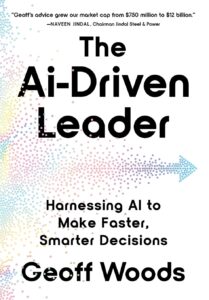
Geoff Woods’ The AI-Driven Leader has genuinely changed how I approach my day-to-day leadership. The central premise resonated deeply: Most leaders are stuck in the operational weeds, struggling to find the time to make better strategic decisions. That tension between operational demands and strategic thinking is something every CEO recognizes.
What struck me most was Woods’ concept of AI as a “Thought Partner”—not a replacement for human judgment, but a powerful tool for driving growth that helps you think more clearly. One phrase he uses has stuck with me: “You can’t read the label if you’re inside the jar.” When you’re deep in the operations of a 400-practice organization across 24 states, it’s easy to lose strategic perspective. Using AI as a thought partner gives me an outside view on problems I’m too close to see clearly.

When you think about scaling, what does it mean beyond expansion—how do you scale people, culture, and purpose?
Buying or building dental clinics is the easy part. People and culture are much harder to scale—especially if you are doing it across international borders. It is important to be clear on your mission, methods, and what you believe are the key ingredients of making a successful DSO. Tactics and details will have to adapt and be flexible as you scale, but the core ingredients of what makes you successful has to remain constant. At European Dental Group, we take time to bring in senior executives from our operating countries several times a year to work on our collective leadership, strategies, and priorities.
In your experience, what separates sustainable growth from fast growth that burns out?
You need to be able to build a team and build processes and systems that can create a foundation for success that can go from one year to another. This requires investment of capital and time. You have to have a constant vigilance on operating KPI—including patients, employees, and partners to ensure you are taking a holistic view of the service you provide and not just solely look at financial metrics.
What’s the most rewarding aspect of sitting in the CEO chair—and what’s the hardest part that few people talk about?
It’s always great to see business or teams create something new, especially when it goes on to be a success. People get a real buzz from stretching themselves with a new idea—often it doesn’t work out, but when it does it’s fantastic. A good example would be invisiblebraces4U: a high-volume aligner concept that offered a more affordable solution to patients. Within six months of the pilot, the team had rapidly expanded the offer, treating many thousands of patients who otherwise would not have been able to access these aligner solutions.
The hardest part is the traveling—I enjoy seeing our teams in their environment, but when your clinics are spread over five countries, it plays havoc with keeping fit and eating well.
When you imagine dentistry in 2050, what will be the biggest change? What do you hope stays consistent?
Technology enablers, whether AI or more robotic, will undoubtedly create a big change. There is a shortage of dentists entering the profession here in Northern Europe, so we will have to find ways to ensure our communities continue to receive great quality of care. I believe our dentists will be able to utilize new technologies to help them do that.
I hope that the profession’s empathy and deeply felt duty of care to our patients continues.
What advice would you give your younger self before taking your first major leadership role?
Really think through how you will achieve executional excellence. Pausing to take the time to engage others in the “why” as much as the “what” will lead to faster and better execution in the end.
What excites you most about 2026 for your organization and for dentistry as a whole?
We have just revamped and extended our Young Persons Program to cover all new young dentists who join our group. I am excited to see how it will help propel the careers of newly graduated dentists, giving them the confidence and opportunity to provide excellent quality of care and learn the business of dentistry.
For the dentistry industry, I am excited about the increasingly relevant technology innovations that can enhance the care we give our patients, often enabling dentists to be more productive and increasing the accessibility of dental care in our communities. Technologies are changing fast, and we want to be leading that innovation in our clinics.
What’s a book or podcast that has recently influenced your thinking and actions?
I flick between a few podcasts that I regularly listen to, with the main ones being High Performance, The Diary of a CEO, Enter the Boardroom, and The Rest Is Politics. I liked a recent podcast featuring James Timpson of Timpson Group. He shared examples of how he creates award-winning service for his customers, such as the good news notepad, which helped create positivity that made stronger teams, deeper trust, and more optimistic people.