Integrity isn’t an innovation. It’s a series of conscious choices that defines Agenics and the future of safe dentistry.
Every patient that leans back in a dental chair trusts that the water is clean and safe. Usually, it is. When it’s not, the complications can be life changing.
In 2016, for example, more than 70 patients of an Orange County, California, children’s dental practice experienced infections that were later traced back to unclean water at the practice. As a result, some children lost parts of their jaws, adult teeth, and even some hearing.
Dental water infections are far more common than they should be. That they happen at all speaks not to our ability to keep water clean but instead to a lack of organizational rigor and the prioritization of profits over people.
Having learned at the feet of a clean water pioneer and evangelist for a people-first business approach, I know that every instance of dental water infection can be traced to misplaced priorities, lax protocols, and flawed understanding. Thankfully, the technology available now gives dentists the tools to virtually eliminate dental water infections.

A Legacy Rooted in Service
While most people in the developed world don’t think twice about water quality unless they’re unfortunate enough to get sick, I can scarcely remember a time when it wasn’t part of my life.
My father, Brad Downs, was a chemical engineer who, in the 1990s, signed on to an Army Corps of Engineers project in Colorado, where our family would soon live. The ambitious project goal was to purify 3 million gallons of contaminated groundwater from the Rocky Flats nuclear site north of Denver. Of all the bids submitted, only Dad’s proposed purifying the water instead of hauling it to a nuclear waste site. That water was eventually purified so well it was safely returned to local rivers and streams.
The success of the Army Corps project convinced my father he could adapt the technology and scale it down to meet the needs of missionaries in Papua New Guinea who were regularly getting sick from biocontaminated water.
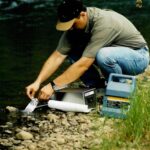
Buoyed by his faith, experience, and enthusiasm, he set off with a backpack full of equipment for the South Pacific island nation. Before long, he fashioned both a purification system and a solar-powered microbiological test lab to confirm water safety.
 Clean water isn’t just about safety—it’s a reflection of values.
 Portable Water Treatment System
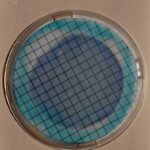 Treated Sample
 Ukarumpa River Untreated
Discovering a New Mission
Dad returned home still buzzing from his recent successes and looking for a new way to make a difference. He found it in early 2000 when ABC News’ 20/20 ran a story called “Dentistry’s Dirty Little Secret,” which highlighted a dental practice biocontamination water problem that was surprisingly common.
Only months later, dental water purity expert Dr. Shannon Mills published an article in the Journal of the American Dental Association (JADA) entitled, “The Dental Unit Waterline Controversy: Defusing the Myths, Defining the Solutions.” Dr. Mills described the ideal water treatment agent in terms of efficacy, safety, and cost, and concluded that no such agent had been discovered.
For my parents, the JADA article presented a worthy challenge and a purpose they could not ignore.
I still remember sitting with my father in the crawl space of our home as he worked to develop the ideal water treatment solution Dr. Mills had outlined. Recognizing the need to pair technology with user-friendly design, my mother, Theresa, did all she could to understand the needs of dental practitioners. She even trained as a dental assistant and worked in a clinic to see how treatment products could fit seamlessly into existing workflows.
At a young age, I could not then accurately describe the feeling that permeated our home, but now I know that it was purpose. Always present and attentive to their children, my parents were also driven to make a societal contribution and improve the world they lived in; they were moved by higher principles and values.
Driven by Science and Service
After months of research and experimentation, my father identified silver as the ideal water treatment agent and created a novel process to produce it in a usable form factor. Not long after, my parents’ company Sterisil was born and throughout the first decade of this millennium, they developed a leading line of patented dental waterline treatment technologies.
Sterisil still creates the only products recognized by the Environmental Protection Agency (EPA) that treat and maintain water purity at a level of 10 colony-forming units (CFUs) per milliliter of water, which is 50 times cleaner than the 500 CFU/mL standard established for drinking water by the Centers for Disease Control (CDC) and embraced by the ADA.
In 2011, my parents started Agenics Labs as an independent dental waterline testing company. I worked various jobs in the family business growing up but formally started my dental career alongside my parents after obtaining a bachelor’s of science in engineering. My husband-to-be Greg Niederschulte and I joined the company together and spent the next several years learning all there is to know about dental water purity. In 2022, Sterisil was sold to private equity without Agenics, and my parents entered semiretirement to run their new foundation, Our King’s Way.
In 2023, Greg and I acquired Agenics and are now putting all our efforts into maintaining the legacy my parents created.
Profit as an Outcome, Not a Goal
Thinking back to those 73 kids in Orange County, as troubling as the infections were, there is another aspect of that case that I think might be more disturbing.
After the outbreak led local public health authorities to the dental practices, a more thorough investigation discovered that the practice had performed more than 1,000 pulpotomies (root canals on children) between January and September of 2016.

Subsequent lawsuits filed on behalf of the children’s families alleged “predatory dentistry” and “production quotas” that ultimately sacrificed the children’s health on the altar of greater profits.
Were all those 1,000 plus pulpotomies necessary? It’s difficult to say definitively, but clearly the families of those impacted didn’t think so. I’ve imagined the trauma of a root canal performed on a toddler, and it makes this entire episode that much more troubling and shines a bright light on the priority of water quality.
Did the practice owners rely on municipal water quality and think testing was unnecessary? Perhaps, and they wouldn’t be alone. Many practices adhere to the “good enough” principle when it comes to water quality and nothing bad ever happens, until something does.
The Orange County outbreak also illustrates for me exactly what my parents were guarding against when they explained—with emphasis and passion—the unassailable hierarchy of business priorities: people, product, and then profit. The first two are the constant focus, and the third is the reward.
If dental practices cut corners, even with the best of intentions, at the expense of patient safety, they’re potentially putting both patients and practice at risk.
Good Intentions Aren’t Enough
Even if most or all dental water infections are the product of error, not avarice, that probably doesn’t matter to the infected patient. The goal should be zero dental water infections.
Our philosophy is that the best intentions are close to worthless without proper training, rigidly adhered-to protocols, and robust technology.
Consider Atul Gawande’s The Checklist Manifesto for a relevant comparison. Gawande’s book illustrates how even the most dedicated, well-trained, and compassionate surgeons and surgical teams make mistakes without robust protocols in the form of simple posted checklists that include no-brainers like “wash hands.”
Perhaps it would be different if states conducted periodic water-quality tests that practices had to prepare for. Currently, however, only Georgia and Washington state mandate regular testing.
And those infections do keep happening. According to the CDC in 2022, multiple outbreaks of nontuberculous mycobacteria infections have occurred in children who received treatment at practices with water contaminated with high levels of bacteria.
“Dental providers should be familiar with these recommendations on how to properly maintain and monitor their dental equipment to ensure that dental treatment water is safe for patient care,” the CDC says.
Protecting Your Patients and Your Practice
The cost of defending a negligence lawsuit and paying damages would be too high for most practices to survive.
But before an infection scenario ever gets to this extreme, most providers are simply concerned with properly and professionally caring for patients, which is a priority we share.
Agenics is dedicated to ensuring that patients don’t suffer devastating infections from routine procedures. While only Washington and Georgia have mandated water testing with a specified frequency, 43 states have codified the CDC guidelines for water quality into law, and all states recognize maintaining and monitoring dental water as the standard of care.
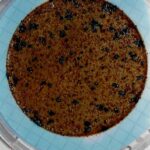
Agenics’ services begin with water testing but extend through comprehensive support, including protocol development, failure remediation, and extensive training. Bacteria testing is most commonly performed via the gold standard EPA Method 9215c using Reasoner’s 2A (R2A) agar—a venerable approach particularly effective at growing the bacteria common in dental waterlines. We’ve branded this our StandardCheck service, and it is a reliable baseline for whether a practice meets the basic EPA standard for drinking water.
When evaluating water samples with StandardCheck, Agenics uses a digital reader, which rapidly counts the number of bacterial colonies on a given sample. By removing the potential for human error, Agenics establishes confidence in both the reports we provide and the solutions we recommend.
Continuing the legacy of innovation, Agenics also offers RapidCheck: the most advanced bacteria detection method available. Agenics developed this specialized process in-house using thousands of real-world dental samples to create the most extensive and reliable test results available. With results in just 24 hours thanks to flow cytometry, this test meets the intense demands of high-throughput practices.
If a test reveals a bacteria level above the EPA minimum, Agenics looks deeper into potential sources, which may not be obvious. Water sources may be an issue, as might a dental chair’s frequency of use. (If narrow waterlines are not flushed and treated frequently, biofilm forms and quickly multiplies.) The water quality reports we provide are comprehensive and include data on alkalinity, total dissolved solids, and potential inhibitors of treatment agents.
From a generation of water treatment expertise, we’ve also learned to recognize unique water quality patterns such as the changes from spring to fall in municipal water or the differences in types of bottled water. As the only independent lab in the industry—Agenics does not sell any treatment or shock products—we can honestly review the effectiveness of any given product for a specific dental practice.
These are all things that most dentists don’t have the time or training to understand, but they can have an impact on clinical quality and patient safety. Instead of putting their livelihoods at risk, dentists can make water quality the responsibility of professionals who concentrate on nothing else.
Built on Principle, Leading with Purpose
I share my family’s story because it’s a reminder that an inherited legacy must still be protected every day or it will die. My parents built their professional lives on faith, integrity, and a simple truth: When people come first, success naturally follows.
That conviction drives Agenics today as much as it did when my parents were running the company. They taught me that embracing belief and service—purpose and meaning—is a better way to live. My parents never let us forget that seeing money as a primary objective would eventually cheapen our lives.
Growing up, my mother told us her goal was to raise children who cared about other people more than financial or business success. Our goal is for Agenics to succeed because we put first things first and trust the reward to come from consistent, values-driven business principles. Every sample Agenics tests, every partnership we embrace, is an act of legacy stewardship that honors where we came from and defines where we are going. Greg and I could think of no better way to honor my parents than to carry on as they taught us.