Trending

The Muted Recovery

10/22/2025
|
7 min. to read

What 2025 Taught DSOs—and the Road to Renewal

By Brian A. Colao
Director, DSO Industry Group at Dykema

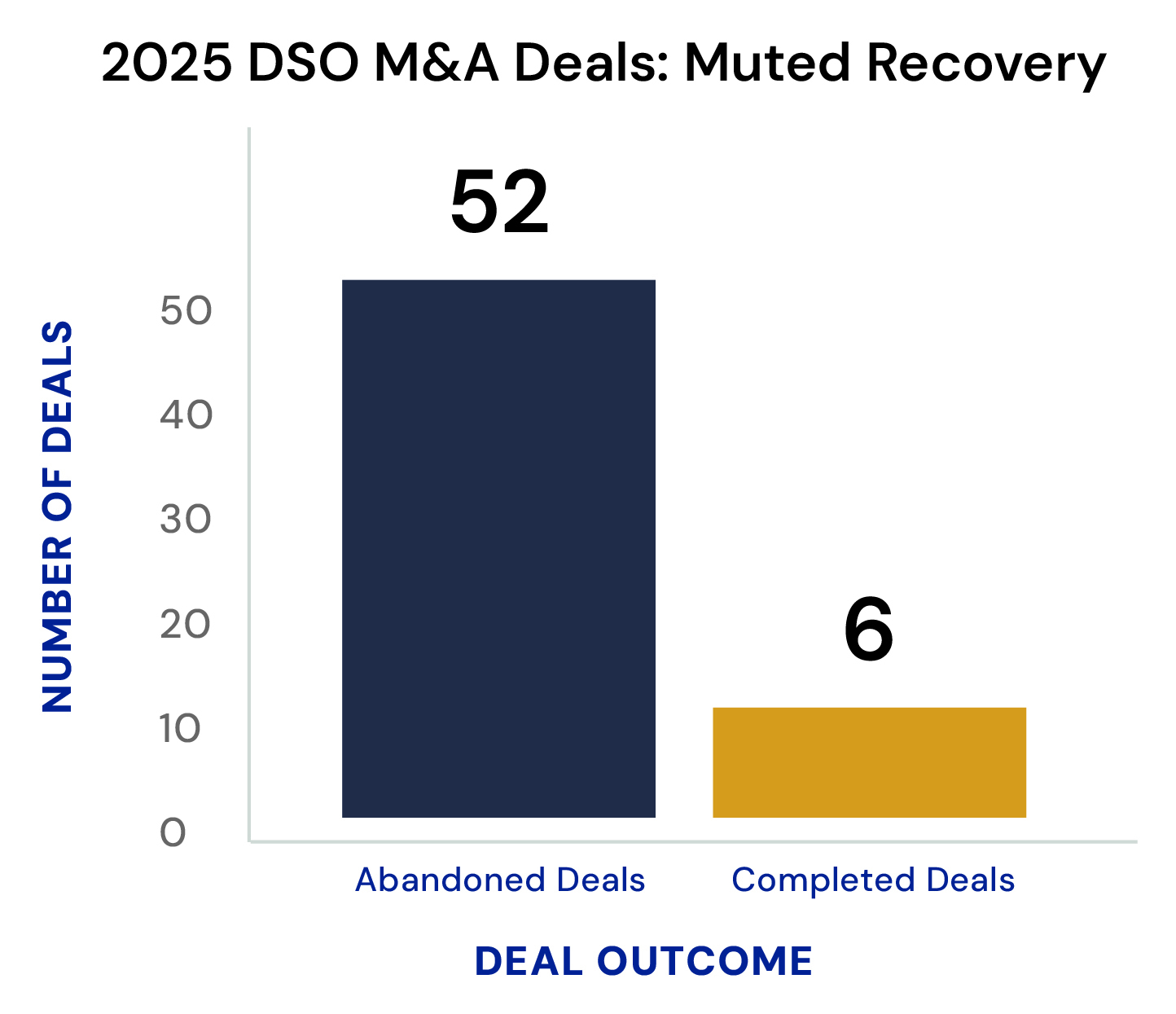
The year 2025 will be remembered throughout the DSO industry as The Year of the Muted Recovery. Entering the year, hope was high that the M&A drought and challenging conditions that began in mid-2022 and caused over 50 significant DSO sales processes to be abandoned would finally subside. A succession of interest rate cuts in late 2024, the inauguration of a new presidential administration promising pro-business reforms, and signals of economic stabilization and the promise of an end to a number of global military conflicts gave rise to expectations that the DSO M&A markets would make a robust rebound.

In my previous year-end article, I identified the critical conditions necessary for a true market revival: sustained interest rate reductions, moderation of inflation, resolution of global unrest, and a regulatory environment that fostered business growth. I also projected that DSOs would increasingly focus on technology adoption for same-store growth to drive EBITDA, compensating for muted acquisition activity.

The Reality: A Muted M&A Market

Unfortunately, virtually none of the foundational pillars for recovery materialized. In 2025, interest rates remained stubbornly high; inflation— though improved—never fell below the key 2% threshold; economically crippling tariffs were introduced against most of the developed world and, as of the time of this writing, much uncertainty remains as litigation over the validity of tariffs appears headed to the US Supreme Court for a decision sometime in 2026. Additionally, the military conflicts in Ukraine and the Middle East have not concluded and continue to exert downward pressure on global markets.

The administration, despite its business-friendly posture, has targeted healthcare fraud aggressively, fueling a notable spike in federal enforcement actions and producing further headwinds for DSO deal-making, which is the subject of a separate article contained herein by my partner, Leigha Simonton, former US Attorney for the Northern District of Texas. As a result, M&A volume remained extremely limited, valuations were pressured, and many groups opted to focus inward, delaying growth decisions and focusing on operational efficiency.

Signs of Hope for 2026: The Year of Renewed Opportunity

Despite these frustrations, several positive signals have emerged, setting the stage for potential improvement in 2026—The Year of Renewed Opportunity:

Advertisements
  • The Federal Reserve at its Sept. 16 meeting, finally, in a highly anticipated move, reduced interest rates by a quarter point. As of the time of this article, there is optimism that there will be additional rate cuts in 2025 and into 2026 because it will take several more rate cuts to create truly favorable economic conditions for the M&A markets.
  • Preliminary peace talks in Ukraine and calls for resolution in the Middle East offer guarded optimism regarding global stability.
  • Legal challenges to tariffs may result in their invalidation, potentially easing supply costs and reducing inflation.
  • Sellers are increasingly adopting pragmatic valuation standards, acknowledging the need to turn investments amid evolving market conditions.
  • There have been at least two significant transactions that have closed and several potential transactions that, as of the time of this article, are under Letter of Intent (LOI) and there is cautious optimism that several closings will be announced before year-end, which represents at least a muted recovery with the chance for a fullblown recovery in 2026.

Given these developments, I anticipate an uptick in M&A activity beginning in the second half of 2026, with the potential for momentum to accelerate should economic circumstances and policy frameworks finally align.

A New Era of Healthcare Enforcement

By Leigha Simonton, Former High-Level DOJ Official and Leader of Government Investigation and Defense Practice for Dykema’s DSO Industry Group

This year has ushered in a markedly elevated threat landscape for health care businesses. The US Department of Justice (DOJ) has prioritized healthcare fraud enforcement at an unprecedented level, shifting its approach from isolated financial disputes to aggressive criminal prosecution in cases that, in prior years, might have remained civil contract matters.

This effort accelerated following the DOJ’s May announcement identifying healthcare fraud as a top priority. New initiatives include financial incentives for whistleblowers to report offenses spanning federal benefit programs, private insurer schemes, and a broader array of conduct now categorized as “fraud,” including actions impacting patients, investors, or other nongovernmental entities. The DOJ reinforced its commitment with new dedicated teams, collaborative working groups with HHS, and the launch of the Health Care Fraud Data Fusion Center—a sophisticated operation leveraging advanced analytics and AI to identify emerging fraud schemes.

“The risks of proceeding without expert guidance have never been greater.”

June 2025 saw the largest healthcare fraud takedown in American history, with criminal charges brought against 324 defendants—including nearly 100 licensed medical professionals—for allegedly orchestrating $14.6 billion in fraudulent activity. Notably, this crackdown involved coordination with 12 State Attorneys General’s Offices and extended beyond federal payer fraud to include wire and mail fraud charges associated with private payers, demonstrating a wide net of enforcement.

Given this aggressive climate, industry participants must maintain rigorous compliance and seek experienced counsel with deep knowledge of the DSO industry, government agency processes, and the structuring of advertising, marketing, business development, patient incentive, and compliance programs—and certainly at the earliest indication of possible scrutiny or an internal concern. The government’s sophisticated investigative approach means that even seemingly minor abnormalities can escalate quickly, and the risks of proceeding without expert guidance have never been greater.

Technology: The Imperative of Innovation

Just as predicted, technology adoption for same-store growth has become essential. DSOs nationwide have piloted—and increasingly implemented—innovations in diagnostic AI, cloud-based practice management, automated RCM tools, patient finance solutions, and specialty integration platforms. While adoption has advanced more slowly than hoped—primarily due to challenges in education, training, integration, and implementation—it is steady and inexorable.

Rising costs for labor, supplies, and equipment, combined with stagnant reimbursement rates, have made technology the only viable solution for sustaining margins and driving growth.

A Bright Spot: The 2025 Dykema Definitive Conference for DSOs
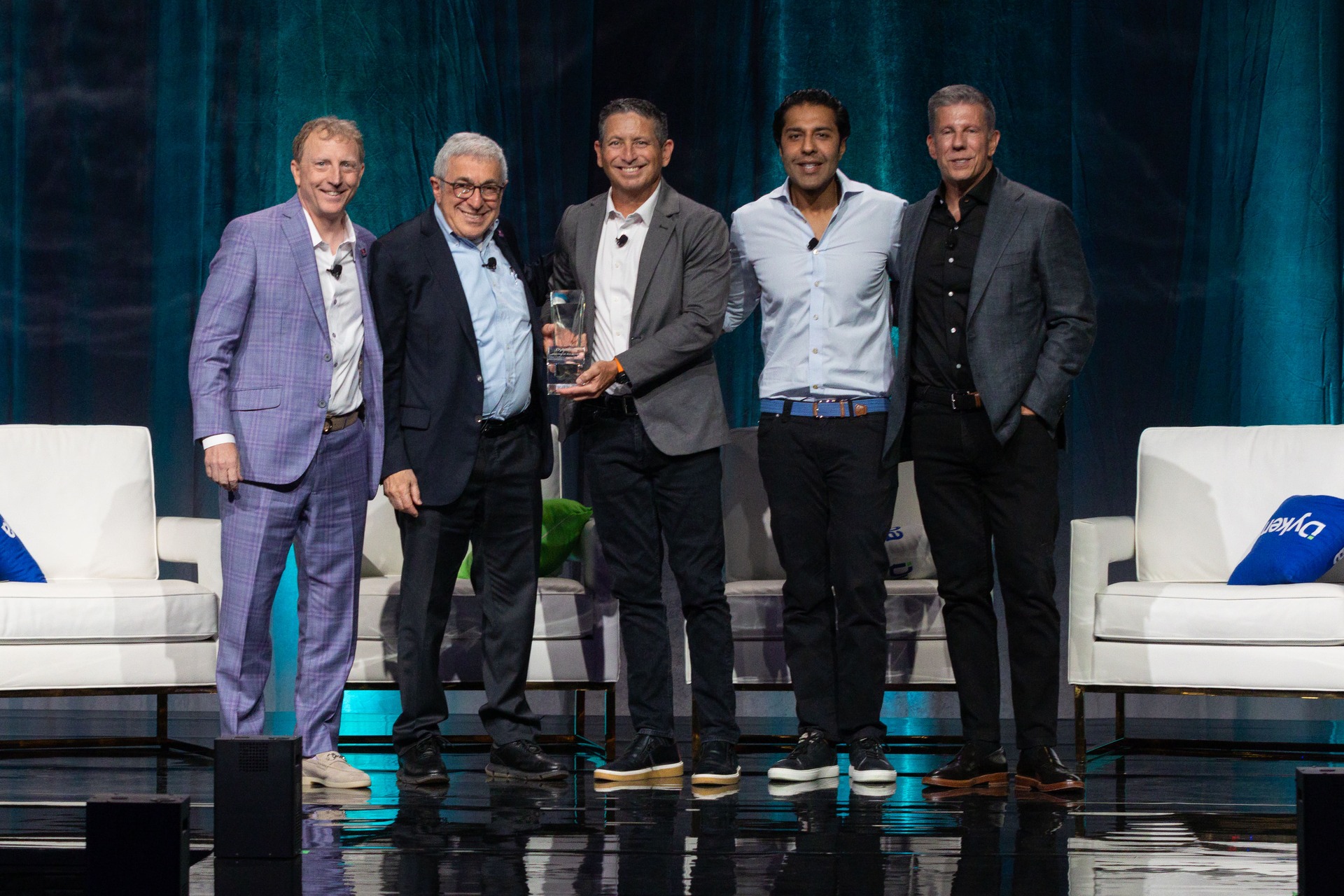
Amid an otherwise stagnant year, the Dykema Definitive Conference for DSOs emerged as the industry’s true highlight and north star. With attendance surpassing 2,500 and experiences selling out within just hours, the event reaffirmed the strength and future promise of the DSO community. Breakouts and workshops quickly reached standing-room only, underscoring the appetite for practical insights and forward looking strategies. The conference also shined a spotlight on industry leadership: Bob Fontana (The Aspen Group) and Stan Bergman (Henry Schein) received the Lifetime Achievement Award, while respected voices like Dr. Sulman Ahmed (DECA Dental) and Steve Bilt (Smile Brands) reinforced their commitment to advancing the profession.

Just as significant, vendors and sponsors showcased innovations that will help power a new era of growth—advancements that align directly with the industry’s need to innovate, refine operations, and prepare for the rebound ahead. The conference made clear that while recovery may take longer than hoped, the foundation of innovation, leadership, and community is firmly in place to carry the industry forward.

Strategic Outlook: Thriving in Uncertainty

As The Year of the Muted Recovery draws to a close, DSOs must remain strategic and resilient. The best-run organizations will not simply survive the volatility; they will use this period to innovate, refine internal operations, and position themselves to lead as the market rebounds.

My prediction: 2026 will begin with the same cautious progress but, as the year unfolds, will reward those organizations who are prepared—operationally flexible and technologically advanced—when true recovery gains traction. With strategic adaptation and forwardthinking investment, DSOs will be well-positioned to lead dentistry’s next era of growth.


Gain ACCESS TO
INSPIRING
stories
Get membership
Companies

Aligning Data, Advancing Oral Health

10/22/2025
|
7 min. to read

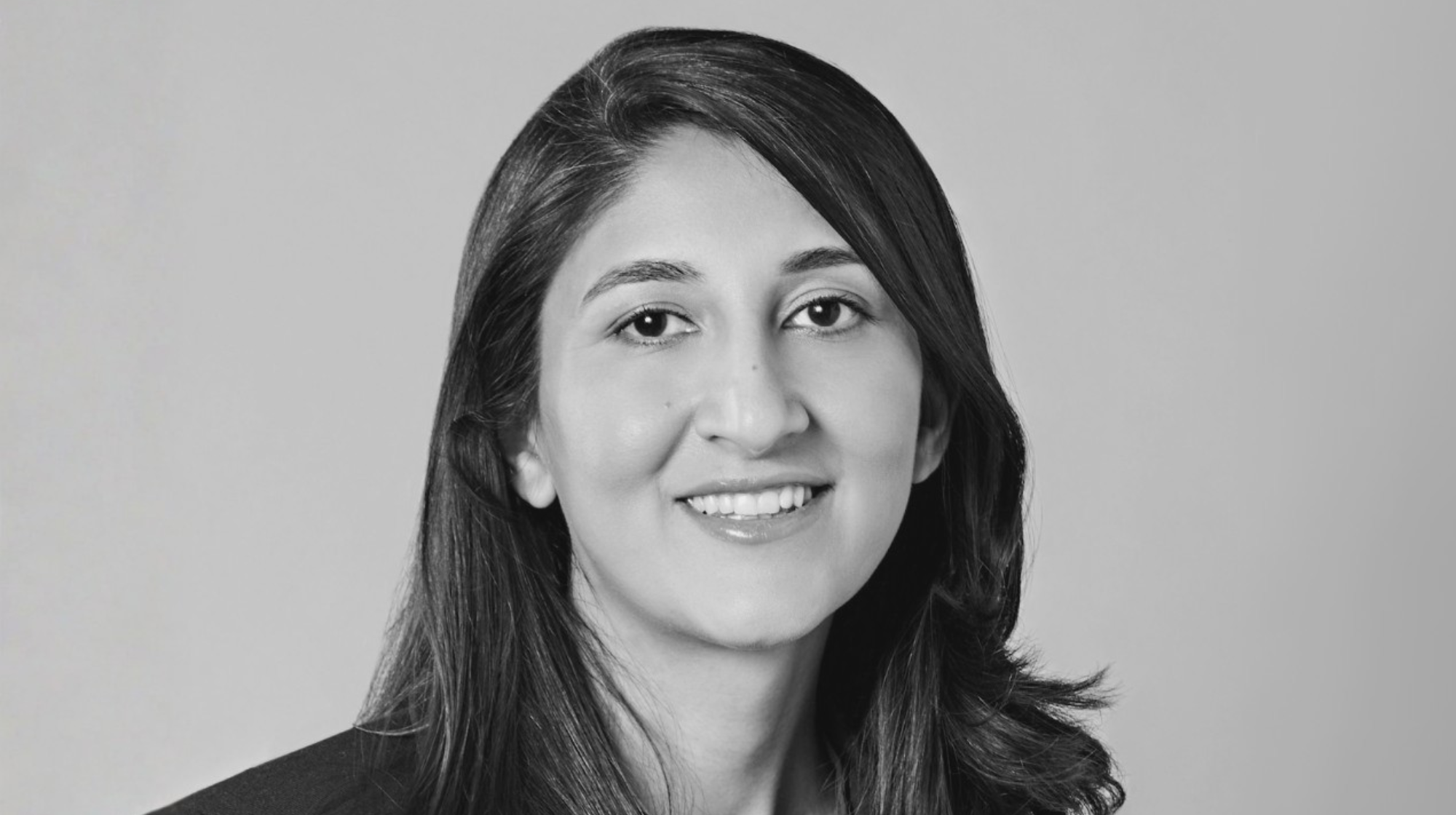
Wardah Inam walked into a dental office for treatment and left with more questions than answers. A new plan conflicted with what she had previously been told, insurance coverage was a mystery, and no one could explain the discrepancies.

For most patients, this confusion is just part of the system—but for Inam, who has a Ph.D. from MIT, it sparked a bigger question: why was dental diagnosis so hard to understand?

“I asked for my X-rays, then left the office. That’s when I started learning dental basics myself, reading books and papers to understand how dental diagnosis works,” Inam says. “I shared my data with multiple dentists, and they gave me different recommendations as well.”

Even with identical data, dentists offered conflicting recommendations. Inam plunged into dental research, consulted multiple providers, and observed dentists in action. Dentistry wasn’t failing from lack of skill— it was failing from a lack of tools assisting dentists.

Bridging the Divide

Inam founded Overjet with a powerful goal: to make dentistry more quantitative and get every stakeholder on the same page to deliver the best care.

“With my background in AI and technology, I realized this was a place where I could make a meaningful impact,” she says.

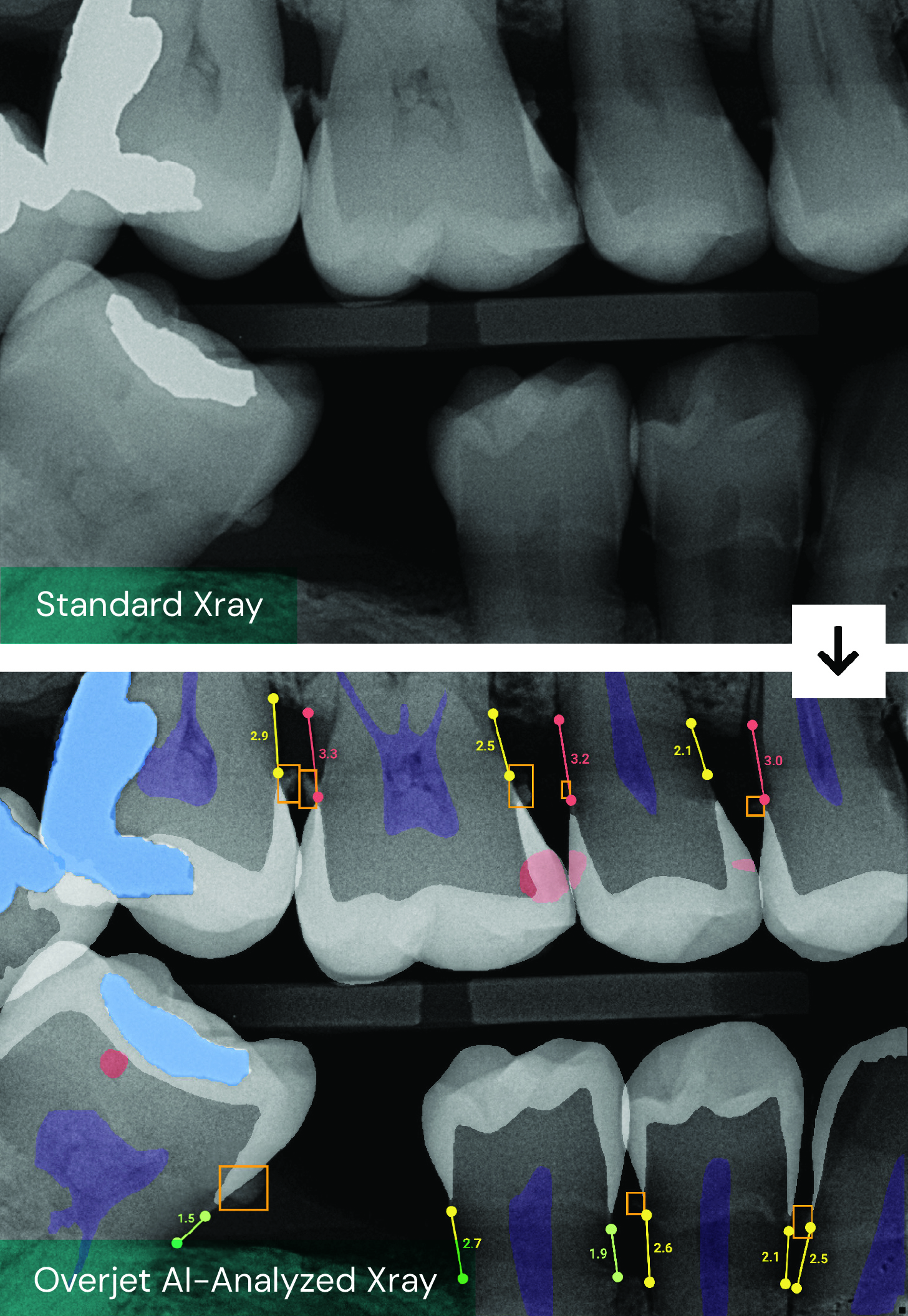
By analyzing dental images and patient data, the platform ensures that diagnoses and treatment plans are consistent, transparent, and aligned with best practices.

“Overjet is on a mission to improve patient care, create exceptional experiences, and optimize outcomes. To achieve this, we need technology that considers the patient experience end-to-end, while also supporting the multiple stakeholders who deliver and pay for care and ensure the system works effectively across the ecosystem,” Inam explains. “Technology can serve as a facilitation layer, enabling providers and payers to share information more seamlessly. This leads to faster, more accurate decisions and, ultimately, better care for patients.”

From the patient’s perspective, the dental journey—from diagnosis to treatment, claim submission, and payment—can feel complicated and opaque. Instead, Inam argues the journey should be more collaborative at every step. “Our AI-native imaging software helps providers communicate more effectively, so patients truly understand their oral health and the treatments they need,” Inam says.

“AI is a tool,” Inam says. “Our goal is to ensure that patients feel understood, providers feel confident, and payers can make faster and accurate decisions. When all three sides trust the system, everything improves—outcomes, costs, and patient experience.”

Measuring What Matters
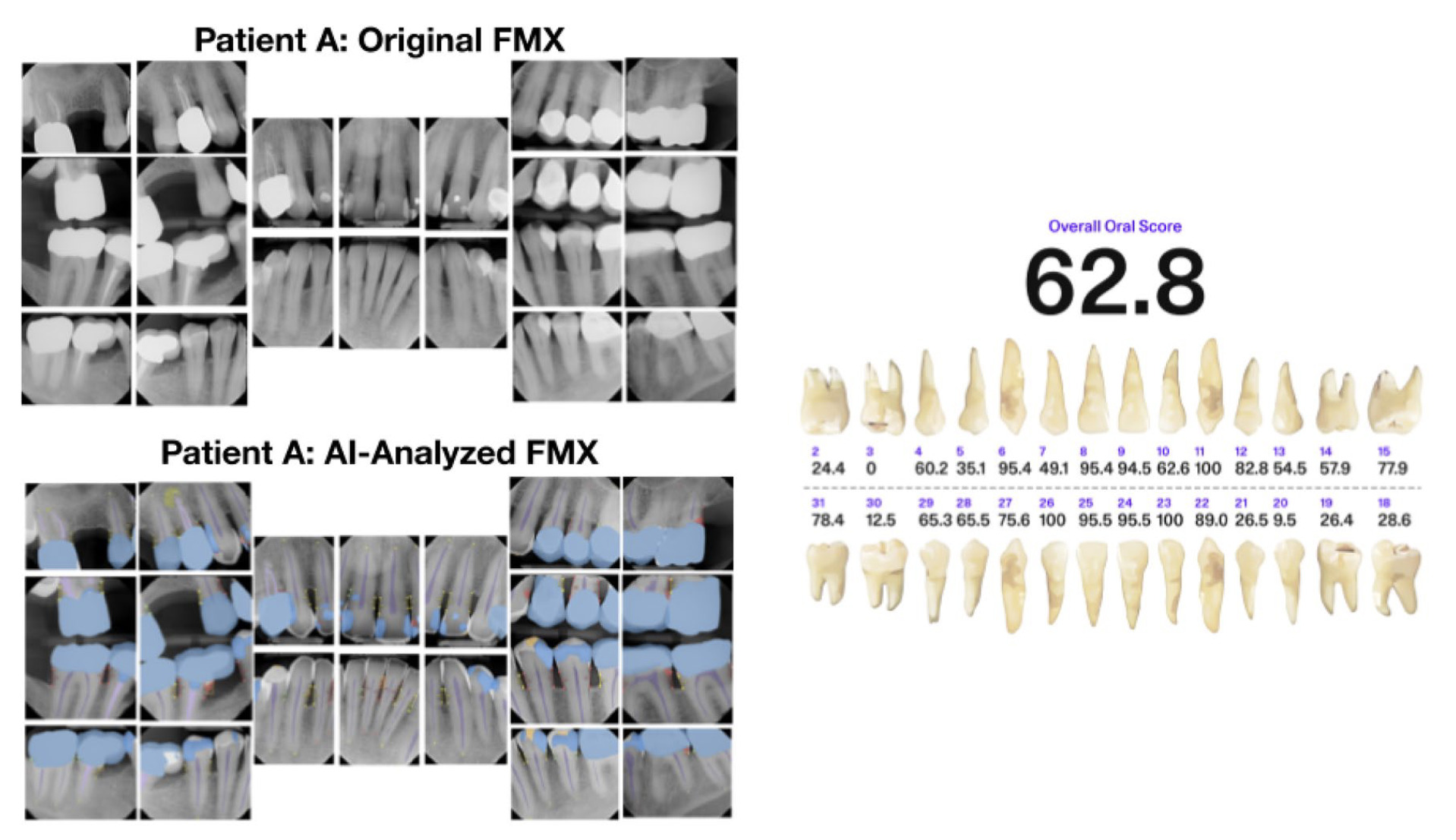
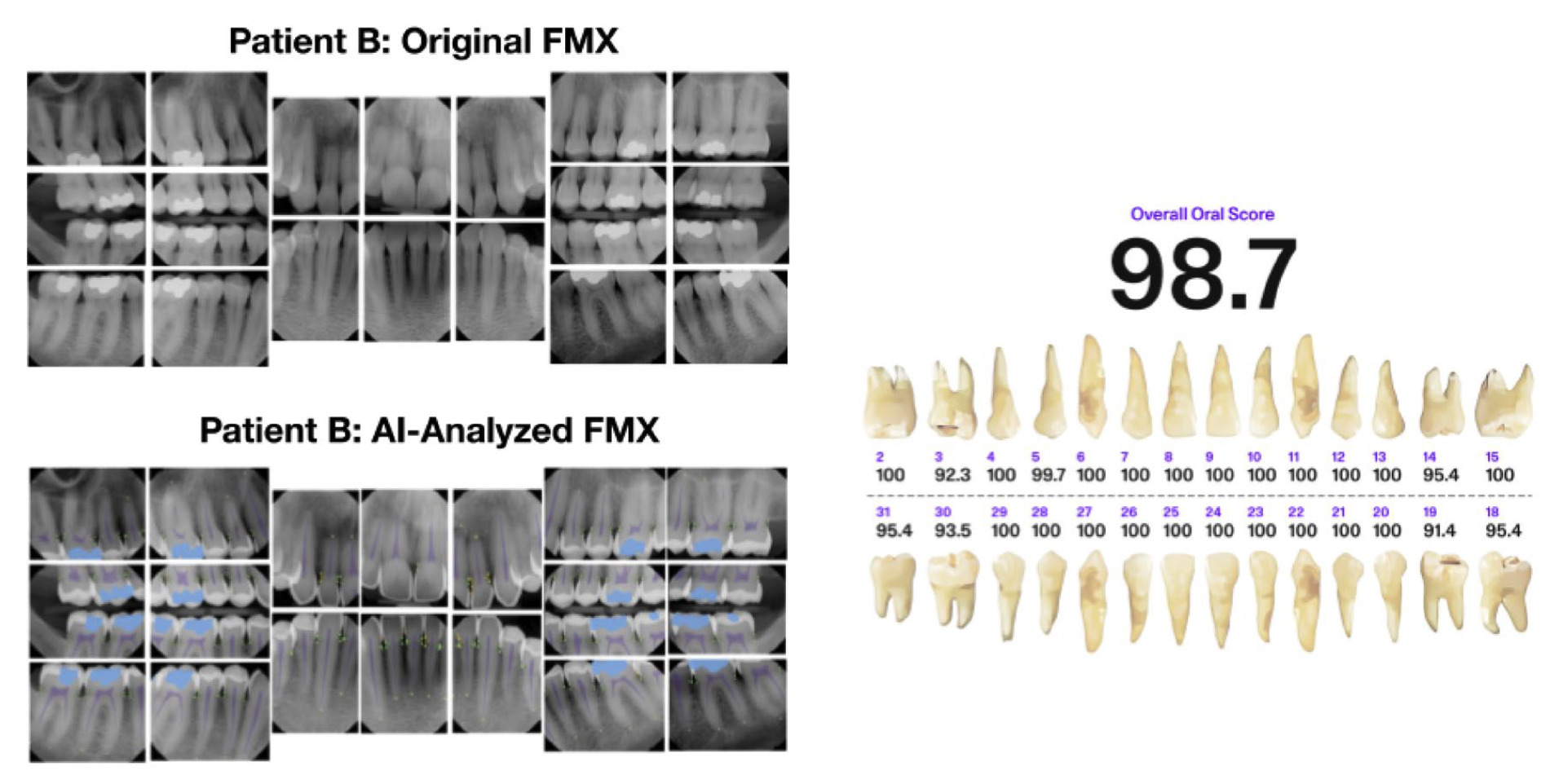
One of the ways Overjet builds this trust and collaboration is through the introduction of the Oral Health Score: a measurable, objective metric that connects patients, providers, and payers.

“It shows where they are today, what treatments are needed, and how those treatments will improve their health. It also helps providers and payers work from the same objective data,” Inam notes.

By creating measurable, objective metrics, Overjet reduces friction and aligns all stakeholders, fostering transparency. “If you can measure it, you can improve it,” she emphasizes.

The Oral Health Score isn’t just internal innovation—it has a scientific foundation. “We’ve used data from more than 340,000 patients across all 50 states,” Inam says. “That scientific foundation is what excites us most— bringing measurable, data-driven improvements to oral health.”

Tackling the Taboo: Working with Payers

While internal metrics like the Oral Health Score bring much-needed clarity, one of the biggest barriers to progress in dentistry is the payerprovider relationship. For decades, it has been defined by mistrust.

Collaboration between providers and payers is rarely simple, but it is absolutely essential. Overjet streamlines this process by helping providers verify insurance in seconds, a task that traditionally takes hours, through aggregated eligibility and benefits data combined with direct payer connections. Its evidence-based AI annotations also empower providers to submit stronger claims, resulting in faster payouts. Overjet’s ReviewPass further accelerates the process by enabling instant payer approvals and skipping manual insurance reviews. In addition, Overjet has introduced credentialing automation software used by both providers and payers to deliver instant, automated credentialing and remove unnecessary administrative friction.

Advertisements

“Providers and payers don’t need to love each other, but they do need to figure out how to work together more effectively to better serve patients,” she notes.

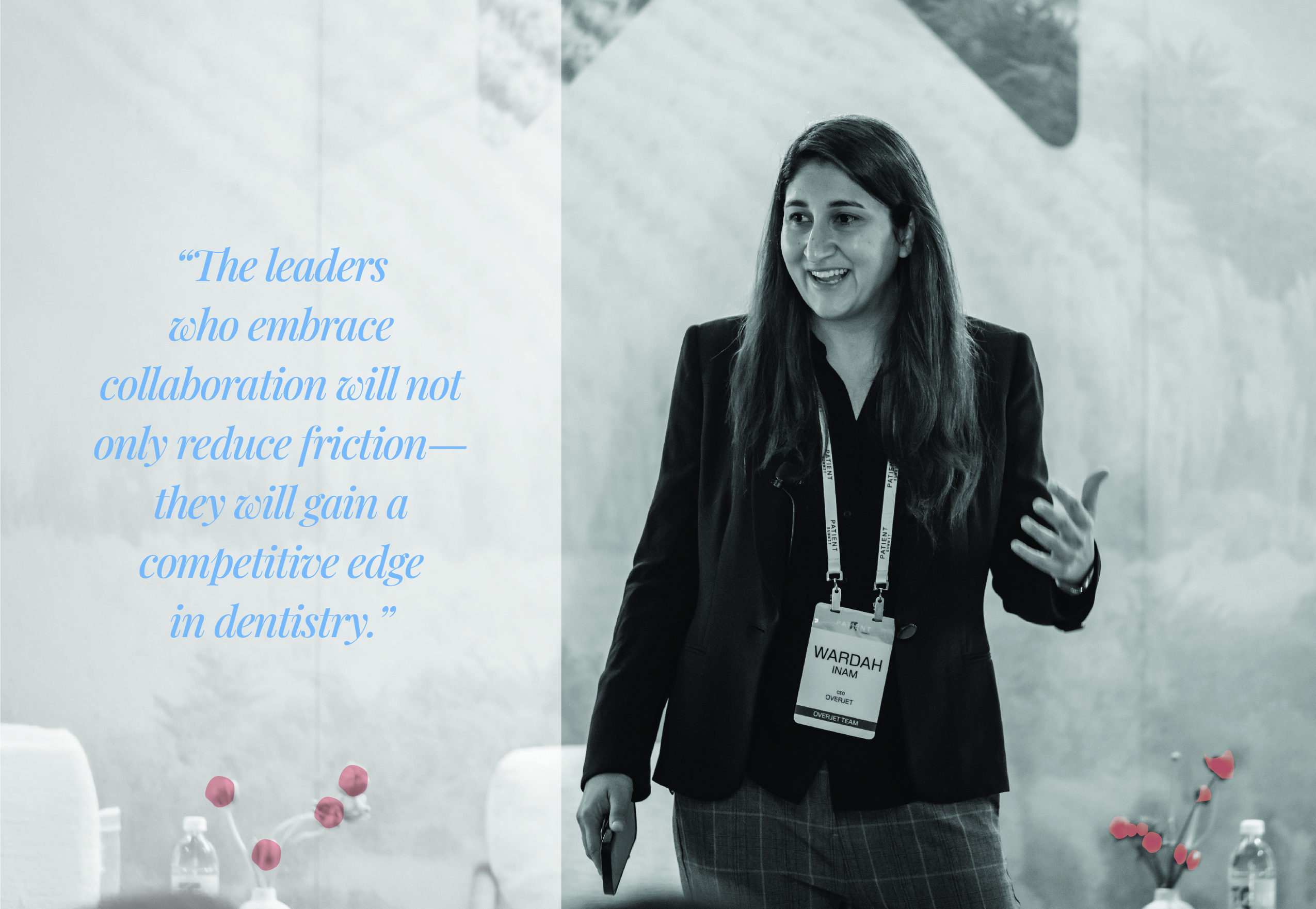
The message to providers is clear: avoiding payers is no longer a strategy. The leaders who embrace collaboration will not only reduce friction—they will gain a competitive edge in dentistry.

Empowering DSOs to Take Bold Action
Overjet is a lever for leadership courage and collaboration, enabling an endto- end, streamlined experience from diagnosis to claim submission.

Standardizing and scaling tools supports both DSOs and solo practices. Patients benefit from more clarity and fairness in treatment, which leads to better outcomes. Providers make more accurate and faster claim decisions with less admin burden.

Payers reduce costs by cutting down administrative overhead.

“The power of AI is not just operational efficiency,” Inam says. “It’s about giving DSO leaders the confidence to grow fast while providing the best care to their patients.”

Overjet allows DSO leaders to step into a new type of leadership—one that prioritizes collaboration, clarity, and courageous decision-making.

Thought leader Kerry Straine, CEO at Straine Dental Management, is confident about the opportunities ahead, “Patient care is at the heart of everything we do. Our goal is to help our partners elevate the patient experience through AI-powered tools. With Overjet, we’re unlocking new levels of precision, efficiency, and performance that will redefine what’s possible in dentistry.”

That same clarity and collaboration extend beyond patient care— transforming transparency into a powerful driver of trust, growth, and competitive advantage.

Turning Transparency into Market Power
Trust cannot be spun, it must be earned through transparency, data, and the courage to confront hard truths directly. When done right, it doesn’t just improve patient care, it drives measurable business results:

  • Patient retention: Clear communication and reliable care build loyalty.
  • Operational efficiency: Consistent treatment planning reduces errors, unnecessary procedures, and administrative burden.
  • Strategic growth: Easier payer collaborations and smoother integration across locations.


Fred Ward, CEO of Marquee Dental Partners, has seen the impact up close: “The best dental offices I’ve ever been associated with were the offices who focused on the patient. I’m excited about what AI can bring—real-time data, real-time recommendations—all the things that enhance a doctor’s opportunities are right in front of them. They can spend their time with the patient doing the treatment right now.”

That, Inam emphasizes, is the real mission: “We’re not just building better AI. We’re building a system where data drives decisions. That shift is the most powerful driver of better care, lower costs, and stronger leadership.”

The Shift: From Blame to Collaboration

Looking forward, Inam envisions a healthcare ecosystem where patients, providers, and payers interact seamlessly, supported by technology that is transparent, reliable, and evidence-based. Overjet is leading this charge in dentistry, creating a model that could expand across broader healthcare.

“Imagine a frictionless dental experience for every patient,” Inam says. “Providers should be empowered to make confident decisions, and payers should feel secure in coverage. When you align all three, you unlock a system that’s smarter, faster, and more humane.”

For DSOs, embracing this model is an invitation to rethink legacy processes, adopt innovative tools, and place trust at the center of leadership.

“This isn’t about asking ‘who wins?’ It’s about asking, ‘How do we all win?’ By shifting from blame to collaboration, we can inspire a new generation of dental professionals and DSO leaders to embrace data-driven care,” Inam says.

Her confusing dental visit years ago pushed Inam to act, and that courage created a platform reshaping an entire industry. The choice now lies with every DSO leader and decisionmaker: remain stuck in uncertainty, or build a future defined by clarity, collaboration, and bold action.

Gain ACCESS TO
INSPIRING
stories
Get membership
Products

Broken Smile to Industry Breakthrough

10/22/2025
|
12 min. to read

My cousins and I tumbled, laughing, into the car. I climbed into the middle front seat with no seatbelt.

The last thing I remember was my face smashing into the dashboard. Broken nose, jaw, teeth, maxilla.

It was the most devastating moment of my life.

The road to revolutionizing oral care didn’t start in a lab, it started with a broken smile.

Beyond Aesthetics

The culture I grew up in was traditional Georgian, very rooted in family values. Getting married young was expected. People would formally ask for your hand in marriage. Beauty was everything—how you looked often mattered more than anything else. But I was different. I had a mind I wanted to use, dreams I wanted to pursue. My father knew that. Nevertheless, at 13, I was being prepped for introductions and weddings.

My parents, new immigrants, didn’t know the best doctors or have access to top care so we went to the local clinics. I went through years of dental work with implants, root canals, veneers, and braces. I hated looking in the mirror. I felt insecure and carried this invisible pain.

But one day, the orthodontist said something I never forgot. He said, “Don’t worry, great things will come from you. You’ll change people’s lives.” 

He gave me hope. He made me stop focusing on what I looked like and start thinking about what I could do. That one moment changed everything. I cared about making a difference. And from then on, my life took a different path.

No Complaints, No Excuses, Just Work

In addition to the complete change in my life’s trajectory, my parents’ compassion, respect, and tenacity influenced my decision to become a doctor.

My father drove a taxi for 14 years, an old yellow Checker. Eventually, he built his own company, bought medallions, and ran a fleet of cabs. He’d be up at 3 a.m., fixing cars when they broke down. There was no complaining, just work, determination, and problem-solving. He did whatever had to be done and so did my mom. It’s almost like you forget the past, you forget the future, and you just keep doing the next step. That’s the resilience that I’ve learned.

My mother had followed the customary Georgian path of getting married young—in fact, she left school one semester shy of becoming a physician to marry my father.

She sacrificed so much of herself. She was brilliant. She’d help me with chemistry and organic chemistry. It pained me as a girl to watch her life revolve around domestic duties when I knew she was meant for so much more. I chose a different path. 

Trading Prestige for Purpose

I started dental school at the University of Pennsylvania. After a residency at New York Presbyterian, I spent two years practicing cosmetic dentistry on Fifth Avenue in New York City. While doing that, I was offered a teaching position at NYU in their Advanced Aesthetic Dentistry program, which I held for two years. But eventually, I returned to Penn for orthodontic school.

I graduated at the top of my class and practiced orthodontics in NYC for 10 years. That time was incredible. I met amazing patients, colleagues, and mentors. But over time, I knew I wanted to go beyond the practice and build something that would impact lives on a larger scale.

Quote
“I wasn’t chasing approval, I was chasing impact.”

Emergency Calls Spark Innovation

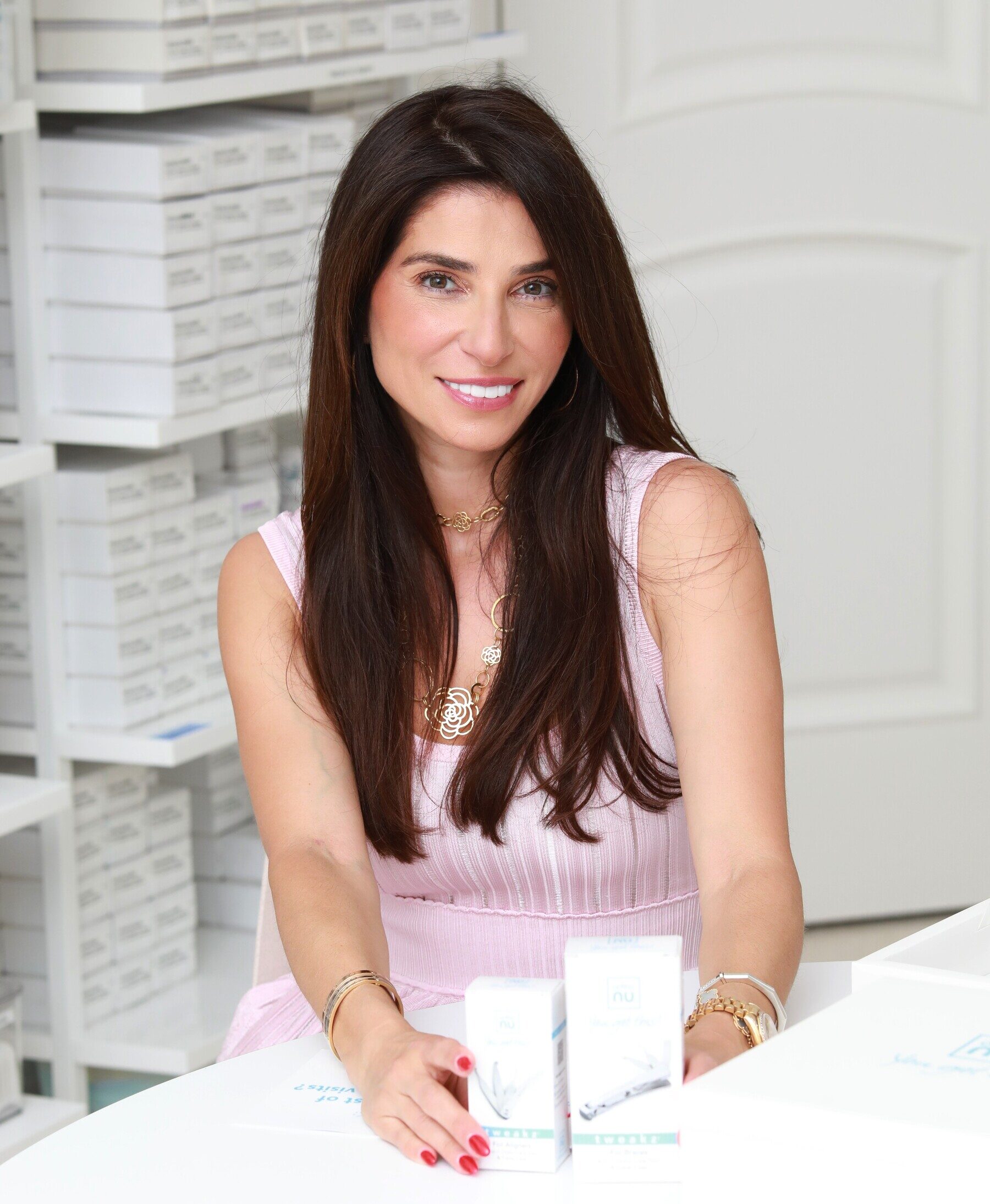
Throughout my career as an orthodontist, I always took the emergency calls. My husband, also an orthodontist, and my father-in-law would hand them to me because I had the patience to walk my patients through what to do. Over the years, I felt the pain and frustration on the other end of those calls: parents trying to help their kids with swollen gums, broken appliances, sleepless nights. I kept thinking there had to be a better way. They shouldn’t have to resort to toenail clippers or pliers to make urgent fixes. Kids shouldn’t have to suffer through school or another night in pain.

I carried that frustration with me for years. Then COVID hit. Suddenly, families from all over were showing up at our home because they had nowhere else to turn. We saw so many people, each with urgent problems. That was the breaking point.

One night, I was in the basement, my husband next to me, the kids playing nearby. I began sketching ideas and drawing designs for what became Tweakz®. I couldn’t stop. My husband was chiming in: “Add a diamond file. A diamond tip.” I kept going, researching clinical trials, studying what worked and what didn’t.

It felt like solving a giant puzzle, and I thought, “I can do this.”

Within weeks, I created 18 products, organized into three collections: Oral Relief, Microbiome, and Aesthetic.

30 Patents and Zero Tolerance for Band-Aid Fixes

At the core of it all was the same why: the voices on the other end of those calls, the desperate parent, the crying child, the family in chaos. As orthodontists, we hand out goody bags filled with toothbrushes and floss that patients just throw away—because when they’re in pain, they’re not thinking about brushing or flossing.

The real question is: How do we get them out of pain so they can achieve proper oral health? When you solve the actual problem, everything else falls into place. If you don’t, you’re just putting a band-aid on it. 

I wanted to solve the problem and that led me to create a portfolio of sciencedriven, research-backed products designed to help patients when they’re at their most vulnerable.

I returned to Penn to deepen my research in preventive medicine, focusing on oral wellness, the oral microbiome, and new delivery systems. I now have about 30 patents pending.
Toenail Clippers Don’t Belong in Orthodontics

People are still using toenail clippers to fix broken wires. It’s awful, and dangerous. Pieces can fly off, lodge into the buccal mucosa or esophagus. It’s a huge liability for the doctor, but no one talks about it. And when people speak up, there’s pushback: “Oh, it’s fine, just come in, miss work, miss school, don’t sleep for two nights while a wire digs into your cheek, causing inflammation, bacteria buildup, plaque, and demineralizations.” All of it is preventable.

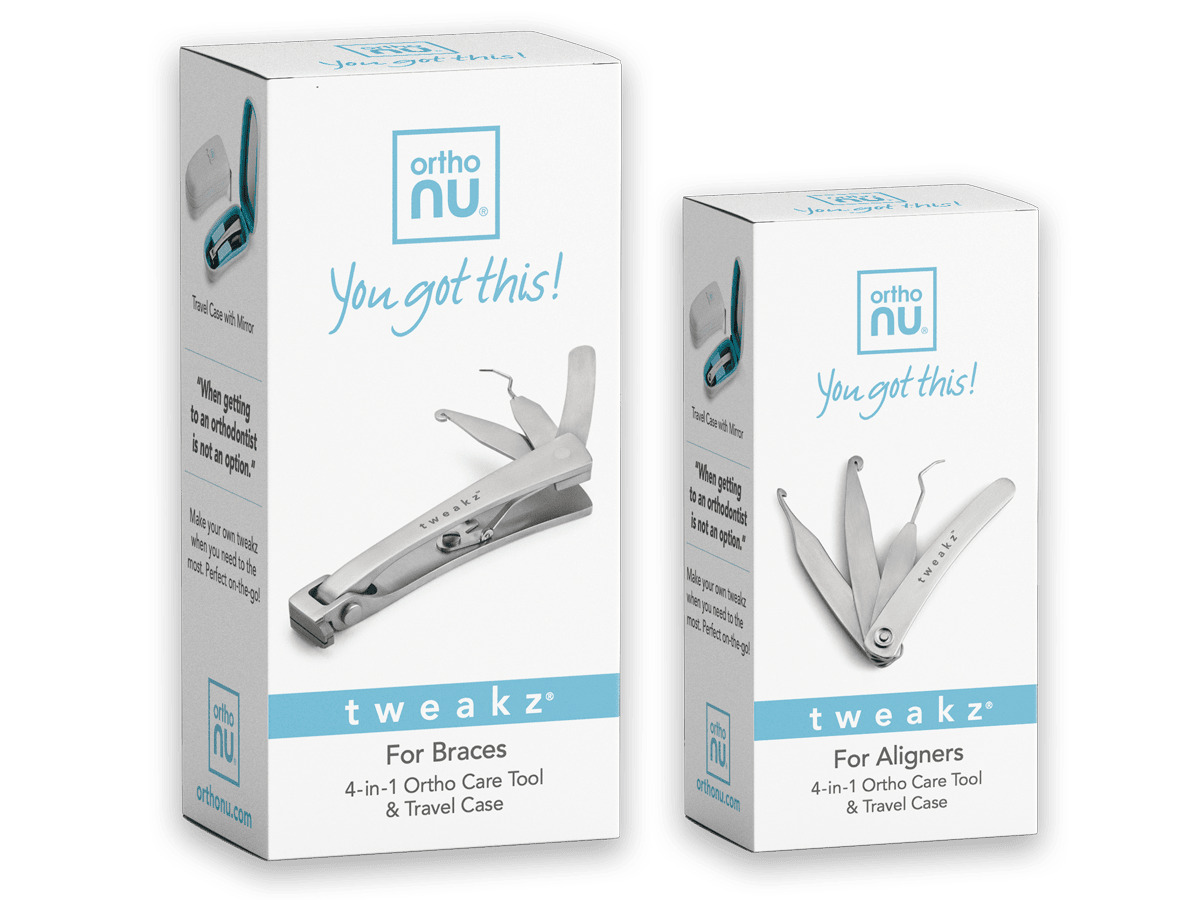
That’s why Tweakz for Braces was the first product. It includes a flush distal end cutter that safely trims wires without leaving sharp edges or loose pieces, unlike old nail clippers. The dislodged bracket remover clears broken brackets, while the rubber band applicator makes changing elastics easy. The diamond dental file smooths rough spots on brackets, hooks, and bands.

The Tweakz for Aligners kit offers an elastics applicator, an aligner remover that removes the most retentive of aligners with ease, and the diamond dental file.
 

Clinician First, Businesswoman by Fire

Starting the business came with a kind of fearless ignorance. I didn’t know what I didn’t know, and in a way, that protected me. I simply focused on the next step: Ask questions, find answers, and keep moving. The stress didn’t hit until my expectations collided with the real mechanics of business— timelines, margins, negotiations. I didn’t yet understand how deals were made or what tradeoffs were required to keep things moving.

Advertisements

The hardest part wasn’t the work itself; it was staying grounded in a world where I no longer felt like the expert. In medicine and oral health, I was confident. In business, I was uncomfortable. Constantly. But instead of pulling back, I focused on what I knew: how to help people, how to remove pain, and how to prevent suffering. My fascination with removing discomfort from someone’s life is what still drives me today.

There were plenty of times I was told “no.” 

But I learned something important: 

When you hear “no,” you’re probably just talking to the wrong person.

So I kept going.

Because I wasn’t chasing approval, I was chasing impact.

There were moments of real doubt, days when I questioned everything and nights when I leaned hard on even the smallest wins to keep going. But those glimmers of clarity and hope kept me moving forward. I’ve never looked back. The vision I hold now is bigger, clearer, and more powerful than ever, and it’s rooted in helping others feel empowered too.

Being an orthodontist always felt natural to me, but becoming an entrepreneur felt like learning a whole new language. Every day is unpredictable. But little by little, the products have started to speak for themselves. That’s been my greatest challenge, bridging the gap between my skill set as a clinician and the skill set you need as an entrepreneur. It’s so important to me that someone opens that package with a smile, knowing this product is going to help them.

90% of Emergencies Solved Before They Start

Beyond improving patient care, these products protect the bottom line by preventing emergencies that can cost orthodontists up to $300 at each emergency visit. Ninety-nine percent of bracket emergencies are due to broken brackets or sharp distal ends. For aligners, 92% involve rough edges or trays that are challenging to remove.

Those unexpected visits, usually right after school, at the busiest time of day, can throw an entire office into chaos, from sterilizing tools and turning over chairs to derailing the schedule. 

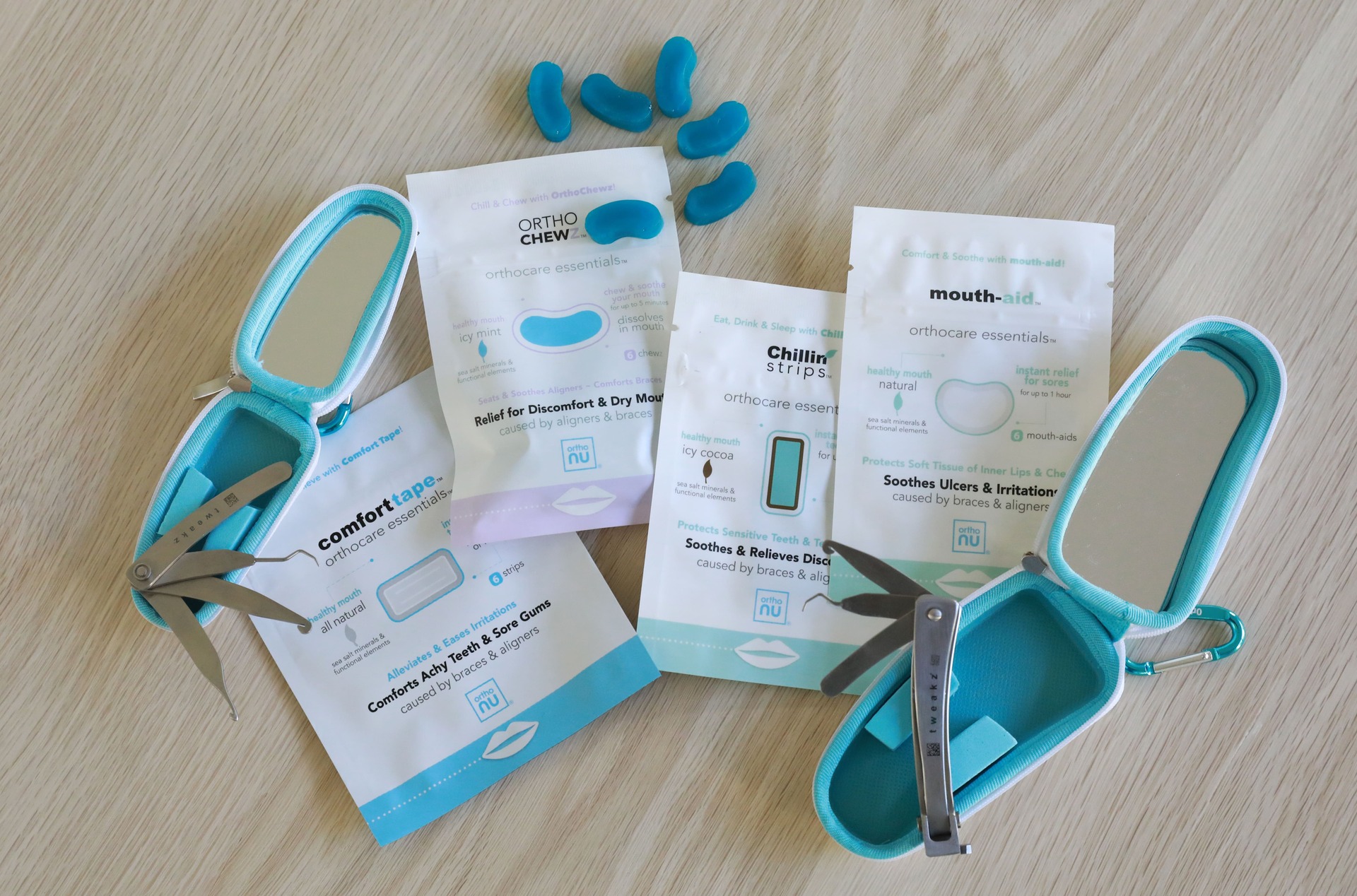
OrthoNu® products help protect profits by solving 90% of emergencies right at home. The Tweakz tool cuts and holds the wire safely, so patients don’t have to rush in. The Oral Relief collection includes Mouth-aid™ to soothe sores, Comfort Tape™ to help with sensitivity, Chillin’ Strips™ to soothe wounds, and the OrthoChewz™ to ease dry mouth and oral fixation. Today, Tweakz is used in 500+ practices and shipped to 5,000+ patients nationwide, in addition to over 8,000 Oral Relief collections. We’re just getting started.

For big practices and DSOs, these tools don’t just save time, they save thousands of dollars. And they open up new revenue streams by offering parents a kit they want to buy. It’s a win-win-win: Practices save money, create new revenue, and less-stressful experiences for patients.
Precision Tools for the Pain No One Plans For

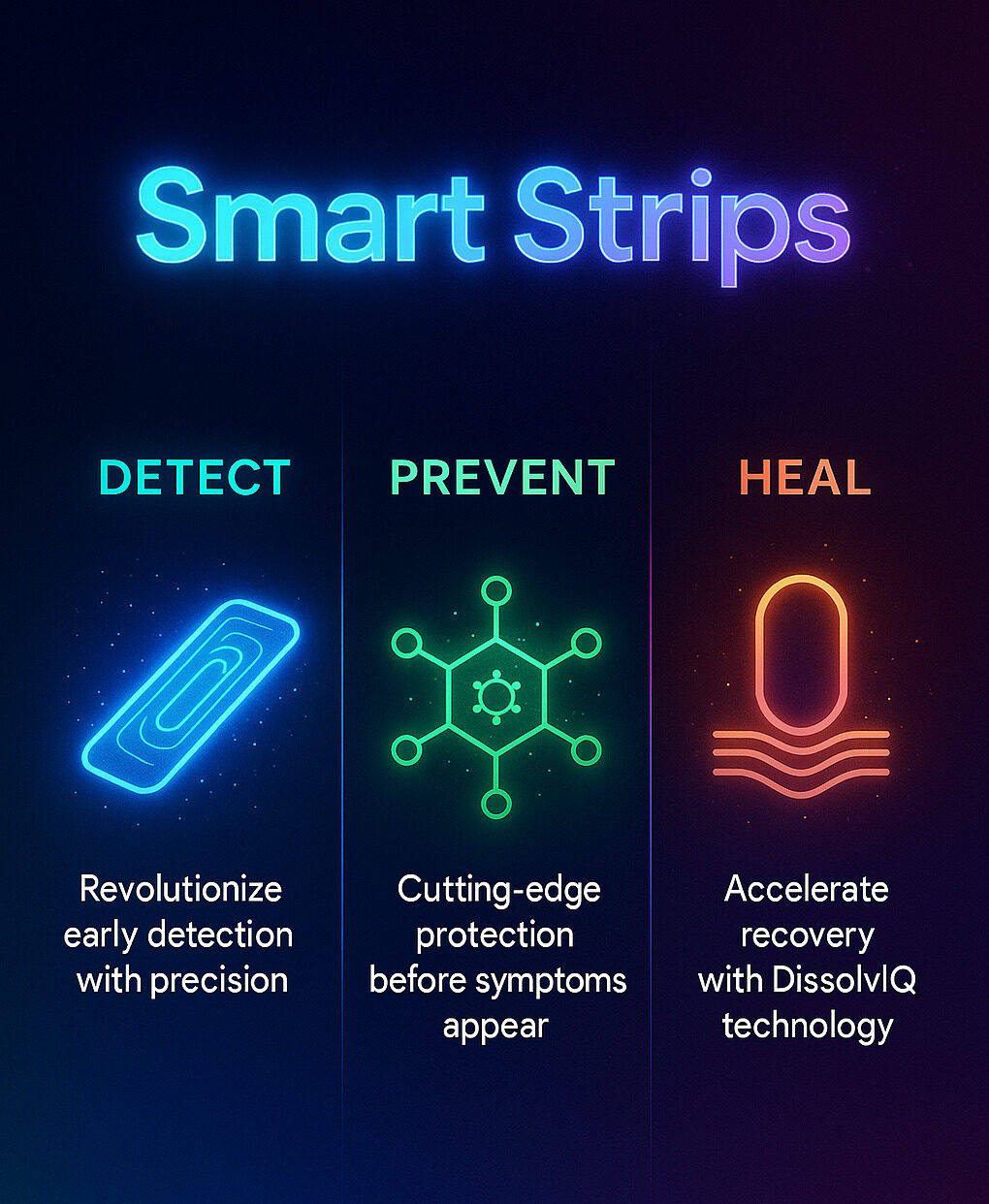
While I originally created these products for orthodontic patients, the oral relief kits are just as effective for anyone recovering from all dental procedures. Whether it’s after a scaling, root canal, crown, periodontal surgery, or multiple extractions, patients never had anything meaningful to take home to ease pain and discomfort. Now they do. Smart strip technology allows the product to stay in place for hours, deliver active ingredients, and support real healing.

Our current Chillin’ Strip molds anywhere in the mouth and stays in place. The more saliva you have, the better it adheres, the opposite of wax. Soon we’ll have strips that last 8, 24, even 72 hours. That means safer wounds, fewer infections, and better outcomes for surgeries, extractions, biopsies, and even for cancer or radiation patients dealing with oral sores.

In the end, it was never just about orthodontics, it was about listening to the pain, the panic, and the unmet needs on the other end of those calls. I realized those moments weren’t interruptions. They were insights.

They pushed me to ask myself: Am I truly solving the problem, or just applying another short-term fix? That question became my compass. I stopped accepting temporary fixes and started building solutions that treat the root causes—solutions that bring real relief, restore confidence, and shift the standard of care.

Because in a field built on precision, we can no longer afford to think small. Our patients deserve more.

I created OrthoNu to solve the problems I lived. First as a teenager in pain with nowhere to turn, then as a doctor who kept running into the same missing pieces in care. Too many gaps. Too little access. Not enough empathy. 

If you believe care can be better, make it better. Because when your mission is rooted in truth, and your drive is unstoppable, you don’t wait for permission—you lead.
The Next Frontier in Diagnostics

The future of healthcare lies in smart strip technology—advancements that extend beyond conventional treatments to support early detection, prevention, and accessible care on a global scale.

Over the next 18 to 24 months, OrthoNu will release a series of innovations—each one grounded in science, built with precision, and driven by one goal: to empower patients and providers.

From targeted pain relief to early disease detection, our IP-protected smart oral strips are changing what’s possible in oral health—making care more effective, more accessible, and more human.

But this isn’t just about product launches or patents.

It’s about leading with purpose.

Often, these lesions are nearly invisible—a faint white line, like lichen planus—that even dentists might miss. Patients are being diagnosed years too late, and doctors face lawsuits because these signs go undetected.

I’m excited about what the products could do for underserved populations. We could triage patients early, in a way that’s affordable and accessible worldwide. We could catch diseases early. Consider a seven-year-old boy who has no idea he has cancer in his mouth. Without this technology, it might not be found until it becomes a much bigger problem years later. The dream is to save lives through early detection.

This vision pushes oral care far beyond the dental chair—toward a future defined by value-based care, personalized wellness, and minimally invasive diagnostics.

The goal is to empower clinicians to be the frontline heroes for their patients. By creating data collection tools for every patient, we can track changes in their oral health over time and catch problems before they escalate.

This technology could revolutionize disease prevention. Think about populations with limited access to healthcare—being able to give them oral smart technology that detects early signs of oral disease, diabetes, heart disease, or cancer. It’s an affordable, accessible way to triage health worldwide.

Because when you build from a place of compassion, you don’t stop after one success. You keep going—because you have to. And when innovation starts from the heart, it becomes unstoppable.

Gain ACCESS TO
INSPIRING
stories
Get membership
Companies

Waterlines as a Leadership KPI

10/22/2025
|
8 min. to read

Many dental offices manage waterlines blindfolded: dump in treatment products, test sporadically, and hope for compliance. But waterline safety isn’t just a clinical detail—it’s a litmus test for leadership. Reliable waterline testing reveals more than bacteria counts; it exposes the strength of a practice’s discipline, accountability, and patient-first values. In an era where a single outbreak can shatter brand equity, erode investor confidence, and damage leadership credibility, treating waterline testing as a core key performance indicator (KPI) separates the organizations that scramble from those that lead.

Some argue the cost of compliance outweighs the risk of penalties. But that perspective collapses when you factor in the true cost of reputational damage and litigation. In 2016, one pediatric dental group learned this the hard way after an outbreak linked to contaminated waterlines resulted in 71 confirmed infections, 49 probable cases, and more than 200 lawsuits— an incident estimated to cost tens of millions.

But it doesn’t have to be this way.

There are large DSOs hitting waterline compliance rates well above 95%. That’s not luck. It’s the result of empirically driven, well-built water management protocols that allow waterline testing to shift from a reactive headache to a strategic KPI. High pass rates aren’t just about ticking regulatory boxes; they offer a window into the health of the entire operation.

When DSOs start proactively treating waterline testing as a KPI, they unlock powerful insights into their training effectiveness, operational discipline, and compliance culture at a team and organizational level.

Treatment Isn’t Enough— Test or Risk It

While roughly 75% of offices actively treat their waterlines, fewer than 25% test them. That’s a dangerous disconnect. Regulations require meeting a 500 CFU/mL bacterial threshold. Treatment alone isn’t a guarantee; without testing, there’s no way to confirm the treatment worked. 

“Laws and regulations are created because the mass population is not following best practices and guidelines. Those who understand testing is doing the right thing for the patients are the early adopters, starting processes long before they are forced,” Kendra Flowers, a clinical operations/ compliance leader, says.

Quote
“Waterline safety isn’t a checkbox —
it’s a competitive advantage.”

Many waterline test failures come down to simple, preventable oversight, like forgetting to add a treatment tablet or neglecting in-line filters on ultrasonic scalers. These small gaps often fly under the radar until a failed test forces attention.

Water quality KPIs should be treated like spore testing: nonnegotiable and high stakes. “Unsafe water has deadly consequences,” Flowers says.

The key? Integrate waterline data into dashboards, reviews, and incentive programs. What gets measured—and rewarded—gets done.

Training That Shows Up in Every Test Result

Waterline test results don’t just measure bacteria—they measure training. When pass rates are consistently high across locations, it’s a strong signal that teams are intentionally following protocols.

According to Flowers, high failure rates are common during the initial implementation of a dental waterline protocol. The failure rates reflect the lack of standardized processes, such as:

  • Heavily occluded lines requiring replacement
  • Elevated bacterial levels from municipal sources
  • Staff unfamiliar with proper procedures


Over time, as the protocol becomes embedded in daily operations, staff gain greater awareness, adopt best practices to prevent failures, and consistently follow maintenance routines.

“Protocol makes or breaks waterline safety. We’ve tested hundreds of thousands of samples, and the truth is simple. Every product can work, and every product can fail if protocols slip. With the right training and site-specific procedures, the majority of failures never have to happen,” says Brianna Niederschulte, President of Agenics Labs.

In short, high scores are proof that the training stuck. Use top-performing offices as a blueprint and treat low pass rates as flashing signs for retraining or standard operating procedure (SOP) overhauls.

Onboarding Passes the Ultimate Test

Waterline test results also serve as a real-time gauge of new hire readiness. When DSOs walk every new hire through SOPs in detail from day one, they sharpen accountability and drive better results. If waterline scores dip after onboarding, it’s time to tighten the process—and make sure new hires aren’t just trained but battle-ready. 

To assist in new hire readiness and better results, Agenics Labs provides customized onboarding and training for DSOs, including developing and maintaining SOPs.

“Not only does this allow us to provide DSOs with solutions we know will work, but it also means we can work right alongside their practices, helping staff adhere to the group’s established procedures,” says Niederschulte. 

Celebrate Your Champions

When offices proactively test and maintain waterlines without reminders, it reveals a culture of discipline and pride in clinical excellence.

“I like to identify champions in all areas of focus or initiatives I oversee,” Flowers explains. “Showcasing the team’s best practices, whether through a company newsletter, peer training for new offices, or coaching support for underperforming teams, not only drives broader adoption of effective strategies but also fosters the development of future leaders within the organization.”

Average DSOs comply because they have to, while great DSOs embed infection control into their operations because giving their patients the greatest care possible is their standard. Recognize and reward the teams that use best practices. Then, use their success to inspire others and embed a culture where accountability isn’t just expected. It’s celebrated.

Advertisements

A Hidden Indicator of Employee Burnout

If well-trained teams are still failing waterline tests, it’s often a red flag for deeper operational issues like understaffing, burnout, or lack of support. This reflects breakdowns in communication, resources, or trust between staff and leadership. 

“Most issues turn out to be workflow inefficiencies requiring coaching or protocol tweaks. But when real resource gaps arise, it’s critical to escalate and engage leadership to find solutions,” Flowers emphasizes.

Use low pass rates as a trigger to reassess staffing, redistribute duties, and provide targeted support before small cracks become big problems.

Compliance as a Strategy, Not a Scramble

By adopting the most rigorous, yet reasonable, waterline testing protocols across all states, organizations can create a consistent standard of care and sustainable compliance culture. 

“This approach not only mitigates risk but also positions the organization ahead of regulatory changes, ensuring readiness and reinforcing our commitment to patient safety and compliance,” Flowers says. 

But protocols alone don’t cut it.

“For any system to succeed, it must be fully integrated into daily workflows, routinely measured, and supported by clear accountability,” Flowers adds.

That’s where deeper, more informative testing can make the difference. Equipping teams with the knowledge to understand what their results mean allows them to take ownership of the process.

“Our mail-in tests include additional water quality metrics that not only help us understand why a sample may have failed but also empower dental team members to identify their own protocol gaps. We are the only lab in the industry to include these extended metrics in every mail-in test, demonstrating our commitment to being comprehensive—one of our core values,” Niederschulte says.

Without this level of integration and insight, compliance becomes a scramble, not a strategy. The best DSOs embed waterline management into the daily routine, track it relentlessly, and use detailed data to prevent failures before they happen. 

Quote
“Embedding waterline results into dashboards, onboarding, and incentives creates a system-wide feedback loop that builds trust with patients, investors, and regulators.”

Benchmarking That Drives Results

Waterline compliance data isn’t just numbers. It’s a spotlight on which offices are excelling and which need help. By centralizing test results, DSOs can benchmark performance (and check compliance culture) across locations, identify top performers, and replicate their success.

“In addition to our online reporting hub, we curate customized reporting for DSOs, allowing them to view their test data in a variety of ways that can be leveraged for insights into their different locations and collective performance as an organization,” Niederschulte says.

The best teams pass on the first try, no hand-holding required. Their secret? Simple, consistent habits like daily maintenance logs, visual checklists, and operatory signage.

When shared through coaching, newsletters, or onboarding, these practices fuel a culture of compliance and improvement. This isn’t just about tracking—it’s about setting the pace.

Lead the Charge or Get Left Behind

When waterline safety becomes a core KPI, DSOs don’t just check boxes. They drive real, measurable excellence.

“Two factors consistently drive reliable waterline outcomes: first, standardized protocols tailored to the organization and second, ensuring teams understand the why behind waterline management through meaningful education. When both are in place, we routinely see offices jump from the industry average of around 70% pass rates to exceeding 95%,” Niederschulte explains.

Waterline safety isn’t a checkbox—it’s a competitive advantage. For DSOs, every test is more than a compliance measure; it’s proof of operational discipline, staff readiness, and patient-centric leadership.

The groups that test, not just treat, demonstrate to patients, regulators, and investors that they put safety and accountability first. Those are the DSOs that will earn trust, scale with confidence, and lead the industry forward. The challenge is simple: Use waterline testing as your gauge. It won’t just tell you if your water is safe—it will tell you if your organization is built to win.

Sources:

Ross, Erin. “Infection Outbreak Shines Light on Water Risks at Dentists Offices.” NPR, Average Top-Performing DSOs September 30, 2016.


Gain ACCESS TO
INSPIRING
stories
Get membership
Trending

A New Path to Ownership

10/22/2025
|
4 min. to read

BY MARKO VUJICIC AND RACHEL MORRISSEY

For most of dentistry’s history in the U.S., being a practice owner was an essential part of being a dentist. The traditional career path was clear: graduate, associate with an established practice for a few years, and then buy in or build a practice of your own. Practice ownership was the marker of success and stability. Most dentists still follow this path. But for younger dentists, the timing of when they get into practice ownership has shifted.

For decades, the American Dental Association has surveyed the U.S. dentist workforce to collect information about their occupation (including ownership status) and basic demographic information. We use the term “practice ownership” here to include dentists who fully own their own practice as well as those who are partners or shareholders in other practice types, such as group practices and dental support organizations (DSOs).

To get a better understanding of how practice ownership has played out for dentists generationally, we looked at survey data from over 55,0000 unique dentists who graduated from dental school between 1991 to 2020 and reported ownership status at least once in their career. To track practice ownership over the career span, we grouped dentists into six graduation cohorts, starting with the classes of 1991-1995 and ending with the classes of 2016-2020. We then looked at practice ownership rates at different career stages for each of these cohorts.

Dentists who graduated from dental school in the early 1990s through the early 2010s show strikingly similar patterns in practice ownership. For these cohorts, ownership was achieved relatively quickly. By the time they had completed their first decade in the workforce, more than three out of five dentists who graduated in the early 1990s through 2010 were practice owners. Although dentists who graduated before 2006 were more likely to be owners at the very early career stage, by the 15 to 19 years of experience stage these differences narrow. The practice ownership rate was 89% for the 1991-1995 cohort compared to 81% for the 2006-2010 cohort.

Advertisements

By contrast, dentists graduating in 2011 or later are following a very different career trajectory than their predecessors. While 63% of dentists from the 2006-2010 graduating classes were owners five to nine years out of dental school, only 33% of the 2011-2015 graduating classes were owners at the same career stage. Thus, there is a significant decline in practice ownership rates in the early career stage for newer graduates. However, as these newer graduates move into the next career phase, their practice ownership rates catch up to their predecessors.

Quote
There is a significant decline in practice ownership rates in the early career stage for newer graduates.

Gender adds yet another layer to the story. Across all graduation cohorts, and all career stages, men are more likely than women to own a practice. The gender gap is largest in the early career stage, and then gradually diminishes toward the later career stages. For the newest cohorts of dental school graduates, the rate of ownership for men was 30% compared to 14% for women early in their careers. One thing to note is that while the levels differ, the shapes of the trend lines across the career span are similar for both genders. Practice ownership generally rises over time but starts at a much lower level for more recent graduates.

Why is practice ownership in the early career stage dropping for younger dentists? While there is no definitive research, we think several forces are at play. Educational debt might steer new dentists away from pursuing practice ownership right out of the gate. Some younger dentists may value flexibility or reduced administrative burden and may not see ownership as immediately appealing or conducive to work-life balance. The changing demographics of the dental workforce, where now the majority of dental school graduates are women, is another factor at play.

Quote
While men and women follow similar paths, women start at a far steeper climb toward ownership.

While some version of practice ownership still seems to be the end point for most dentists, it is clearly no longer the quick step it was a generation ago. We also caution that for the newest cohort of dental school graduates we have only limited data—for the first 10 years of their career. There is clearly something quite different about this cohort, and it remains to be seen if their “catch up” rate is indeed as quick as the cohort before. We will update the data as they become available. Stay tuned.
Gain ACCESS TO
INSPIRING
stories
Get membership
Companies

AI At Scale

10/22/2025
|
4 min. to read

How Dentistry Is Leading the Enterprise Revolution

AI in healthcare often lives in theory. In dentistry, it’s already in daily practice. More than 50,000 providers and eight of the top ten largest DSOs in North America use VideaAI by VideaHealth, shifting the conversation from potential to performance. Heartland Dental, for example, adopted the platform across 1,500 supported locations in just 10 weeks, proving that AI can scale seamlessly across enterprise operations, deliver consistent clinical support, and strengthen patient trust. For DSO leaders, dentistry shows what it looks like when AI becomes standard care rather than a pilot program.

Heartland Dental: Enterprise Proof in Action

Heartland Dental, the largest DSO in the U.S., became the proving ground for AI at scale. Within weeks, the platform was not only rolled out but also embraced. With adoption across nearly every supported practice, VideaAI quickly became part of the clinical workflow rather than an added step.

Dr. Seth Gibree, Senior Director of Clinical AI and Innovation, underscores the impact, “When integrated with clinician expertise, AI diagnostics provide valuable assistance, helping dentists detect issues earlier and enabling less invasive care that enhances patients’ well-being and promotes overall long-term health.”

For multi-site leaders, Heartland’s experience signals something bigger: AI is not a side tool—it’s an operational backbone that scales without compromise.

  • Scale That Moves Markets: VideaAI powers more than 50,000 providers and eight of the top ten largest DSOs in North America, proving that AI can operate at full enterprise scale, embedded into every workflow.
  • Rapid Adoption: Heartland achieved 95%+ user adoption in just 10 weeks, showing that clinicians adopt and trust AI when it delivers real value.
  • Results You Can Measure: Improved treatment acceptance, stronger patient trust, fewer missed diagnoses, and reduced administrative burden demonstrate measurable impact.

These enterprise wins aren’t just numbers; they play out at the chairside every day. Dr. Tim Quirt, SVP of Clinical Operations, explains, “Our supported clinicians use VideaAI every day to detect details even the most observant human could miss, while retaining complete control of treatment planning.”

Operational Impact That Scales

The benefits of AI extend far beyond individual patient encounters. Nearly 60% of patients say they feel more confident in their dentist when AI tools are used. These measurable outcomes translate into fewer missed diagnoses, better clinical results, and reduced costs associated with delayed or complex treatments.

AI also tackles the persistent staffing crunch. In early 2024, nearly 40% of private dental practices were actively recruiting assistants, with most describing the process as augment human capacity, democratize data, and reduce clinician burnout.

By 2027, Gartner projects that AI will cut clinical documentation time in half, amplifying efficiency without proportional increases in staffing. For dental organizations, this goes beyond a point solution and marks a full-scale operational shift that delivers measurable results across the enterprise.

Policy and Payment Momentum

Advertisements

Dentistry’s AI adoption also reflects a larger policy trend: incentivizing prevention. Regulators and payers are encouraging early detection to reduce downstream costs, and dental practices with AI-driven diagnostics are well positioned under these value-based care models. Dentistry is also emerging as a test case for AI transparency and accountability, helping set standards for how patients experience AI across healthcare. For example, insurers are beginning to reimburse claims supported by AI findings, while professional associations are piloting guidelines that ensure patients understand when AI is used in their care.

Quote
AI has moved from pilot programs to a standard for care.
–  Florian Hillen

What to Look for in a Dental AI Platform

As practices explore AI solutions, it’s clear that not all platforms are created equal. The most effective tools are FDA-cleared, clinically validated, and built to meet the highest standards of compliance and data privacy. They are seamlessly integrated into existing workflows and designed with patient trust in mind. They provide intuitive visuals for communication, robust reporting at every level, and proven scalability across enterprise DSOs.

Choosing the right partner means selecting a solution that elevates both clinical precision and the patient experience, without introducing new barriers.

Dentistry: A Blueprint for Healthcare AI

The story of dental AI isn’t just about better X-rays—it’s about building trust, supporting clinicians, and making preventive care the norm. Dentistry is already doing what the rest of healthcare is still debating: proving AI works at enterprise scale.

If AI can transform one of the most anxiety-filled visits in healthcare into a moment of clarity and confidence, it’s not hard to imagine how this model could reshape medicine more broadly. The dental chair may well be where healthcare AI proves its true value.

Sources:
The 2025 State of America’s Oral Health and Wellness Report. Delta Dental.

State of the U.S. Healthcare Workforce 2024. Bureau of Health Workforce.

Predicts 2024: Healthcare Delivery, AI’s Proving Grounds. Gartner.

Gain ACCESS TO
INSPIRING
stories
Get membership
Leaders

Sisters Defying Dental Norms

10/22/2025
|
9 min. to read

From a pediatric clinic to a global healthcare brand, Haley and Goly Abivardi are rewriting the rules of dentistry with drill-free innovation.


They were never destined for the ordinary.

Swiss dentists and sisters Haley and Goly Abivardi have spent their careers asking why dentistry should look and feel the same as it did a generation ago. The answer? It shouldn’t. From running a pediatric clinic in rural Switzerland to pioneering Europe’s first fear-free DSO, their path has always led toward a bigger idea: that oral health is inseparable from overall health, and that care should be non-invasive, patient-friendly, and accessible.

Today, through their company vVARDIS and its breakthrough treatment CurodontTM, the Abivardis are pushing dentistry into a future of non-invasive care, inspired by nature. Stylish, uncompromising, and deeply human, their story blends science with innovation, patient compassion with commercial success. What they are building isn’t just a company—it’s a movement.

The Abivardis’ story is proof that big visions can upend old systems. Case in point: Their non-invasive early caries treatment was being used by two DSOs serving 250 offices, but 18 months later, it had reached 13% of U.S. dental offices—a rapid leap in influence and impact.

CurodontTM, vVARDIS’ proprietary, biomimetic solution, treats early-stage caries through hydroxyapatite generation, offering the opportunity to preserve the natural tooth structure without the need for drilling, injections, or artificial filling materials.

The Abivardi sisters fuse cutting-edge science with a deeply human mission: to improve oral health for better overall health—and make it available to everyone.

In this Q&A, they open up about their journey, the lessons that shaped them, and why they believe dentistry is on the verge of a revolution.

Origins & Influences

What sparked your journey into dentistry, and how did your early influences shape your vision?

Dr. Haley: Powerful role models deeply influenced our upbringing. Our mother, an entrepreneur, showed us the possibility of balancing a career with being a dedicated mother. What we hold most dear about her is her commitment to making a positive impact on people’s lives and her determination to pursue one’s goals.

Dr. Goly: Absolutely. She instilled in us the belief that the most beautiful achievement is bringing happiness to others. On the other hand, our father, a natural scientist, was a pioneer in sustainability, having written his thesis on the subject 60 years ago. He taught us the invaluable lesson Mother Nature always knows best.

How did your journey in dentistry begin, and what inspired your first steps?

Dr. Haley: After studying medicine and dentistry as DMDs, knowing how important oral health is, we wanted to treat children to make an impact on their overall health.

Dr. Goly: Having the same mission, we decided to work together as sisters and to run a public pediatric dental office in the rural areas of Switzerland, linked to elementary schools with the focus on prevention and early intervention. As healthcare professionals and mothers, it was heartbreaking to witness our patients suffering and to observe the impact of poor oral health on their physical and psychological well-being, mainly due to a lack of knowledge, awareness, or often anxiety associated with dental visits.

Most of the patients missed their appointments or came too late. Those early experiences inspired us to seek positive patient experiences and to elevate patient care, specifically to ease the anxiety associated with delaying dental visits. Ultimately, this led us to develop a new concept of a fear-free dental clinic, and that is how we opened our first clinic.

At that time, we were young—driven by vision yet facing the challenge of having no patients in a city with the highest number of dentists in the world, and only modest savings to rely on. Despite initial skepticism, our clinic proved remarkably successful, capturing 14% of the market within three years.

Encouraged by our success, we expanded by opening new clinics in Switzerland and Europe, founding the first Swiss DSO, the first European fear-free DSO, and expanding the brand worldwide.

How did you transform the traditional dental clinic into a fear-free, patient-first experience?

Dr. Goly: We founded our DSO over 20 years ago with an entirely new approach. This innovative concept combined state-of-the-art technologies and techniques with an unprecedented level of comfort and well-being for patients. For the first time, all specialists could be found under one roof with extended opening hours, until 9 p.m., seven days a week, with a walk-in concept.

We created a unique experience, maintaining consistent identity and design across all clinics. We even had our own music and fragrance. Unlike traditional clinics, we reimagined the entire patient experience, putting the emphasis on overall health and wellness and delivering a spa-like atmosphere, as opposed to one of a dental room.

The Breakthrough

Why has Curodont taken off so quickly—and what makes it a win for dentists and patients alike?

Dr. Haley: Because it is a win-win for everyone. For clinicians there is finally a drill-free solution for early-stage carious lesions and you can treat them in as little as three minutes during the same appointment. Patients are motivated to return because the treatment is completely drill-free. When the dentist performs a recall after six months, any new lesions can again be treated without drilling. This not only encourages repeat visits but also helps dentists save valuable chair time for more complex procedures.

Advertisements

When did you realize Curodont could upend traditional dentistry and why was it a game-changer?

Dr. Goly: We founded vVARDIS around four years ago, but the groundwork for our vision started almost two decades back with the pediatric dental clinic. Those experiences deeply influenced us. That is why our vision has consistently revolved around practicing minimally invasive, early intervention care rather than relying on reparative dentistry.

In addition to our clinics, we led our own dental hygienist school, complete with a research center, facilitating various clinical studies. It was during this time, over 10 years ago, that we came across groundbreaking technology offering a non-invasive treatment for early decay, without the need for a needle or a drill.

For decades, we’d been scouting for a solution and finally one day, we found it! The proprietary formulation disperses throughout the depth of the lesion and treats the early-stage caries by restoring the lost or damaged hydroxyapatite crystals with minerals from saliva.

As daughters of a natural scientist, we were fascinated by this innovation. Despite years of trying everything possible to improve our patients’ oral health, we felt that something was still missing.

Tooth decay remains the number one disease in the world. Despite significant improvements in oral health and dietary habits over the past 50+ years, around 95% of the global population is still affected. More common than heart disease, diabetes, or even cancer, tooth decay impacts millions—especially vulnerable populations. Until now, there has been no satisfactory solution for treating the early stages of the disease.

Dr. Haley: We see early-stage lesions in nearly 80% of our patients, but most leave the office untreated, with dentists putting a “watch” on it without having a suitable solution available. However, patients may not return for a follow-up appointment, which exposes them to the risk of cavity progression and potential severe secondary diseases.
Dr. Goly: Motivated by the aspiration to make this groundbreaking innovation accessible to everyone, we decided to sell our dental clinics and reinvest everything into the creation of vVARDIS.

How is vVARDIS pushing the boundaries of dentistry—and inspiring change beyond the dental chair?

Dr. Haley: Now that Curodont is available in over 13% of U.S. dental offices, an increasing number of dental professionals—or “Curodontists”—are embracing our treatment and giving patients access to this revolutionary solution with fast adoption rates. It demonstrates the demand dental professionals have for a solution capable of treating tooth decay at an early stage.
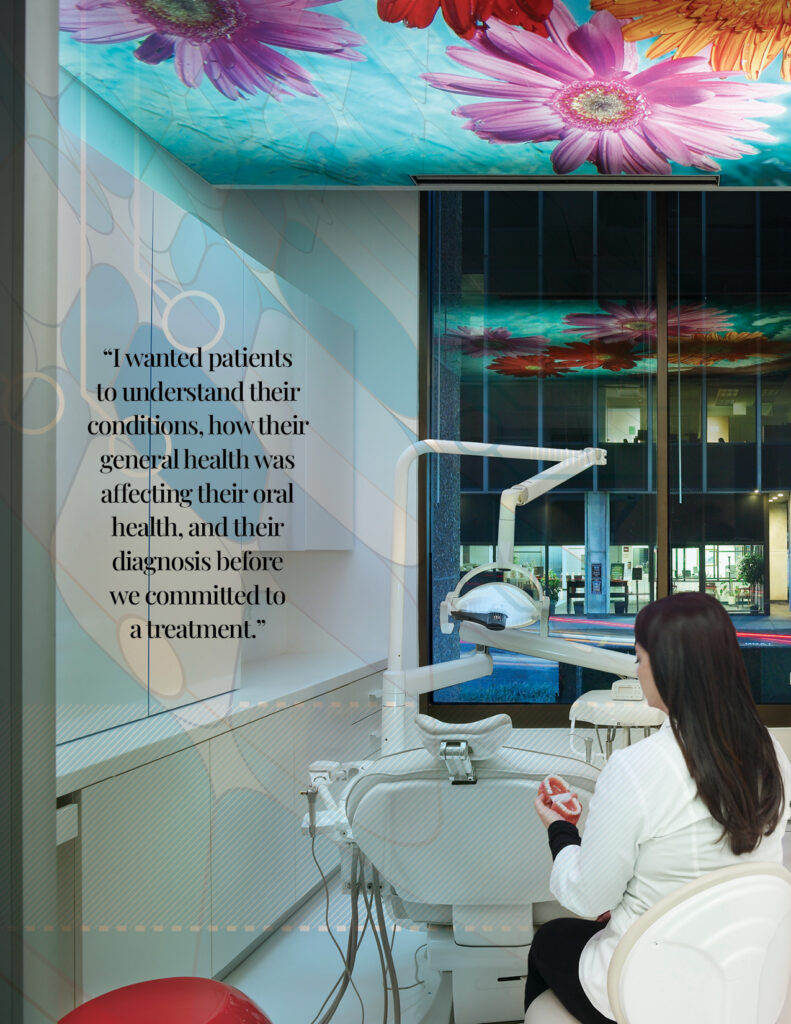
Dr. Goly: We are thrilled to witness a ground-breaking transformation in dentistry similar to the advancements that medicine embraced years ago toward non-invasive, early intervention approaches. In the same way, Curodont is helping to elevate the standard of care for the early treatment of tooth decay.
Quote
CAVITIES ARE THE WORLD’S NUMBER ONE DISEASE—AFFECTING 95% OF PEOPLE.

Sisterhood & Vision

How do sisters turn shared vision into a powerhouse partnership and make it last 25 years?

Dr. Haley: People often ask us why and how it’s been possible. We challenge each other, yes—but our shared mission of improving lives through better oral health keeps us aligned.

Dr. Goly: We have such a strong bond that we’ve cultivated over the years. This deep connection has enabled us to discover the most effective ways to complement each other. 

When did you see that dentistry can transform not just health—but someone’s entire future?

Dr. Haley: Looking back, we see countless experiences that shaped us into who we are today, but the most impactful experience was when we decided to give back to our community and provide free dental treatment to the homeless in our clinics. After restoring their smiles with implants and crowns, many patients regained employment and reestablished connections with their loved ones. This was the exact moment where we saw the impact a healthy smile can have on others.

Dr. Goly: This was a very moving experience and reinforced our belief in the idea that proper dental care can change lives. We learned that if everyone has access to dental care, not only will their mental and physical health benefit, but their overall quality of life will as well.

What advice would you give to anyone chasing a bold vision, even when the path feels impossible?

Dr. Haley: The same advice that we received from our parents that helped us become who we are today: “If you have a vision, go for it. ‘It doesn’t work’ doesn’t exist.”

For Haley and Goly, vVARDIS is more than just a company—it embodies a mission to make non-invasive dentistry and early caries treatment accessible to all, creating a meaningful impact on people’s lives, especially underserved communities.

Quote
IF YOU HAVE A VISION, GO FOR IT. ‘IT DOESN’T WORK’ DOESN’T EXIST.
Gain ACCESS TO
INSPIRING
stories
Get membership
Women in DSO®

Canadian Expansion

08/06/2025
|
2 min. to read

With women now representing more than 50% of Canada’s recent dental graduates, the expansion of Women in DSO® into Canada couldn’t have come at a better time. At the forefront of this movement are Education Committee Co-Chairs Joseé Desjardins and Sanaz Nestorov, who are championing the next generation of women leaders through dynamic programming— including the launch of Canadian Exchange Circle panels.

Desjardins reflects, “Within a year, we were diving into webinars with people we didn’t really know. I’ve done this kind of thing before with boards of trade or think tanks, but this felt different—it was more natural. I was outside my comfort zone, but I was loving it.”

Quote
It’s not just professional— it’s personal. It’s powerful.”

Nestorov shares that the impact has gone far beyond professional development. “I echo everything Joseé said. From an educational perspective, this experience has been intangible—but incredibly powerful. One of the biggest takeaways for me has been seeing how women can truly help each other stand taller.”

That peer-to-peer learning and support is central to the mission.

Advertisements

“Being exposed to a diverse group of women has been incredibly valuable,” says Desjardins. “The conversations are richer, more open. There’s a strong spirit of women lifting one another, especially in a space designed for vulnerability and growth.”

In May 2025, Women in DSO hosted its first-ever DSO Summit in Canada, a milestone event that brought together professionals from across the country.

“There were people from large, competing DSOs who didn’t even realize they needed to learn from one another—until they were in the same room,” Nestorov recalls. “We’re creating space for meaningful engagement and building an ecosystem of mentorship that the corporate dental space in Canada has been missing.”

The expansion of Women in DSO into Canada is more than a geographic move—it’s a strategic investment in the future of the industry, one powerful woman at a time.

Joseé Desjardins
Joseé Desjardins is the Vice President of Business Development and Marketing at iFinance Canada, leading business development efforts focused on sustainable growth, innovation, and partnership.
Sanaz Nestorov
Sanaz Nestorov serves as the National Account Manager, Enterprise DSO at Align Technology, where she leverages her extensive expertise to drive growth and innovation.


Gain ACCESS TO
INSPIRING
stories
Get membership
Women in DSO®

From Ready to Recognized

08/06/2025
|
6 min. to read

The Program Turning Potential into Authority Across the Dental Industry
In a rapidly transforming dental landscape, clinical excellence is no longer enough. Strategic growth now hinges on something deeper: empowered leadership, visible expertise, and intentional talent development—especially among women professionals.

That’s the focus of the Women in DSO® Education Committee, which is building the next generation of industry leaders by equipping women with the tools, platforms, and visibility to lead boldly. As Committee Chair Cheryl Polmatier puts it, “We’re not just creating content—we’re developing leaders.”

From executive presence to thought leadership, the Education Committee helps women show up confidently in rooms where decisions are made—and where your organization’s future is shaped.

The Competitive Advantage: Visible, Confident Leaders
Every dental leader knows that your team is your greatest asset. So what happens when you leave talent untapped within your organization?

The Women in DSO Education Committee helps your organization tap into that talent to reach its potential by coaching women professionals to become recognized experts in their fields. Whether through speaking engagements, panel participation, blog features, or virtual leadership sessions, participants gain more than visibility— they gain influence.

“The goal is readiness,” says Polmatier. “We help women build the communication skills and executive presence that organizations need to grow from the inside out.”

Strategic Platforms That Drive Real Development
The Education Committee offers three proven vehicles for leadership growth and personal brand expansion:

1. Exchange Circles
These 45-minute live, virtual sessions begin with a brief presentation by an industry expert, followed by a 10-minute Q&A and open peer dialogue led by a facilitator. Focused on the technical drivers of DSO success, the sessions align with five key pillars: operations, clinical, financial, growth, and leadership and people. They’re designed to support strategic thinking and career advancement through thought leadership.

2. Empower Networking
Centered on leadership and personal development, Empower Networking fosters the growth of professionals aiming to lead in the DSO space. These virtual panels focus on building confidence and influence—helping participants sharpen their leadership skills and expand their impact.

Both Exchange Circles and Empower Networking are hosted monthly and serve as platforms to feature women as experts, enhance their recognition, and accelerate their path to leadership.

3. #WinDSO Blog
Published weekly, the blog amplifies diverse voices and thought leadership across the dental space. It’s a tool for executives looking to spotlight rising talent or to contribute their own strategic perspective to the national conversation.

Expert Content That Accelerates Growth
Exchange Circles and Empower Networking are designed not only to elevate individual careers but to strengthen entire organizations by developing the talent within. These platforms deliver high-value content aligned with the real challenges and strategic priorities facing DSOs and dental leaders— from optimizing operations and scaling revenue to building resilient, future-ready teams. Each session is led by industry experts who don’t just speak to theory—they bring hands-on experience and proven results from the front lines of dental innovation.

Quote
Leadership isn’t about being in charge. It’s about making others feel capable of stepping forward.

Whether you’re investing in your own development or nurturing leadership across your team, Exchange Circles and Empower Networking offer practical, actionable insights that drive measurable impact. By creating space for rising leaders to engage, contribute, and be seen, these platforms help organizations grow from within—turning internal potential into visible, strategic advantage.

A Strategic Resource for Leaders
For forward-thinking dental leaders, learning doesn’t stop between conferences or quarterly meetings—it’s ongoing, intentional, and aligned with real-world priorities. That’s why Exchange Circles and Empower Networking offer on-demand access to a robust library of recorded sessions designed to fuel both individual and organizational growth.

This expertly curated content features high-impact discussions on topics that matter to today’s dental executives— from optimizing culture and strategy to marketing innovation and digital transformation. Some of the latest sessions added to the library include Global Insights: Culture vs. Strategy: What Really Drives Dental Organization Success?, Beyond the Chair: Innovative Marketing for Dental Industry Growth, and Canada Insights: Advancing Care Through Technology & Digital Transformation.

Whether you’re developing your leadership team, onboarding emerging talent, or sharpening your own executive lens, this content library offers a flexible, scalable way to stay ahead of industry shifts and turn insight into action—on your own schedule, at your own pace.

How to Get Involved: Share Your Voice, Grow Your Impact
Cheryl Polmatier joined the Education Committee three years ago and became Chair in January 2025. For her, the mission is personal.

“There’s no other platform in our industry that empowers women like this,” she says. “We’re here to help others rise—to spotlight women in a space long dominated by the ‘good old boys’ network.’

Advertisements

The committee offers many ways to get involved—speaking, writing, or joining a subcommittee. “You get out of your silo and into real conversations about innovation, leadership, and growth,” Polmatier says. “It feels amazing to help other women shine.”

Invest in Your Leaders. Invest in Your Legacy.
The future of dentistry will be shaped by those who develop leaders—not just systems. Whether you’re a CEO, practice owner, or clinical director, giving your team access to Exchange Circles, Empower Networking, or blog contributions can unlock new levels of growth—for them and for your organization.

Leadership isn’t just about being in charge. It’s about making others feel capable of stepping forward. Let the Education Committee help you elevate the talent already within your reach.

Ready to nominate yourself or someone in your organization?

Email info@womenindso.org to learn more about speaking, moderating, or joining the planning team.

Upcoming Virtual Panels: Your Invitation to Engage and Grow
Join Exchange Circles and Empower Networking for a powerful lineup of upcoming virtual panels designed to inform, inspire, and elevate women in the dental industry. You don’t need to be a member to attend these live events. From shaping the future workforce to revolutionizing dental education and exploring cutting-edge topics like teledentistry and revenue cycle management, the Exchange Circles series offers valuable insights you won’t want to miss. Learn more and register at WomeninDSO.org/exchange-circles.

Empower Networking brings timely conversations for personal and professional growth—empowering female entrepreneurs, navigating career pivots, and mastering the art of setting boundaries. These sessions are crafted to help women lead with confidence and clarity. Explore the schedule and secure your spot at womenindso.org/empower-networking-1.

Empower Networking: 
Aug 21
Empowering Female Entrepreneurs

Sep 18
The Power of Pivot: Embracing Change to Fuel Career Growth

Nov 20
From Overwhelmed to Empowered: The Art of Setting Boundaries

Exchange Circles CA:
Aug 14
Transforming Care: How DSOs Are Redefining the Patient Experience

Oct 9
Beyond General Practice: Unlocking Same Store Growth in DSOs

Dec 11
Lighting the Way: The Impact of Women Who Lead and Lift

Exchange Circles:
Sep 4
DSO and Dental Schools: Shaping Tomorrow’s Workforce Together

Oct 2
Revolutionizing Dental Education: The Role of Learning Management Systems in DSOs

Nov 6
The Dollars Behind the Smiles: Optimizing Revenue Cycle Management in DSOs

Dec 4
The Rise of Teledentistry: How DSOs Can Adapt and Thrive

Gain ACCESS TO
INSPIRING
stories
Get membership
Companies

The Anti-Agency: Forget the Rulebook — Figment Never Read It

08/06/2025
|
8 min. to read

With roots in fashion and a mindset for disruption, Figment Creative is reshaping what dental branding can be.

In an industry where blue logos and stock smiles dominate, one agency is daring to color outside the lines. Figment Creative, founded in January 2025 by Allison Alexander, a seasoned marketing executive with a background in fashion and retail, is quickly becoming one of the most talked-about creative forces in the dental space—not by following the playbook, but by tossing it out entirely.

From Fashion to Figment: An Unconventional Journey
Allison Alexander didn’t set out to disrupt dental marketing. Her career began in the fashion industry, where she spent over a decade mastering the art of brand identity and visual storytelling in one of the world’s most dynamic and demanding markets. In 2014, after a temporary consulting project with Darby turned into a strategic shift, she pivoted into dental, bringing with her a fresh perspective that challenged the industry’s conservative norms.

“I saw an opportunity to modernize how dental companies present themselves,” Alexander says. “There was so much untapped potential to tell better stories—stories that connect emotionally, not just clinically.”

That vision eventually led her to launch Figment Creative, a full-service agency built on the belief that branding should be bold, strategic, and deeply human. With the support of longtime mentor and Darby Group president Frank Massino, Alexander turned aspiration into action.

Now serving as both Vice President at Darby Group Companies and President of Figment Creative, Alexander has built an agency that reflects her belief in the power of branding to drive real business outcomes.

The Anti-Agency Model
Figment Creative calls itself the “Anti-Agency Agency”—a title that speaks to its lean structure, hands-on approach, and aversion to bureaucracy.

“We’re scrappy and strategic,” says Alexander. “We move fast, think big, and operate as an extension of your team. No fluff, no meaningless jargon, no inflated costs—just thoughtful, effective marketing that cuts through the noise and meets your customers where they are.”

At the heart of Figment’s process is one deceptively simple principle: listening.

“The most powerful part of our process is listening—really listening,” Alexander explains. “Founders and executives are often so immersed in the day-to-day that they miss the most compelling parts of their own stories. Our job is to uncover those overlooked moments, refine them, and build a narrative that resonates.”

That process is deeply collaborative. Clients don’t get passed through layers of account managers. Instead, they work directly with the creative minds behind the work. “We’re not just vendors,” Alexander adds. “We’re partners. Your goals become our goals.”

That philosophy is reflected in everything from brand development and campaign creation to website design, social media, packaging, content, product launches, and consulting. But what truly sets Figment apart is the team behind the work.


The People Behind the Disruption
Chief Marketing Officer Cody Sunderland brings two decades of experience at the intersection of dental marketing and entertainment. Known for orchestrating immersive brand experiences and reimagining messaging for top dental companies, Sunderland’s creative instincts are matched by a deep understanding of audience psychology.

“Cody has this rare ability to turn strategy into spectacle,” says Alexander. “His work doesn’t just communicate—it captivates. That kind of thinking is exactly what the dental industry needs right now.”

Director of Content Marketing Katie O’Doherty’s background spans content development, brand strategy, and social media marketing. She thrives on crafting compelling narratives that engage audiences and drive meaningful connections. As a talented digital storyteller and a newcomer to dental, she brings an outsider’s lens that challenges assumptions and sparks innovation.

Advertisements

“Katie is that rare Swiss Army knife type of marketer—she has a deep understanding of strategy, but also the skills to execute ideas with precision. She’s a master at bringing client visions to life and a brilliant collaborator,” notes Alexander.

Then there’s Walter Gross, VP of Digital Marketing & Strategy, whose résumé reads like a masterclass in audience engagement. Before joining Figment, Gross spent nearly a decade at Sony Music Entertainment, where he led global CRM strategy and managed campaigns for legendary artists like Bob Dylan and Bruce Springsteen. He pioneered Sony’s first email automation system, launched the D2C brand Sony Music Now, and developed real-time data visualization tools that reshaped how the company approached marketing.

Alexander says, “Walter brings a level of digital sophistication that’s rare in any industry, let alone dental,” says Alexander. “He understands how to build loyalty, scale engagement, and turn data into action.”

Built for Brands That Want More
Figment’s client roster reflects its appeal to brands that are ready to think differently. From startups to established manufacturers, the agency has become a go-to partner for companies looking to elevate their presence and deepen their impact.

“When we set out to find a marketing partner, we weren’t just looking for an agency—we were looking for a team that could grasp the complexity of our mission and match the scale of our ambition,” says Jacob Block, CEO of American Nitrile.

“Figment stood out immediately. Their strategic insight, creative precision, and deep understanding of brand positioning in a crowded market made them the clear choice. Even early in the partnership, it was obvious—they’re not just helping us compete; they’re helping us lead.”

Dr. Edgard El Chaar of NYC Dental Smiles shares a similar experience. Dr. El Chaar leads a group of four practices in Manhattan under the NYC Dental Smiles brand, in addition to two widely acclaimed periodontal practices under his own name. Enis Guri, the group’s Vice President of Operations, attended the Empower & Grow conference this past March and heard Allison speak on branding and consumerism. Intrigued by her approach, she arranged a meeting to explore how Figment could support their growth and evolving brand strategy.

“That first meeting ended with a poignant question,” says Alexander. “Dr. El Chaar asked how many dental practices we’d marketed before. I told him, ‘None—and that’s exactly why you should work with us.’ We weren’t bringing recycled ideas. We were bringing a fresh perspective. He paused, smiled, and said, ‘Fair enough.’”

“When we met the Figment team, it was clear they weren’t offering a templated approach,” says Dr. El Chaar. “They listened closely, asked the right questions, and brought a level of strategic depth that’s rare in this space. Their fresh perspective challenged us in the best way—and that’s exactly what we needed.”

Mentorship: The Power Behind the Vision
That spirit of collaboration extends beyond client relationships. One of Alexander’s most meaningful professional connections—and a future collaborator—is Julieanne O’Connor, co-founder of Influential Dental and bestselling author. The two met through the Women in DSO mentorship program and quickly discovered a shared philosophy around branding, leadership, and authenticity.

“Allison and I connected over the belief that branding is about more than aesthetics—it’s about alignment, purpose, and impact,” says O’Connor. “Figment is a reflection of that belief. It’s what happens when a creative agency stops playing it safe and starts telling stories that stick. Figment understands the nuances of the dental industry but isn’t confined by them—and that’s what makes it so effective.”

Frank Massino, President at Darby Group Companies, has been a trusted mentor and foundational force in Alexander’s professional story for nearly two decades. His encouragement and belief in her vision played a critical role in bringing Figment Creative to life—long before it had a name.

“Allison and I always talked about evolving Darby’s branding beyond its traditional roots to position it as a forward-thinking, ‘cool dental company,’ but executing that vision was another challenge. Many within the company, including ownership, resisted a full-scale rebrand, hesitant to abandon what had worked for decades. Allison and I saw it differently, and I urged her to trust her instincts and push forward. Armed with compelling storyboards and a poignant message, she secured approval for Darby’s first major rebrand in over 70 years.

“Today, we take pride in seeing competitors snap photos of our trade show booth or mirror our marketing. What started as a bold idea has become the industry benchmark.”

A Future Defined by Possibility
In a space that’s long overdue for reinvention, Allison Alexander and Figment Creative are proving that the future of dental branding doesn’t have to look like the past. It can be bold. It can be strategic. And most importantly, it can be unforgettable.

Gain ACCESS TO
INSPIRING
stories
Get membership
Filter
Categories
Paspaudę „Įsigyti mokymus“ mygtuką būsite nukreipti į platformą, kurioje galėsite įsigyti šiuos mokymus.