Inside the minds of top operators building high-performance teams, systems, and momentum.
Growth has a way of exposing everything. Weak systems. Leadership gaps. Friction between teams. Processes that worked at 10 locations and break at 50. From the outside, growth often looks like more practices, larger teams, and stronger numbers. Inside the organization, it looks different. It looks like hundreds of moving parts operating under increasing pressure—where decisions have to happen faster, execution becomes less forgiving, and small breakdowns compound quickly.
That responsibility often sits with the chief operating officer (COO). Across these conversations with operational leaders from some of dentistry’s leading organizations, one theme surfaced repeatedly: The strongest operators are not trying to control everything. They are disciplined about controlling what matters.
They simplify. They build leaders intentionally. They create accountability without bureaucracy. They understand that culture, systems, and execution are not separate initiatives—they are interconnected and moving simultaneously.
Because growth doesn’t reward more noise. It rewards alignment. Precision. Speed with purpose.

Where do most organizations misunderstand the COO role?
In my experience, the COO role is often misunderstood as purely executional. I see it much more as building scalable systems that actually allow the organization to grow. That looks like creating clear regional structures with defined decision authority, establishing one source of truth through consistent data and KPI dashboards, and centralizing support services where scale can make the biggest difference. It’s not just about keeping the business running day to day, but about designing the infrastructure that supports growth. That means aligning operations, clinical leadership, and growth strategy into one cohesive engine. At its core, the role is about balancing people, process, and performance.
Where do most DSOs overcomplicate operations?
Many DSOs overbuild processes and systems too early. There’s a tendency to layer in tools, approvals, and reporting that slow the organization down. Simplicity scales better. The goal should be clarity in expectations, consistency in execution, and just enough structure to support growth, not constrain it.
What’s one operational decision you made that created disproportionate impact?
Investing early in a strong field leadership structure. Empowering regional leaders with clear accountability, data visibility, and decision-making authority created faster problem-solving at the local level. That reduced bottlenecks at the center and significantly improved both performance and engagement across practices.
How do you balance standardization with clinical autonomy?
We standardize the business of healthcare, not the practice of it. Core operational elements, such as systems, reporting, patient experience, and compliance, should be consistent. But clinical decision-making must remain with the physician. When that boundary is clear, you get the benefits of efficiency and scale without losing trust or clinical integrity.
What do you look for when hiring your regional or field leaders?
I look for operators who can translate strategy into action. They need strong business acumen, the ability to influence providers and teams, and a real bias toward accountability. The best leaders in these roles are both data driven and highly focused on relationships. They can quickly diagnose issues and drive change without losing trust along the way.
Where do most operators fail when it comes to developing leaders internally?
They often assume strong performers will naturally grow into strong leaders. In my experience, that rarely happens without intention. Leadership development requires structure, clear expectations, coaching, and honest feedback. At the same time, the strongest organizations balance internal and external talent. You need internal subject matter experts who have intentionally developed their leadership skills alongside external hires who bring structured leadership and business capabilities while learning the nuances of the specialty. When you have both, the leadership team is stronger and better positioned to support broader team development and drive results.
What book or podcast has recently influenced your leadership approach?
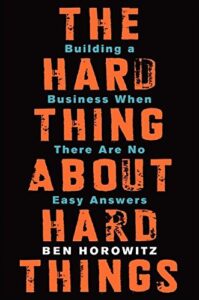
The Hard Thing About Hard Things by Ben Horowitz has influenced me recently. It’s an honest look at leadership, especially making tough decisions with incomplete information and leading through uncertainty. It’s a good reminder that scaling isn’t about avoiding problems; it’s about navigating hard moments thoughtfully and staying grounded as a leader. That really resonates in our space, and it’s shaped how I think about building strategies, processes, and structures that support growth while still working in the realities of day-to-day operations.

Where do most organizations misunderstand the COO role?
Most organizations underestimate the true scope of the COO role and how collaboration across the department and broader organization ultimately drives results and culture. High performance is not sustainable without both, as you cannot deliver strong results with a weak culture, and culture alone will not produce outcomes. As part of the role, leaders must build others who can scale the organization by continuously strengthening their own leadership capabilities while intentionally developing the leaders on their team. Organizations that cut corners in this area tend to plateau.
What’s one operational decision you made that created disproportionate impact?
One decision that created an outsized impact was refocusing on de novo performance. Over time, as the organization scaled, some core systems became less consistent in execution. The organization made a deliberate choice to become more hands-on by clarifying expectations, tracking commitments more rigorously, and reinforcing accountability at every level. This renewed focus quickly improved execution consistency across de novo practices. The impact was significant, leading to stronger performance, better alignment across leaders, and a return to the operational discipline that drives successful openings and early-stage growth. It reinforced the lesson that tightening execution on what works, rather than adding complexity, can unlock disproportionate results.
How do you balance standardization with clinical autonomy?
The organization is doctor-led, meaning they create the right environment for supported doctors to succeed by providing strong systems, education, mentorship, and opportunities for collaboration. Standardization exists to support consistency, efficiency, and a high-quality patient experience, not to impact clinical judgment.
How do you protect culture while aggressively growing?
Leaders must lead with their mission, vision, and core values in everything they do, as these are the foundation of culture and the “why” behind the work. At Heartland Dental, the vision is to be a world-class company and the leader in dentistry, with growth being a critical part of achieving that. Protecting culture during growth begins with ensuring leaders and teams understand how their roles connect to that vision. Growth does not dilute culture; it reinforces it when done intentionally, allowing an organization to grow aggressively while culture is carried through the behaviors, expectations, and standards that leaders reinforce daily.
What book or podcast has recently influenced your leadership approach?
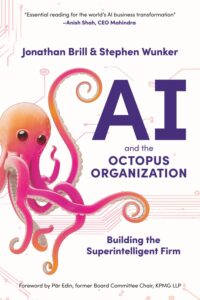
The leadership team recently read AI and the Octopus Organization by Jonathan Brill and Stephen Wunker, which was impactful given how quickly AI is evolving and the level of disruption it is creating across the industry. This reinforced the importance of staying curious, adaptable, and thoughtful about how technology is integrated into operations while keeping people at the center. On a personal level, the author is drawn to leadership content focusing on growth, accountability, and perspective, particularly books and podcasts that challenge how they think about leading through change and developing others.

Where do most organizations misunderstand the COO role?
The COO role is often seen as managing day-to-day operations. In reality, it is about building a system that turns strategy into results. That means connecting what happens in the field to overall performance in a way that is easy to understand and repeat. At The Aspen Group (TAG), as a healthcare support organization, that comes down to putting the right tools, processes, and infrastructure in place so providers can focus on patient care, with less friction in daily work and more alignment across the organization. The goal is an operating model that supports growth across different brands and care settings.
Where do most DSOs overcomplicate operations?
Most organizations add layers without improving understanding. That often shows up as too many reports, tools, or processes that do not change behavior. Technology should simplify work, not add steps. The strongest operating models are straightforward, with a small set of expectations and measures that teams can act on quickly.
What’s one operational decision you made that created disproportionate impact?
Clarifying the link between daily operations and overall performance had a meaningful impact. We made it easier for teams to see how scheduling, patient flow, and staffing decisions affect outcomes. When that connection is visible, it becomes easier to prioritize and follow through. We have also tried to be disciplined about where we focus resources and where dedicated support can have the greatest impact. We recently made the decision to invest in dedicated clinical and field support for a group of underperforming offices. That focused approach helped improve both the patient experience and overall performance in a relatively short period of time.
How do you balance standardization with clinical autonomy?
We standardize the operational side of the business, including scheduling, workflows, and support systems, to create a more predictable environment and reduce unnecessary friction. That allows providers to stay focused on patient care. Clinical decisions always remain with the provider. Our role is to support providers with the tools, training, and infrastructure they need to operate effectively. The intent is to create an environment where they can deliver care with consistency and confidence.
Where do most operators fail when it comes to developing leaders internally?
Development is often left to chance. High performers are promoted without a clear plan for how they will grow into leadership roles. Without structure and feedback, progress is uneven. At TAG, we have invested in a more formal approach through The Aspen Group University, which provides leaders with clear development paths, training, and ongoing support. When development is intentional and supported at scale, with defined expectations and regular coaching, the results are much stronger.
What book or podcast has recently influenced your leadership approach?
I recently listened to an HBR podcast on leadership, Is Your Company Suffering from Initiative Overload? I found it both insightful and highly relevant to TAG. One of the most important things leaders can do is make clear prioritization decisions that allow teams to focus. Focus drives clarity and alignment, which then leads to stronger accountability and ultimately, better results. I would much rather work on a smaller number of priorities and execute them well than spread ourselves too thin.

Where do most organizations misunderstand the COO role?
In healthcare—particularly within a model like ClearChoice—the COO role is often viewed too narrowly as operational oversight, but it actually is orchestrating a highly coordinated care delivery system at scale. That requires aligning clinicians, lab operations, patient experience, and business performance into a unified model that consistently delivers favorable outcomes. The role is not simply about execution—it is about integration. Without that alignment, even strong individual components fail to translate into sustainable performance and positive experience for patients.

What are the 3–5 KPIs you personally watch every week—and why those?
At ClearChoice, I focus on a concentrated set of metrics that reflect operational discipline and effectiveness so doctors and center owners can focus on delivering exceptional patient care:
- Case acceptance rates: A direct indicator of patient trust and experience, and how effectively value is communicated in a high-consideration treatment.
- Healthcare financing application rates: The primary driver that creates a path toward treatment options.
- Net starts: Reflects how efficiently we guide patients through a complex, multistep journey.
- Resource utilization: Ensures we are optimizing capacity within a resource-constrained clinical model.
- Patient experience (NPS/Google reviews): In a life-changing procedure, experience is inseparable from outcome.
Together, these KPIs provide a balanced view of demand generation, operational execution, and long-term scalability.
What’s one operational decision you made that created disproportionate impact?
One of the most impactful decisions was strengthening alignment between consult scheduling, surgical block utilization, and lab turnaround times. In a model like ours, small inefficiencies compound quickly. By better coordinating these interdependent functions, we improved case flow, reduced patient wait times, and increased surgical throughput—without adding incremental clinical resources. It reinforced the importance of managing the system as an integrated whole.
If you were stepping into a COO role today, what would you prioritize in your first 90 days?
The first 90 days would center on building a deep understanding of how the system operates in practice.
- Spend time in centers: Observe the culture firsthand and understand how it shapes the patient journey from consult to final delivery.
- Identify strengths and constraints: Determine what truly differentiates the organization competitively while uncovering the real bottlenecks limiting growth—not just the reported ones.
- Establish operational cadence: Align the organization around clear metrics, accountability, disciplined communication, and a high-performance culture.
The objective is not immediate transformation but clarity—creating a foundation for sustainable execution.
What book or podcast has recently influenced your leadership approach?
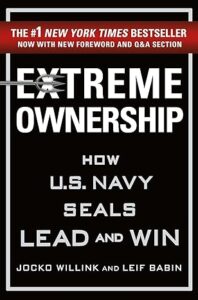
Extreme Ownership by Jocko Willink and Leif Babin. Its emphasis on total accountability resonates strongly in a complex operating environment. The principle that leaders are responsible for everything within their span of control reinforces the importance of clarity, discipline, and ownership in driving results.

What are the 3–5 KPIs you personally watch every week—and why those?
Production, every day, every week, every month. Revenue forgives all sins. Production can be an indicator of potential provider dissatisfaction. It can indicate operational weakness in areas of scheduling/appointment confirmations/marketing. I monitor this at the company, regional, office, and individual provider levels. Additionally, I watch:
- Co-pay collections: The RCM cycle will break and overall collections percentages will suffer if we are not collecting patient balances at the time of service.
- Google reviews: Daily, I am looking at any review below three stars across the entire company so I can identify trends or any particular office-level problems and reach out to individual patients if warranted.
- Terminations (voluntary and involuntary): I want to understand why employees are leaving, either by their choice or ours.
- Earnings before interest, taxes, depreciation, and amortization: I review this at the company, regional, and office levels to identify the need for action planning and intervention to course correct. It’s difficult to monitor on a weekly basis, but watch it monthly for sure.
Where do most DSOs overcomplicate operations?
The more platforms we are asking offices to interact with, the more likely we are going to be faced with resistance and process failure. Fortunately, PMS platforms are building more and more functionality into their systems, and now this is happening very rapidly with AI advancements. Hopefully, this will help DSOs to streamline operations without breaking the bank, as new functionality always comes with a new price tag.
What’s one operational decision you made that created disproportionate impact?
The decisions I have made in my career that created disproportionate impact (both good and bad) are those involving placing the right people into the right seats. A few years ago at Riccobene, we were working hard to improve our RCM team. I had a few office and regional managers on the operations team who I thought would be great on the RCM team. Although it was painful to backfill them, I decided to ask them to move over to RCM. In large part thanks to them, our RCM performance has now dramatically improved to where we are today, which is truly best in class. Knowing where talent will best be utilized and taking risks in this area can have the biggest impacts on performance.
Where do most operators fail when it comes to developing leaders internally?
I think the biggest failures come from the risks we are unwilling to take. Overlooking someone who has demonstrated drive and willingness to learn, just because they may not look the part or be who we’ve promoted in the past, can keep us from finding the best internal talent. We also need to look across functional lines. Sometimes dental assistants make the best office managers. A great hygienist can become an amazing training team member. If we take a risk on developing someone internally that doesn’t pan out, we can always retain that individual in their original role. But if we don’t take the risk, we may be missing out on a complete rock star in a new role. Every new hire is a risk—why not take risks on our own employees first?
What book or podcast has recently influenced your leadership approach?
Ego vs. EQ by Jen Shirkani.


Where do most organizations misunderstand the COO role?
The COO role is truly the connective tissue between the CEO’s vision, the practices delivering care, and the teams supporting them. Execution happens in the field, not just in a support office, which means understanding how practices actually operate matters just as much as dashboards and strategy. Ultimately, the role is about creating alignment, driving accountability, and turning strategy into results.
Where do most DSOs overcomplicate operations?
When they lose sight of the practice. Our job is to simplify workflows for the people closest to the patient. When front office teams, hygienists, and doctors are navigating unnecessary steps or unclear processes, it slows care and adds cost. Standardization should be used intentionally, focused on the areas where consistency improves speed, quality, and efficiency. Not everything needs to be centralized or controlled. And teams need to understand the why or alignment breaks down and work-arounds take over. Simplicity and consistency scale. Complexity creates friction.
What’s the most common integration mistake after an acquisition?
Moving too fast on what feels urgent to the support office and too slow on what matters to the practice. Early on, teams want clarity. Is my schedule changing? Who do I call when something breaks? If you lead with systems and reporting instead of those answers, you lose trust early. The other mistake is treating every acquisition the same. Practices vary widely, and integration should reflect that. You have to meet each practice where it is. Good integration isn’t about forcing change. It’s about supporting what’s already working and building from there.
What do you look for when hiring your regional or field leaders?
Emotional intelligence first, operational skill second. You can teach someone P&L, but you can’t teach them how to walk into a practice, read the room, and build trust. I look for leaders who have curiosity, listen before prescribing, and can hold accountability without damaging relationships. The best field leaders don’t just report performance. They improve it.
Where do most operators fail when it comes to developing leaders internally?
They promote high performers and then wonder why they struggle as leaders. Operational strength doesn’t automatically translate to developing others, and that transition is often overlooked. I’ve also seen organizations fail to create a visible path. If high performers can’t see where they’re going, they’ll find somewhere that shows them. The operators that stand out invest in developing leaders from within, not just hiring them from the outside.
What book or podcast has recently influenced your leadership approach?
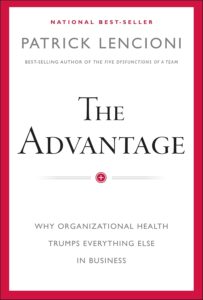
The Advantage by Patrick Lencioni has influenced how I think about operating models and leadership teams. In my experience, effort usually isn’t the problem. Organizations struggle when priorities aren’t clear, teams aren’t aligned, or communication breaks down between departments. The bigger an organization gets, the more important simplicity and clarity become. The book reinforced what I’ve seen operationally over the years.

What are the 3–5 KPIs you personally watch every week—and why those?
I focus on a small group of KPIs that give a real-time view of growth, operational efficiency, and long-term sustainability.
- Revenue: It reflects overall business performance and operational execution.
- New patient bookings: They are one of the strongest indicators of future growth and market demand.
- Chair and diary utilization: They show how effectively we are maximizing clinical capacity while maintaining access for patients.
- Colleague and clinician churn: Retention directly impacts culture, continuity of care, and operational stability.
Together, these metrics provide a balanced view of financial performance, patient demand, operational effectiveness, and team health.
What’s one operational decision you made that created disproportionate impact?
One of the most impactful decisions I made was restructuring communication and accountability across regional leadership. We implemented standardized weekly operational reviews with clear ownership, faster escalation pathways, and simplified scorecards. The change itself was not complicated, but it dramatically improved execution speed, visibility, and alignment across teams. Often, operational impact comes less from large transformations and more from creating clarity and consistency at scale.
How do you balance standardization with clinical autonomy?
We standardize areas that improve consistency, compliance, patient experience, and operational efficiency, while preserving autonomy in clinical decision-making. The key is involving clinicians in the process so standards are developed collaboratively, not imposed top down. When providers understand that operational consistency reduces friction and supports better patient care, alignment becomes much easier.
How do you protect culture while aggressively growing?
Culture is protected through consistency, visibility, and leadership behavior. During periods of growth, communication becomes even more important. Leaders must reinforce values through hiring decisions, recognition, accountability, and daily interactions. I also believe culture scales when leaders feel empowered and connected to the organization’s mission. Growth exposes weaknesses in culture quickly, so protecting it requires intentionality at every level.
Where do most operators fail when it comes to developing leaders internally?
Many organizations promote high performers without investing in leadership development. Operational success does not automatically translate into leadership capability. Internal development requires intentional coaching, clear expectations, mentorship, and opportunities for growth before someone steps into a larger role. Too often, organizations wait until there is an urgent opening instead of building a consistent leadership pipeline.
What book or podcast has recently influenced your leadership approach?
One book that recently influenced my leadership approach is Snakes in Suits by Paul Babiak and Robert D. Hare. It offers a powerful perspective on how personality dynamics, manipulation, and unchecked ego can impact organizations and leadership teams. The book reinforced the importance of emotional intelligence, self-awareness, and value-based leadership, especially in high-growth environments. It also reminded me that strong culture and clear accountability are essential safeguards for building healthy, high-performing organizations.